Physical Address
304 North Cardinal St.
Dorchester Center, MA 02124
Physical Address
304 North Cardinal St.
Dorchester Center, MA 02124

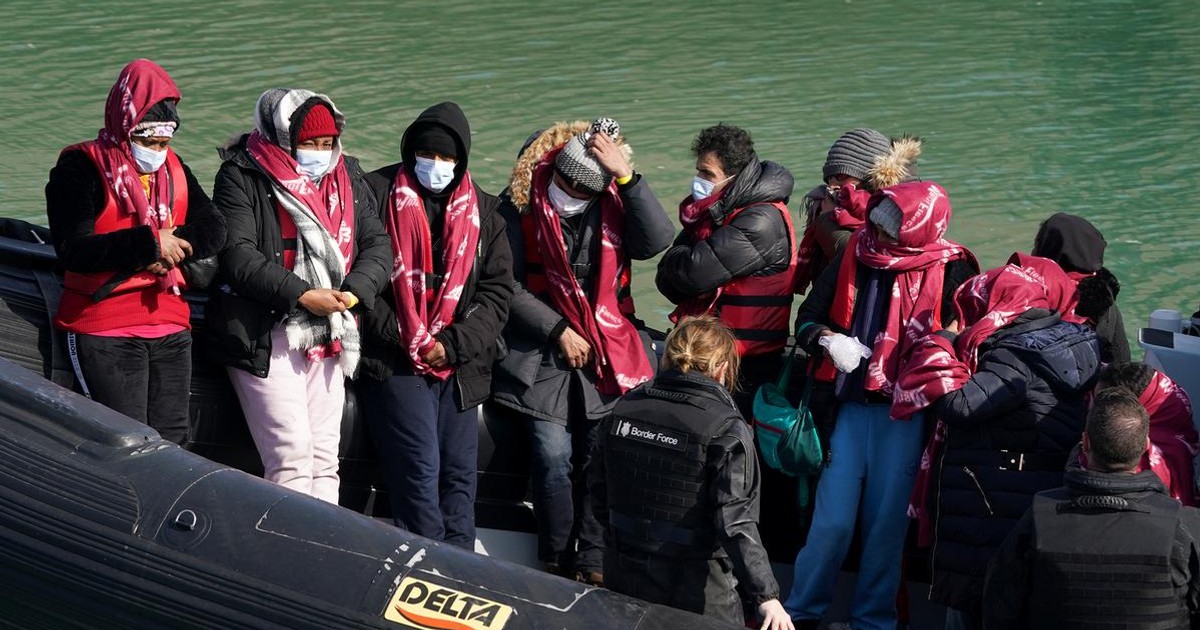
Rwanda has taken the UK to international arbitration over unpaid commitments under the scrapped migrant deal. The case raises legal, political, and financial questions about Britain’s controversial asylum policy.
The diplomatic fallout from Britain’s abandoned Rwanda migrant policy has entered a new and consequential phase. The Rwandan government has launched legal proceedings against the United Kingdom, seeking payments it says are owed under the now-defunct asylum partnership between the two countries.
Rwanda has filed a case with the Permanent Court of Arbitration (PCA) in The Hague, arguing that the UK failed to honour financial commitments made under the treaty. The deal, signed under the previous Conservative government, would have seen some asylum seekers transferred from the UK to Rwanda in exchange for substantial British financial support.
That policy was formally scrapped in 2024 by Prime Minister Sir Keir Starmer shortly after Labour won the general election. At the time, the Home Office declared that £220 million in scheduled future payments would no longer be made to Rwanda.
Now, Kigali is challenging that position.
Through arbitration, Rwanda is asking for a legal determination of the rights and obligations of both parties under the treaty. The case, listed on the PCA’s website as “pending,” was initiated in November and could take years to resolve.
The UK government has vowed to fight.
A Home Office spokesperson said:
“The previous government’s Rwanda policy wasted vast sums of taxpayer time and money. We will robustly defend our position to protect British taxpayers.”
Rwanda has not issued a formal public response to the BBC, but its Ministry of Foreign Affairs directed attention to an article in The New Times, a Rwandan newspaper, which said the arbitration “concerns the performance of specific commitments under the treaty.”
Michael Butera, chief technical adviser to Rwanda’s minister of justice, was quoted as saying:
“Through arbitration, Rwanda seeks a legal determination of the parties’ respective rights and obligations under the treaty, in accordance with international law.”
The Rwanda scheme was one of the most controversial immigration policies in modern British politics. It was designed to deter migrants from crossing the English Channel in small boats by sending some asylum seekers to Rwanda for processing and resettlement.
Despite the scale of the political debate, the policy barely moved beyond the drawing board. Only four volunteers were ever transferred under the arrangement. Yet the cost was enormous.
The previous Conservative government spent around £700 million on the scheme, including £290 million already paid to Rwanda. The agreement also included future payments tied to the programme’s operation.
In December 2024, the Home Office acknowledged that a further £100 million would have been due under the treaty—£50 million in each of the 2025–26 and 2026–27 financial years. An additional £120 million was set to be paid upon the transfer of 300 people.
When Labour scrapped the policy, Sir Keir Starmer declared it “dead and buried.” The government argued that the deal was unworkable, costly, and ineffective.
However, Rwanda now maintains that commitments under the treaty remain enforceable.
The agreement itself contained a termination clause allowing either party to withdraw by giving written notice. But it also specified that any dispute not resolved diplomatically would be referred to the Permanent Court of Arbitration.
That is precisely what Rwanda has done.
The PCA is not a conventional court but an international forum for resolving disputes between states. It operates much like commercial arbitration, offering a structured, legally binding process outside domestic courts.
If the tribunal rules in Rwanda’s favour, the UK could be compelled to make additional payments. If it sides with Britain, Rwanda’s claims would be dismissed.
The PCA has not yet published a timetable. Typically, such cases involve lengthy exchanges of legal arguments and can run for several years.
For the UK, the case carries financial, political, and reputational implications. Even if Britain ultimately prevails, the process itself may incur significant legal costs and prolong a controversy the government hoped to leave behind.
For Rwanda, the arbitration is about more than money. It is also about principle and international credibility. Officials argue that Kigali upheld its side of the bargain and prepared infrastructure, staffing, and systems to receive migrants. From their perspective, Britain’s unilateral withdrawal created financial and administrative losses.
The New Times article notes that Rwanda pursued diplomatic channels before initiating arbitration—suggesting that this legal step was taken after negotiations failed.
The case has already ignited political debate in the UK.
Conservative shadow home secretary Chris Philp described the arbitration as “yet another catastrophic consequence of Labour’s decision to scrap the Rwanda scheme before it even started.”
“This legal action means the British taxpayer is now facing a huge bill for Labour’s weakness and incompetence,” he said.
“Labour was too weak to see this crucial policy through, and it’s the British taxpayer who is left to pay the price.”
The Labour government counters that the real waste occurred under the Conservatives, who poured hundreds of millions into a policy that never functioned.
It has previously indicated that it was examining what money could be recovered after ending the scheme. Rwanda, however, has said it is under “no obligation” to refund any funds already received.
The dispute therefore crystallizes a broader argument about accountability: who bears responsibility for the cost of a policy conceived, funded, and then abandoned across two administrations?
This case also carries wider implications.
It raises questions about how binding international migration agreements are when domestic political change intervenes. Governments change. Policies shift. But treaties remain.
If Rwanda succeeds, it could set a precedent that discourages future governments from casually abandoning international agreements, even controversial ones. If Britain prevails, it may reinforce the idea that political termination clauses provide broad latitude to exit such deals without further cost.
Either outcome will be closely watched by other countries considering similar arrangements.
For African states, the case touches on how partnerships with Western governments are structured and enforced. For European states, it highlights the legal risks of outsourcing asylum policies to third countries.
For now, the case remains in its early stages. The PCA will eventually establish a timetable, and both sides will prepare detailed legal submissions. There may be attempts at settlement before a final ruling.
But one thing is clear: the Rwanda policy, far from being “dead and buried,” has entered a new life in international law.
What began as a domestic political experiment has become a transnational legal dispute—one that could take years to resolve and cost millions more.
In the end, the arbitration will not decide whether the Rwanda policy was morally right or politically wise. It will answer a narrower, colder question: what, under the treaty, does the United Kingdom still owe?
For British taxpayers and Rwandan officials alike, the answer may prove both expensive and instructive.
Join African360 WhatsApp Channel for more News update: https://whatsapp.com/channel/0029Vb7Oc6nGk1FpdCN0xn44