Physical Address
304 North Cardinal St.
Dorchester Center, MA 02124
Physical Address
304 North Cardinal St.
Dorchester Center, MA 02124

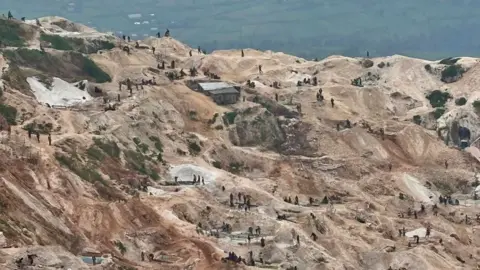
More than 200 people have died in a DR Congo mine collapse in Rubaya, exposing deadly artisanal mining conditions and the human cost of the global coltan trade.
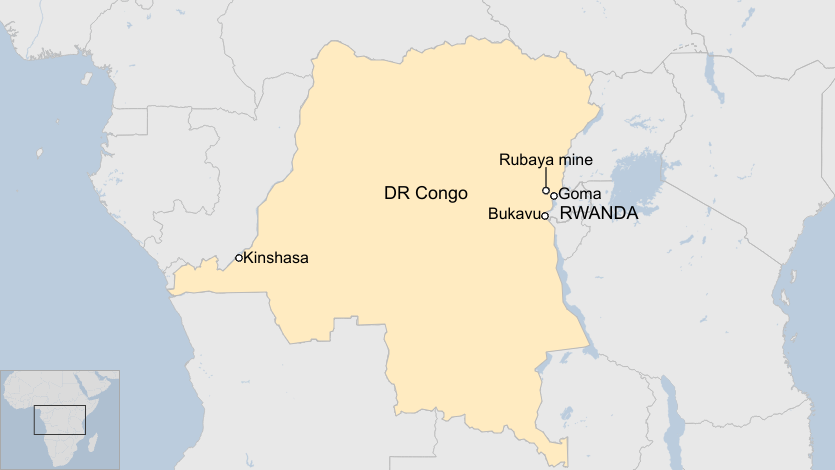
A devastating mine collapse in eastern Democratic Republic of Congo has left more than 200 people dead, highlighting once again the lethal intersection of conflict, poverty, and global demand for critical minerals. The tragedy occurred in Rubaya, a key mining town in the volatile North Kivu region, where heavy rainfall caused a coltan mine to cave in, burying hundreds of miners underground.
According to local rebel authorities, the collapse happened on Wednesday after days of intense rain weakened the already fragile soil. While rescue efforts were immediately launched, hopes of finding many survivors quickly faded. Officials say women and children were among those working inside the mine at the time of the disaster, underscoring the scale of vulnerability surrounding artisanal mining in the region.
The mine collapse was triggered by heavy rainfall, but those familiar with the site say the disaster was long in the making. A former supervisor of the mine told the BBC that the facility lacked basic safety standards and structural reinforcement, making accidents almost inevitable.
He explained that the soil in Rubaya is extremely unstable and requires constant maintenance—something the site did not receive. This not only increased the likelihood of collapse but also complicated rescue operations once the ground gave way.
Around 20 survivors were reportedly pulled from the debris and are currently receiving medical treatment. Many others, however, were not as fortunate. Bodies continued to be recovered hours after the collapse, while some victims were initially listed as missing, fueling agonising uncertainty for families.
Most of those killed were artisanal miners—individuals working independently or informally rather than for licensed mining companies. In eastern Congo, artisanal mining is often the only source of income for entire communities, despite the extreme risks involved.
Women and children regularly work alongside men in these mines, digging manually with basic tools. There is little to no protective equipment, and safety inspections are virtually nonexistent. For many families, the choice is stark: risk death underground or face hunger above it.
One grieving relative, whose cousin died in the collapse, described the loss as devastating. He said his cousin was driven by the desire to support his wife and two children and held on to hope even after the accident, believing his body had not yet been found because he might still be alive.
That hope was later shattered when the body was recovered.
Rubaya is not just another mining town. It sits atop one of the richest coltan deposits in the world, accounting for roughly 15% of global supply and about half of the Democratic Republic of Congo’s total reserves.
Coltan contains tantalum, a key component used in the production of smartphones, computers, electric vehicles, and other high-performance electronics. The global appetite for these devices has made Rubaya a strategic economic prize—and a dangerous one.
Since 2024, the area has been under the control of the M23 rebels, who seized large swathes of North Kivu. International observers and the United Nations have accused the group of taxing mining operations and benefiting financially from mineral extraction.
The rebel-appointed governor of North Kivu, Erasto Bahati Musanga, visited survivors in hospital days after the collapse, but critics argue that such gestures do little to address the systemic failures behind the disaster.
The Rubaya tragedy exposes the hidden human cost behind everyday consumer electronics. While tantalum extracted from coltan powers devices used around the world, the miners who risk their lives to extract it remain largely invisible in global supply chains.
When a BBC team visited the Rubaya mines in mid-2025, they documented appalling working conditions—deep, unmarked pits, manual digging, and complete absence of safety measures. The collapse now stands as a grim confirmation of those warnings.
As families mourn and rescue efforts wind down, attention is turning to accountability. Questions remain about who is responsible for safety oversight in rebel-controlled mining zones and whether international buyers are doing enough to ensure ethical sourcing.
For communities in Rubaya, however, the tragedy is deeply personal. Entire households have lost breadwinners, and children have lost parents—victims of a system that prioritises minerals over human lives.
The DR Congo mine collapse is not an isolated incident. It is part of a recurring pattern that will likely continue unless mining governance, conflict resolution, and global supply chain accountability are fundamentally reformed.
Join African360 WhatsApp Channel for more News update: https://whatsapp.com/channel/0029Vb7Oc6nGk1FpdCN0xn44