Physical Address
304 North Cardinal St.
Dorchester Center, MA 02124
Physical Address
304 North Cardinal St.
Dorchester Center, MA 02124

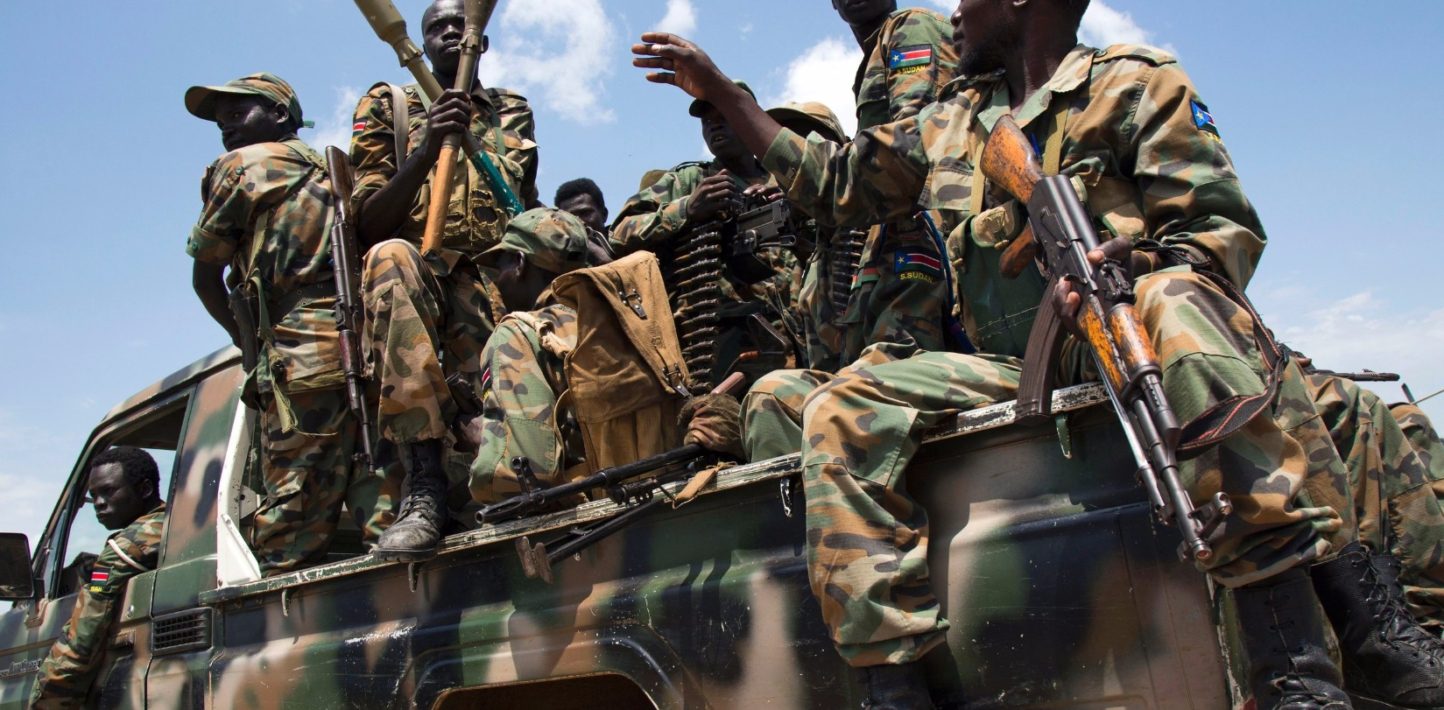
The United Nations has condemned inflammatory rhetoric by a South Sudanese general urging troops to “spare no one,” as fighting intensifies in Jonglei and more than 180,000 civilians are displaced.
The United Nations has sounded a grave warning over the worsening security situation in South Sudan after a senior military commander publicly urged his troops to show no mercy—explicitly naming civilians, children, and the elderly as targets.
The comments, made by South Sudan’s deputy army chief, General Johnson Oluny, have triggered international outrage and heightened fears of mass atrocities in a country still struggling to recover from years of brutal civil war.
In a video shared online, Oluny can be heard addressing fighters from his Agwelek militia as they prepared for deployment to opposition-held areas of Jonglei State. His words were chilling: troops were told to “spare no one—the elderly, children, birds—leave no house standing.”
For a nation with a painful history of ethnic massacres and civilian suffering, such language cuts deeply. The head of the UN Mission in South Sudan (UNMISS) did not mince words, condemning the remarks as “utterly abhorrent” and warning that “inflammatory rhetoric calling for violence against civilians, including the most vulnerable, must stop now.”
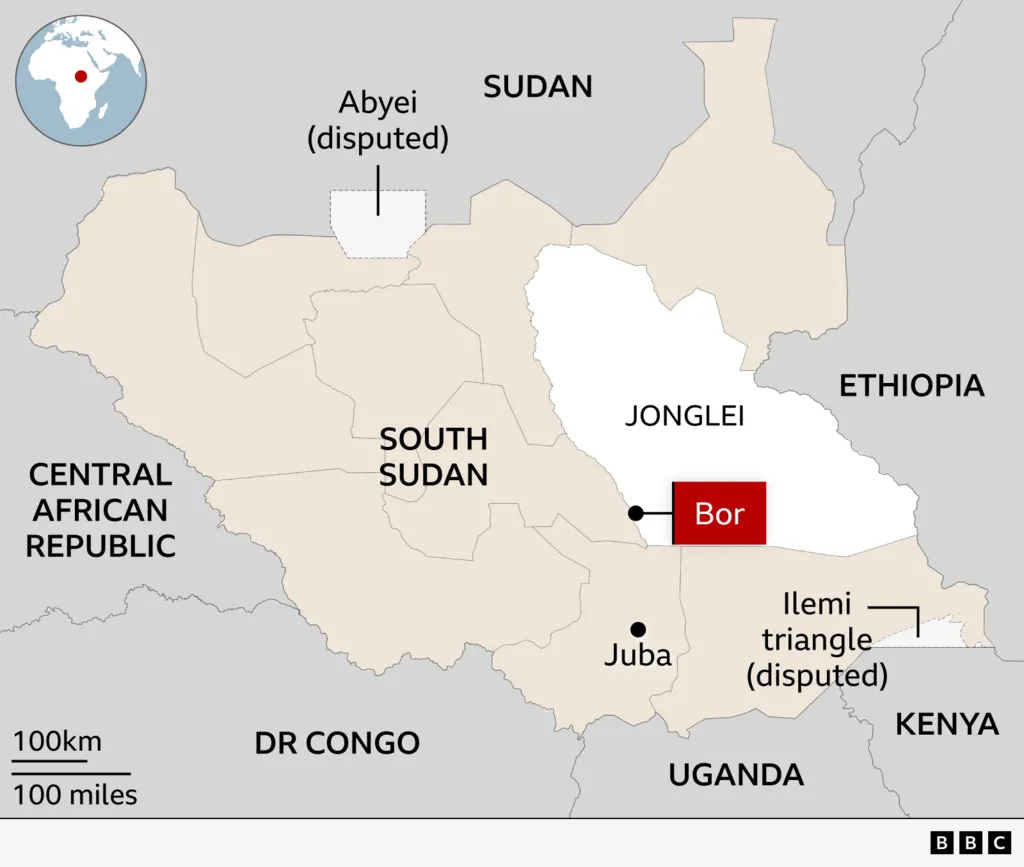
Jonglei State, north of the capital Juba, has become the latest flashpoint in South Sudan’s simmering conflict. Forces aligned with former Vice-President Riek Machar have captured several areas in recent weeks, prompting the government to prepare for a large-scale military operation.
The military has ordered all civilians, UN personnel, and aid workers to evacuate three counties—Nyirol, Uror, and Akobo—ahead of what it describes as an imminent offensive. The directive has sent shockwaves through communities already living on the edge.
Last week, the country’s chief of defence staff instructed troops in the region to “crush the rebellion” within seven days, signaling a dramatic escalation. Witnesses now describe civilians fleeing into swamps and remote areas, desperate to escape advancing forces.
According to the United Nations, more than 180,000 people are believed to have been displaced by the intensifying fighting.
The UN Commission on Human Rights in South Sudan (UNCHRSS) expressed “grave alarm” at the developments, warning that the language being used by senior leaders is not just reckless—it is dangerous.
“No senior political or military leader in Juba can claim to be unaware of the blatant public incitements to commit serious crimes in Jonglei,” the Commission said in a statement issued in Geneva.
UNCHRSS Chair Yasmin Sooka described the rhetoric as “profoundly dangerous,” noting that calls to kill civilians and those no longer participating in hostilities violate international law and risk unleashing mass violence.
The South Sudanese military has ordered civilians in the affected counties to move to government-controlled areas “for safety.” All personnel from the UN mission and non-governmental organizations were also instructed to leave within 48 hours.
An UNMISS spokesperson confirmed that peacekeepers in Akobo remain in place, working to de-escalate tensions and prevent further conflict. However, it remains unclear whether UN staff are still present in the other counties.
For humanitarian agencies, the evacuation orders pose a stark dilemma. Leaving means abandoning vulnerable populations at their moment of greatest need. Staying could put aid workers in direct danger.
Meanwhile, opposition forces have reportedly threatened to march on Juba, raising the specter of a wider confrontation that could plunge the country back into full-scale war.
Independent UN experts now warn that the situation is rapidly heightening “the risk of mass violence against civilians.”
South Sudan is the world’s youngest country, gaining independence in 2011 after decades of struggle. Yet hope quickly gave way to bloodshed.
In 2013, conflict erupted when President Salva Kiir accused his deputy, Riek Machar, of plotting a coup. What followed was a devastating civil war that claimed nearly 400,000 lives and displaced millions. The fighting fractured the nation along ethnic lines, pitting Kiir’s Dinka community against the Nuer, widely seen as backing Machar.
A 2018 peace agreement formally ended the war, but its implementation has been halting and incomplete. Tensions between Kiir and Machar have steadily resurfaced, fueled by mistrust, political rivalry, and sporadic violence.
The fragile power-sharing arrangement is now effectively in ruins. Machar was arrested last March and is currently on trial for “crimes against humanity,” a move that many observers view as the final blow to the unity government.
Against this backdrop, rhetoric that echoes the darkest days of the civil war is deeply alarming.
History has shown that mass atrocities often begin with words. Dehumanizing language, public incitement, and the normalization of violence create the conditions for crimes against civilians.
In South Sudan, where memories of ethnic cleansing and village burnings remain fresh, calls to “spare no one” are not mere bravado—they are potential triggers for catastrophe.
The UN’s intervention is therefore more than diplomatic caution. It is an urgent plea to halt a slide toward horrors the nation has already endured.
For South Sudan, the choice is stark: step back from the brink and protect its people, or risk repeating a tragic cycle where civilians once again become targets in a political struggle.
As families flee into swamps and remote bushlands, carrying what little they can, the human cost is already unfolding. Whether leaders in Juba will heed the warnings may determine whether Jonglei becomes another chapter in South Sudan’s long history of grief—or a turning point toward restraint and accountability.
Join African360 WhatsApp Channel for more News update: https://whatsapp.com/channel/0029Vb7Oc6nGk1FpdCN0xn44