Physical Address
304 North Cardinal St.
Dorchester Center, MA 02124
Physical Address
304 North Cardinal St.
Dorchester Center, MA 02124

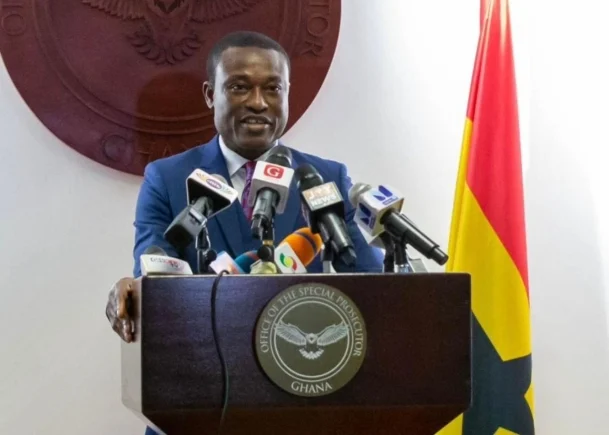
The Office of the Special Prosecutor uncovers a high-risk monopoly at Ghana’s ports that cost the state GH¢345 million. Here’s what went wrong and what must change.
Ghana’s anti-corruption fight reached a defining moment with the release of the Office of the Special Prosecutor’s July to December 2025 Half Yearly Report on January 29, 2026. Buried within the pages of the report is a disturbing account of how a single private company was allowed to control a critical public service at the nation’s ports, collect millions in fees, and retain public revenue with little or no oversight.
At the heart of the matter is LCB Worldwide Ghana Limited, a foreign-owned company that was granted an exclusive nationwide monopoly to provide disinfection services at all ports of entry. Under this arrangement, LCB charged importers and exporters directly for services, kept the proceeds in its own private accounts, and determined how much to remit to state institutions. The Ghana Health Service, which oversaw the programme, relied mainly on reports submitted by the company itself, without independent verification.
The Office of the Special Prosecutor’s corruption risk assessment concluded that this structure was riddled with vulnerabilities. It exposed weaknesses in legal authority, procurement, fee-setting, financial flows, oversight, competition, transparency, and even public health outcomes. Special Prosecutor Kissi Agyebeng described the situation as posing an “immense systemic corruption risk” and warned that it required urgent corrective action.
The financial implications are staggering. The OSP estimates that the state stood to lose about GH¢345 million under the arrangement. This figure includes GH¢120 million in avoided costs, GH¢25 million in Value Added Tax and statutory revenue that should have gone to government, and GH¢200 million in future losses now prevented by the intervention. These are not abstract numbers. They represent hospitals that could have been equipped, classrooms that could have been built, and communities that could have received basic services.
What makes the case especially troubling is that the model itself enabled abuse. LCB was permitted to charge every importer and exporter at the ports, retain all receipts in its private accounts, make partial payments to state agencies at its own discretion, and submit operational reports without independent checks. In effect, control over public revenue was handed to a private foreign company, without a clear system of accountability.
In any serious governance system, such an arrangement would raise immediate red flags. The ports are among Ghana’s most sensitive economic gateways. Every day, goods worth millions of cedis pass through them. Any operation embedded within that environment must be tightly regulated, transparent, and accountable. Instead, the system allowed one company to dominate nationwide, operate with minimal scrutiny, and handle public funds as though they were private income.
The Office of the Special Prosecutor did not merely highlight the problem. It acted. The report ordered the immediate suspension of all disbursements to LCB pending a forensic audit. It directed the company to stop holding and retaining fees in private accounts. It tasked the Ghana Revenue Authority with exercising oversight over LCB’s tax obligations and recovering any unpaid taxes. Most significantly, it ordered the Ghana Health Service to submit an Integrity Plan by March 31, 2026, detailing corrective measures and a full reorganisation of the ports disinfection programme.
This Integrity Plan is not meant to be a formality. It must outline how the system will be redesigned to prevent abuse, assure transparency, and restore accountability. The OSP has made it clear that any future arrangement must be grounded in a lawful and transparent framework, supported by strong financial, technical, and governance controls.
Beyond the immediate case, this episode exposes a broader governance challenge in Ghana. Too often, public-private partnerships are created without robust legal foundations, transparent procurement processes, or effective financial monitoring. In such environments, corruption does not always announce itself with scandals and arrests. It embeds quietly in poorly designed systems, draining public resources in ways that are difficult to detect.
The ports disinfection deal is a textbook example of systemic risk. It did not depend on secret bribes or hidden transactions. The vulnerability was built into the structure itself. A monopoly was created. Revenue collection was privatised. Oversight was weak. Reporting was self-generated. In such a system, abuse becomes not just possible, but almost inevitable.
Mr. Agyebeng’s intervention sends a powerful message. Corruption is not only about individuals breaking rules. It is also about institutions designing arrangements that invite exploitation. By stepping in before the damage became irreversible, the OSP demonstrated that anti-corruption work can be preventive, not merely punitive.
For the Ghana Health Service, this moment is both a reckoning and an opportunity. The agency must now rethink how disinfection services at the ports are delivered. Who collects the fees? Where are they held? How are they tracked? Who verifies performance and revenue in real time? These are not technical questions alone. They are questions of trust, governance, and national interest.
For citizens, the case is a reminder that corruption often hides in plain sight. It lives in contracts, memoranda of understanding, and administrative decisions that seem routine. It drains the state quietly, cedi by cedi, while the public remains unaware of what is being lost.
The estimated GH¢345 million saved by this intervention is more than a headline figure. It represents real opportunities that would have vanished without anyone noticing. Protecting such resources is not just an administrative duty. It is a moral responsibility to current and future generations.
As Ghana continues its journey toward stronger institutions, the OSP’s action at the ports should stand as a defining example. It shows that corruption can be confronted not only after money is stolen, but before flawed systems are allowed to mature. If this approach is sustained across other sectors, it could mark a turning point in how public resources are safeguarded at the nation’s borders and beyond.
Join African360 WhatsApp Channel for more News update: https://whatsapp.com/channel/0029Vb7Oc6nGk1FpdCN0xn44