Physical Address
304 North Cardinal St.
Dorchester Center, MA 02124
Physical Address
304 North Cardinal St.
Dorchester Center, MA 02124

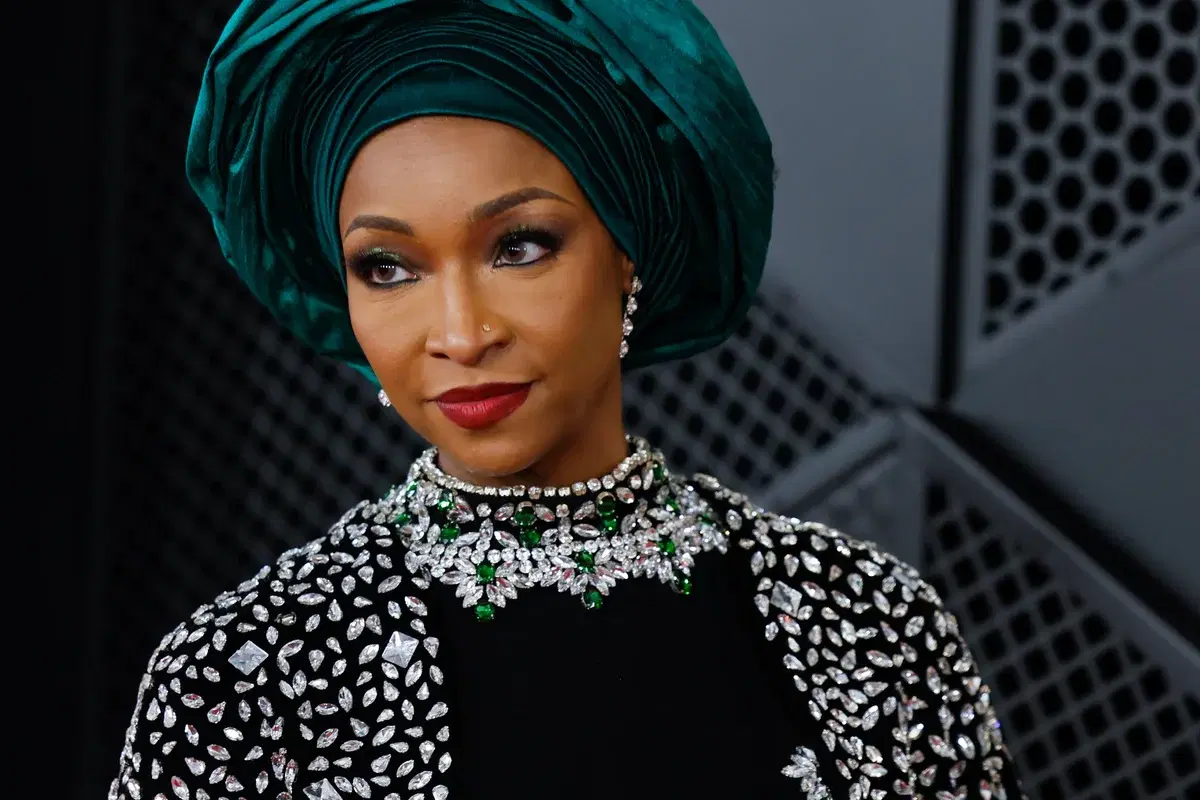
Nigeria’s Minister of Arts and Culture, Hannatu Musawa, says an Atiku–Obi alliance cannot defeat President Bola Tinubu in 2027, warning it could deepen opposition divisions and weaken their chances.
As Nigeria’s political landscape begins to warm up ahead of the 2027 general election, conversations around opposition alliances are gaining momentum. Among the most debated possibilities is a joint presidential ticket involving former Vice President Atiku Abubakar and ex-Anambra State governor Peter Obi—two of the most prominent figures in opposition politics.
But according to Nigeria’s Minister of Arts, Culture and the Creative Economy, Hannatu Musawa, such an alliance would not be enough to unseat President Bola Ahmed Tinubu.
Speaking during an interview on The Mic On Podcast, which was later shared on Instagram, Musawa offered a blunt assessment of the opposition’s prospects. While acknowledging Atiku Abubakar’s experience and stature, she argued that the former vice president would still fall short against the ruling party in 2027.
“I see him as a formidable opponent,” Musawa said. “But as much as I respect and admire him, I do not believe that Vice President Atiku Abubakar would be able to match the ruling party in 2027.”
Her comments reflect a growing confidence within the governing camp and underline the challenges facing opposition forces as they search for a viable strategy.
Speculation about a coalition between Atiku and Obi has intensified in recent months, driven by calls for unity among opposition parties. Many analysts believe that fragmentation was a major factor in the opposition’s defeat in the last election cycle.
However, Musawa dismissed the idea that a merger of political forces would dramatically alter the balance of power.
“I don’t think he’s a match even if Atiku and Peter come together,” she stated.
In her view, combining two popular figures does not automatically translate into electoral success. Instead, such an arrangement could expose deeper fault lines within the opposition, particularly among Peter Obi’s loyal supporters, popularly known as “Obidients.”
These supporters, who mobilized in large numbers during the last election, have consistently expressed resistance to seeing Obi in a subordinate role on any ticket.
“That kind of ticket is likely to upset a lot of Obidients,” Musawa warned. “Many of them have been very clear that they do not want Peter Obi as a vice-presidential candidate. Some people will have to reconsider positions they once held.”
Her remarks point to a fundamental dilemma facing the opposition: unity may be necessary, but unity on whose terms?
Musawa went further, arguing that even flipping the ticket—making Peter Obi the presidential candidate with Atiku as his running mate—would not improve the opposition’s prospects.
“If Peter Obi is presented as the presidential candidate instead, that would be the quickest way for the opposition to lose the election,” she said. “I say that very honestly.”
This assertion is likely to provoke strong reactions, especially among Obi’s supporters, who view him as the natural standard-bearer for any credible opposition coalition. Many within this bloc believe Obi represents a generational shift in Nigerian politics and embodies a break from traditional power structures.
Yet Musawa’s comments reflect a different political calculus—one rooted in party machinery, regional dynamics, and the entrenched advantages of incumbency.
Her perspective suggests that elections are not won by popularity alone. They require extensive political infrastructure, deep party networks, and strategic alliances across Nigeria’s diverse regions. In that context, she implies, neither Atiku nor Obi—alone or together—can currently match the organizational strength of the ruling All Progressives Congress (APC).
Musawa’s remarks come amid ongoing debates within opposition circles, particularly around the role of the Africa Democratic Congress (ADC), which has been positioned by some as a potential coalition platform.
Supporters of Peter Obi have insisted that any coalition-backed party must present him as its presidential candidate for 2027. This stance has drawn caution from ADC leaders, who have warned against divisive rhetoric.
The party has emphasized that internal disagreements and public pressure campaigns could inadvertently strengthen the APC by fragmenting opposition unity before a campaign even begins.
In many ways, Musawa’s intervention echoes this concern. Her argument is not merely about the electoral weakness of a specific ticket; it is about the structural challenges facing an opposition struggling to reconcile ambition with cohesion.
Whether one agrees with her assessment or not, Musawa’s comments highlight uncomfortable truths about Nigerian politics.
Elections are not decided by social media energy alone. They hinge on:
Opposition figures may command enthusiasm, but translating that into nationwide victory requires more than symbolic unity.
For Atiku, the challenge is overcoming repeated electoral setbacks and convincing voters that another attempt represents renewal rather than repetition. For Obi, it is expanding beyond a passionate base into a broad, multi-regional coalition capable of winning across Nigeria’s complex political terrain.
An Atiku–Obi alliance may sound powerful in theory. In practice, as Musawa argues, it could ignite internal tensions that weaken the very unity it seeks to create.
With four years still to go, the political field remains fluid. Alliances can shift, new players can emerge, and public sentiment can change dramatically.
Yet Musawa’s comments serve as an early reality check: defeating an incumbent party with deep roots and national reach is an uphill task. It requires not just prominent names, but a carefully constructed movement capable of navigating Nigeria’s political complexities.
For the opposition, the question is no longer whether unity is needed—but whether it can be achieved without fracturing the very base that gives it life.
As debates continue, one thing is clear: the road to 2027 will test not only the strength of political alliances, but the ability of opposition leaders to balance ambition with cohesion.
Join African360 WhatsApp Channel for more News update: https://whatsapp.com/channel/0029Vb7Oc6nGk1FpdCN0xn44