Physical Address
304 North Cardinal St.
Dorchester Center, MA 02124
Physical Address
304 North Cardinal St.
Dorchester Center, MA 02124

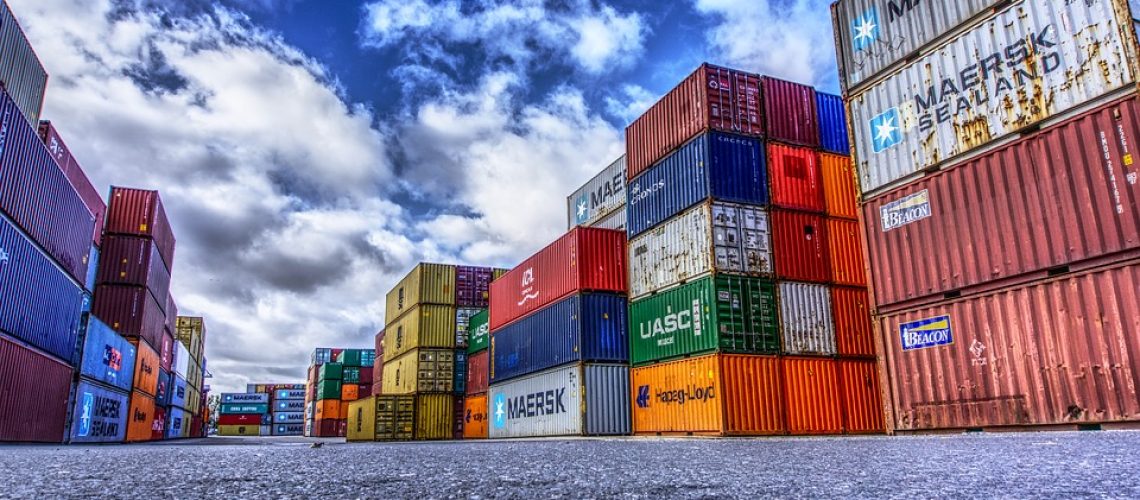
West Africa now absorbs over 62% of Nigeria’s exports to Africa, highlighting Nigeria’s growing role in regional trade and value chains under ECOWAS and AfCFTA.
Nigeria’s position as a regional economic engine is becoming increasingly evident, with new data showing that West Africa absorbs more than 62 percent of Nigeria’s exports to the African continent. This remarkable figure highlights not only Nigeria’s central role in regional commerce but also the deepening economic ties within the ECOWAS bloc.
According to figures from Nigeria’s National Bureau of Statistics (NBS), reviewed by Ecofin Agency, goods worth ₦2.995 trillion were exported to ECOWAS countries in the past year alone. This represents a 16 percent year-on-year growth, underscoring the momentum behind intra-regional trade in West Africa.
The trend has drawn the attention of policymakers and analysts alike. Bashir Adewale Adeniyi, Comptroller General of the Nigeria Customs Service, described the development as evidence of Nigeria’s growing influence as “a hub for intra-continental trade and value chains.” Speaking to Bloomberg, he added that the numbers are “a clear signal of strengthening regional trade momentum.”
In simple terms, West Africa is no longer just a neighboring market for Nigeria—it is becoming the backbone of its African export strategy.
Among the goods flowing from Nigeria into the sub-region, fuel dominates. ECOWAS countries purchased nearly ₦298 billion worth of Nigerian fuel products, making energy exports the single largest contributor to regional trade.
This is hardly surprising. Many West African economies rely heavily on imported petroleum products to power transportation, industry, and households. Nigeria’s capacity to meet this demand gives it a strategic advantage and reinforces its role as a regional supplier of essential commodities.
But fuel is only part of the story. Nigeria’s exports also include manufactured goods, agricultural products, and industrial inputs—key components of regional value chains that are slowly taking shape under the African Continental Free Trade Area (AfCFTA).
Despite West Africa’s dominance within the African context, exports to the continent remain a relatively small portion of Nigeria’s overall trade profile.
In the first half of 2025, Nigeria’s total exports were estimated at ₦43.3 trillion, yet only about 10 percent of that volume went to African markets. Europe remained Nigeria’s largest export destination, absorbing ₦17.3 trillion worth of goods, followed by Asia at ₦14.1 trillion, and the Americas at ₦6.9 trillion.
Africa ranked fourth.
This contrast highlights both a challenge and an opportunity. While Nigeria trades more heavily with distant markets, the African continent—especially West Africa—offers a geographically closer, culturally aligned, and strategically vital market with enormous growth potential.
Recognizing this potential, Nigeria has begun taking deliberate steps to strengthen its position within Africa’s emerging single market under the African Continental Free Trade Area (AfCFTA).
Among the most significant measures are:
These interventions are aimed at breaking long-standing logistical and cost barriers that have limited trade between African countries. For many Nigerian exporters, shipping goods to Europe or Asia has often been easier than trading with fellow African states. AfCFTA seeks to reverse that imbalance.
By lowering tariffs and improving transport infrastructure, Nigeria is positioning itself to expand beyond West Africa into new African markets, particularly in East and Southern Africa.
For ECOWAS countries, Nigeria’s growing export footprint presents both opportunity and responsibility.
On one hand, access to Nigerian goods—especially fuel, manufactured items, and industrial inputs—can reduce costs, improve supply stability, and stimulate economic activity across the sub-region. On the other, it calls for complementary policies that enable two-way trade, ensuring that regional integration benefits all members.
The 16 percent year-on-year growth in ECOWAS imports from Nigeria suggests that businesses and consumers across West Africa are already responding to improved trade conditions. This momentum could accelerate if infrastructure, customs procedures, and regulatory frameworks continue to improve.
The data tells a broader story: West Africa is becoming a living example of what African integration can look like in practice.
With over 62 percent of Nigeria’s African exports flowing into the sub-region, ECOWAS is emerging as the heartbeat of Nigeria’s continental trade. The figures confirm that regional markets are not just theoretical constructs—they are active, expanding, and increasingly central to economic planning.
As AfCFTA gains traction, Nigeria’s role will likely evolve from a regional exporter into a continental trade hub. The success of initiatives like the East Africa air corridor could redefine how African goods move across borders, reducing dependence on non-African markets and building resilient intra-African value chains.
For now, one fact stands out: West Africa is no longer just Nigeria’s backyard—it is its most important African marketplace. And as trade barriers fall and connectivity improves, that relationship is set to deepen, shaping the future of commerce across the continent.
Join African360 WhatsApp Channel for more News update: https://whatsapp.com/channel/0029Vb7Oc6nGk1FpdCN0xn44