Physical Address
304 North Cardinal St.
Dorchester Center, MA 02124
Physical Address
304 North Cardinal St.
Dorchester Center, MA 02124

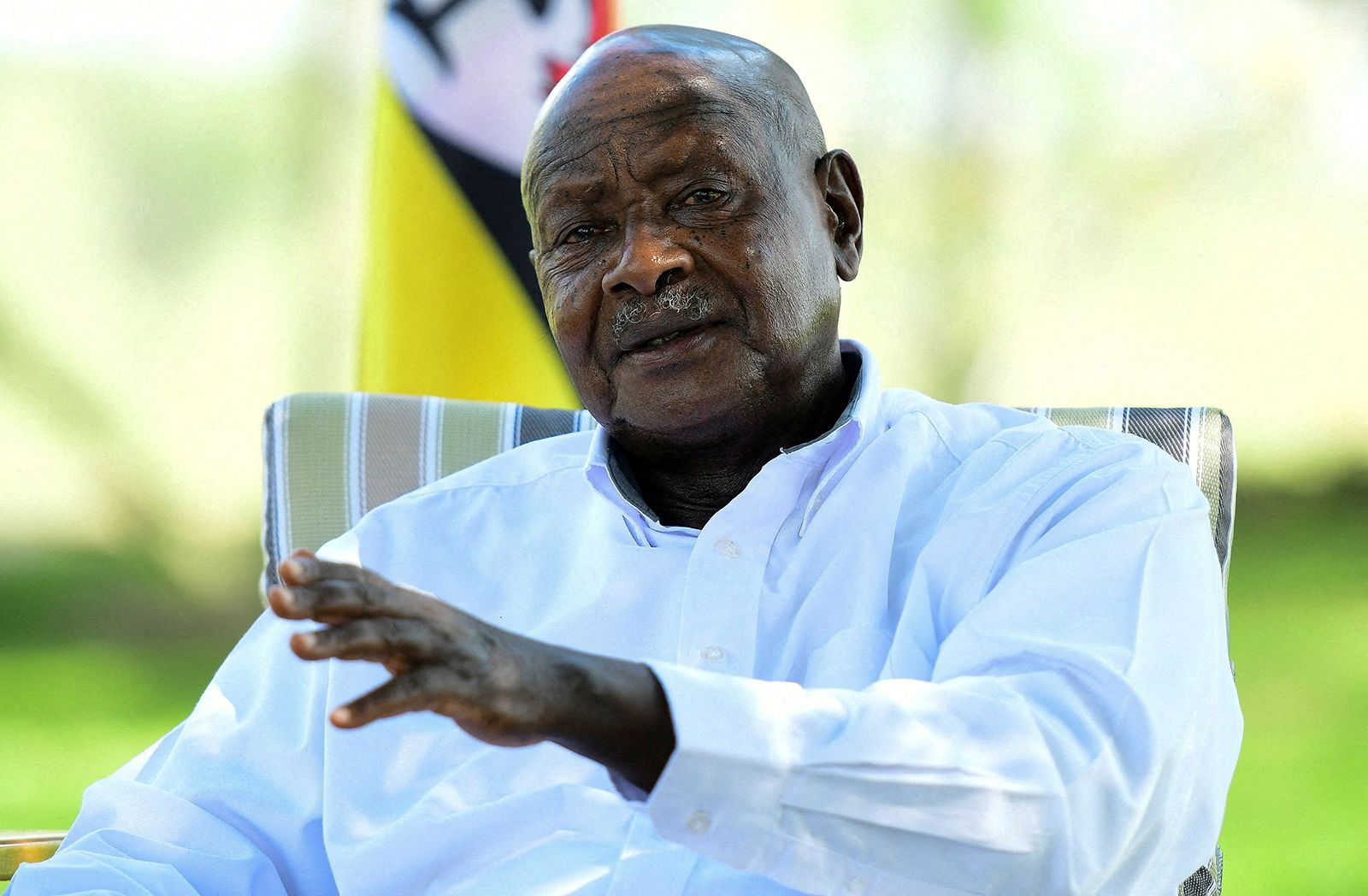
A deep look at Yoweri Museveni’s leadership since 1986, his rise to power, repeated electoral victories, controversies, and the implications of his seventh term win in 2026 — with advice for African leaders.
When Yoweri Kaguta Museveni entered Kampala on January 26, 1986, after a five-year guerrilla struggle, he was welcomed as a liberator who would end dictatorship, restore peace and rebuild war-torn Uganda. Armed with the promise that he would serve only one term to unite and stabilize the nation, Museveni’s ascent marked a bold break from the brutality of past regimes.
Four decades later, Museveni has not only surpassed the tenure of any Ugandan leader since independence, but he has also reshaped Uganda’s political system to remain in power through seven presidential terms — most recently with a contested victory in January 2026.
Museveni’s journey began long before 1986. Born in 1944 in the Mbarara region of southwestern Uganda, he pursued education in political science and economics in Tanzania, where he became active in leftist and Pan-Africanist movements. Upon returning to Uganda after Idi Amin’s fall, he played a role in transitional governments, but soon clashed with the return of Milton Obote, whom he accused of rigging the 1980 elections.
Out of this turmoil, Museveni organized the National Resistance Movement (NRM) and its armed wing, the National Resistance Army (NRA), initiating a guerrilla war that culminated in his capture of Kampala in January 1986. This victory established him as president and signaled the start of the NRM era.
In the early years of his presidency, Museveni focused on national recovery. The new government launched economic reforms, stabilized macroeconomic conditions, and addressed insurgencies across the country, including efforts against the Lord’s Resistance Army in the north. The 1995 constitution formalized his leadership with clear governance structures. In 1996, Museveni won Uganda’s first direct presidential election with a strong margin, and reelection followed in 2001. However, it was his 2005 constitutional amendment eliminating presidential term limits that fundamentally changed the political trajectory of Uganda’s leadership.
Museveni’s subsequent reelections in 2006, 2011, and 2016 were marked by increasing domination of political space, restrictions on opposition activity, and concerns over media freedom and rule of law. Critics pointed to state influence over electoral institutions, while supporters cited contributions to economic growth and stability. Throughout this period, the opposition, including figures like Kizza Besigye and later Bobi Wine, emerged as vocal critics, even as they faced arrests, court challenges, and alleged harassment by security forces.
On January 15, 2026, Uganda held its general election. Official results declared Museveni the winner with 71.65% of the vote, securing his seventh term — a remarkable extension of his presidency well beyond his original one-term promise. However, the election was deeply divisive. The campaign period saw:
A nationwide internet blackout, widely seen as an attempt to control information and limit opposition coordination. Allegations of ballot irregularities and intimidation by opposition leader Bobi Wine, who rejected the results and encouraged peaceful protest. Reports of arrests, detention of supporters, and clashes between security forces and civilians. International observers and rights groups raised concerns about the fairness of the process and the shrinking democratic space in Uganda. These dynamics have underscored broader debates about leadership longevity and democratic norms in Africa.
Over forty years, Museveni has transformed Uganda from conflict to relative stability, achieved measurable economic progress, and played a significant role in regional diplomacy. Yet his extended rule is also underscored by allegations of authoritarian practices, constitutional manipulation, and suppression of opposition voices — raising difficult questions about governance and democracy. For some Ugandans, Museveni remains a symbol of stability; for others, he represents the entrenched power structures that hinder generational change.
As Africa continues to develop politically and economically, leaders across the continent can draw valuable lessons from Uganda’s experience:
Strong institutions — including independent electoral commissions, judiciary, and free media — are essential to ensure legitimacy, accountability, and the peaceful expression of the popular will.
Leadership should reflect not only the will of the current generation but also prepare space for the next. Succession planning must be transparent, merit-based, and not rooted in familial or patronage networks.
Security and stability are important, but they must not come at the expense of civil liberties. Respecting human rights strengthens social cohesion and fosters international credibility.
Africa is a youthful continent. Empowering young voices, political participation, and leadership pathways ensures innovation, responsiveness, and national renewal.
While continuity can support long-term policy implementation, leaders should embrace change and adapt — ensuring governance systems evolve with society’s aspirations.
Yoweri Museveni’s long tenure tells a story of liberation, transformation, and controversy. As Uganda and Africa at large navigate the 21st century, the continent’s leaders must balance experience with democratic renewal — for the lasting prosperity of all citizens.
Follow African360 WhatsApp Channel for more Africa’s Histories: https://whatsapp.com/channel/0029Vb7Oc6nGk1FpdCN0xn44