Physical Address
304 North Cardinal St.
Dorchester Center, MA 02124
Physical Address
304 North Cardinal St.
Dorchester Center, MA 02124


With losses exceeding GH¢7.1 billion, Ghana’s Gold-for-Reserves programme faces urgent reform. Experts call for transparency, fiscal responsibility, and coordinated action to restore its purpose.
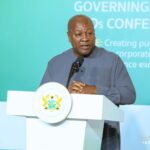
The call by the Governor of the Bank of Ghana (BoG), Dr. Johnson Pandit Asiama, for collective action to reform the Gold-for-Reserves (G4R) programme marks a critical turning point in Ghana’s economic management.
With cumulative losses now exceeding GH¢7.1 billion since 2021, the urgency for reform cannot be ignored. Yet, as the Governor rightly noted, this moment should not be about apportioning blame—it should be about constructive transformation.
The G4R programme was introduced at a time of severe economic strain. Ghana’s foreign exchange reserves were under intense pressure, and the cedi was rapidly losing value. Leveraging domestic gold production to strengthen reserves was a sound strategic idea. Ghana is one of Africa’s leading gold producers, and using that natural advantage to support economic stability is both logical and necessary.
The problem lies not in the concept, but in how it has been implemented.
Losses under the programme have risen sharply—from GH¢744 million in 2022 to GH¢1.8 billion in 2024—highlighting deep operational weaknesses. The Governor’s admission that the BoG has absorbed the costs of the trading model since inception exposes a structural flaw. A central bank should not routinely carry the financial burden of what is essentially a fiscal policy tool.
Dr. Asiama’s distinction between the Gold-for-Reserves initiative and the now-defunct Gold-for-Oil programme is important. While the latter was scrapped due to inefficiencies, G4R serves a core central banking function: reserve accumulation. This justifies its continuation—but only if meaningful and immediate reforms are undertaken.
Several priority actions stand out.
First, the Ministry of Finance (MoF) must honour its budgetary responsibilities. The $270 million allocation in the 2025 budget, which had not been disbursed as of September, is unacceptable. If G4R is a government policy, its costs must be transparently borne within the national budget, not quietly transferred to the central bank’s balance sheet.
Second, the trading model itself needs a comprehensive overhaul. The external audit expected in March must deliver clear recommendations on operational efficiency, pricing structures, and risk management. Parliament and the MoF must commit to implementing these findings without delay.
Third, transparency must be strengthened. Concerns raised by Parliament’s Public Accounts Committee reflect wider public unease over how national resources are being managed. Regular public reporting on G4R’s operations, costs, and benefits would enhance accountability and rebuild confidence.
Finally, coordination among the BoG, the Ministry of Finance, and mining sector stakeholders must improve significantly. The programme’s link to responsible mining and small-scale mining formalisation presents opportunities that can only be realised through integrated, not fragmented, policy action.
The Governor’s appeal for unity deserves support. Ghana’s economic challenges require institutions to work together toward shared national goals. However, unity must not replace accountability. Reforms must be substantive, measurable, and time-bound.
The Gold-for-Reserves programme can still play a vital role in Ghana’s economic stability—if it is restructured properly. Allowing losses to continue while institutional credibility erodes is not an option. Parliament, the Executive, and the Bank of Ghana must act decisively to ensure this strategic initiative delivers real value to the Ghanaian people.