Physical Address
304 North Cardinal St.
Dorchester Center, MA 02124
Physical Address
304 North Cardinal St.
Dorchester Center, MA 02124

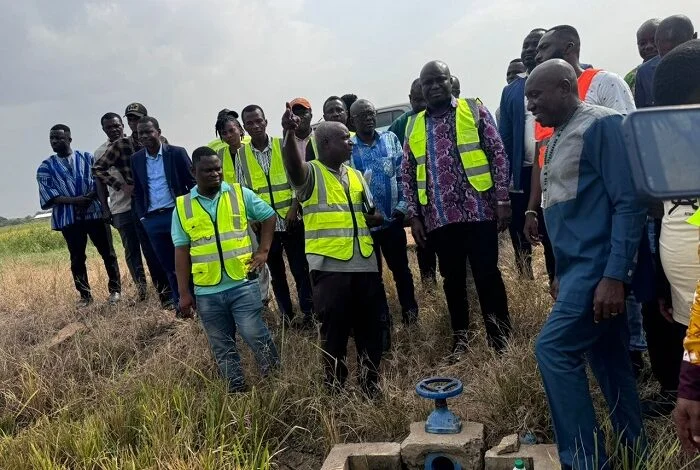
Ghana’s Minister of Food and Agriculture has assured farmers that stalled works at the Kpong Irrigation Scheme will resume within days, paving the way for year-round farming, improved rice yields, and stronger food security.
After months of uncertainty and slowed progress, hope is returning to Ghana’s largest irrigation project. The Minister of Food and Agriculture, Mr. Eric Opoku, has assured farmers and stakeholders that stalled works at the Kpong Irrigation Scheme will resume within days, following government action to fast-track outstanding payments to contractors.
The announcement, made during a working visit to the Kpong site last Thursday, signals a renewed urgency in completing a project that has the potential to reshape Ghana’s agricultural future. For farmers who depend on the scheme—and for a nation grappling with climate uncertainty and food security concerns—the news could not be more timely.
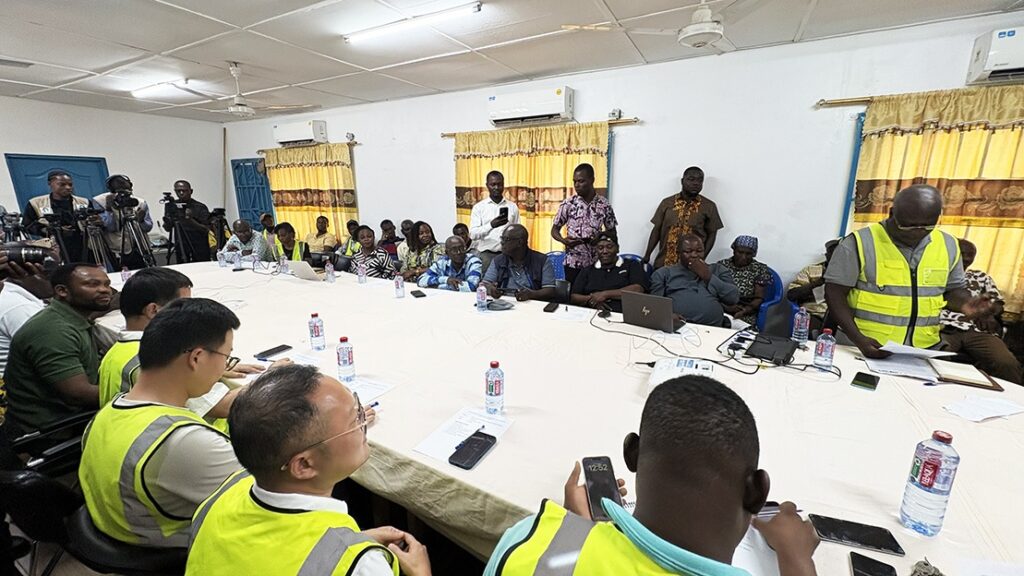
According to the Minister, payment delays had significantly affected the pace of work. During his visit, he received four outstanding payment certificates from contractors and immediately forwarded them to the Ministry of Finance for action.
“I want to give you every assurance that within the shortest possible time, payment will be effected and work will resume on site,” Mr. Opoku said, addressing farmers and project stakeholders.
His message was clear: the government is determined to unlock the full agricultural potential of the Kpong Irrigation Scheme and ensure that its 4,000 hectares are fully available for year-round production.
The Kpong Irrigation Scheme is not just another infrastructure project—it sits at the heart of Ghana’s transition toward modern, climate-resilient agriculture.
Mr. Opoku explained that the rehabilitation of Kpong fits squarely within the government’s Agriculture for Economic Transformation Agenda, implemented through the Feed Ghana Programme. At its core, the programme represents a strategic shift away from heavy dependence on rain-fed farming toward irrigation-led production.
“Irrigation is now a priority for the Ministry of Food and Agriculture. A chunk of our resources is going into irrigation development, and Kpong, being the biggest irrigation infrastructure in Ghana, must receive the attention it deserves,” the Minister said.
While favourable weather boosted harvests in 2025, he warned that climate patterns are becoming increasingly unpredictable. Droughts, irregular rainfall, and extreme weather events pose growing threats to food production.
“Irrigation is the only sustainable buffer against these uncertainties,” he stressed.
By enabling all-year farming, the Kpong Scheme will help stabilise food supply, protect farmers’ incomes, and reduce Ghana’s vulnerability to climate shocks.
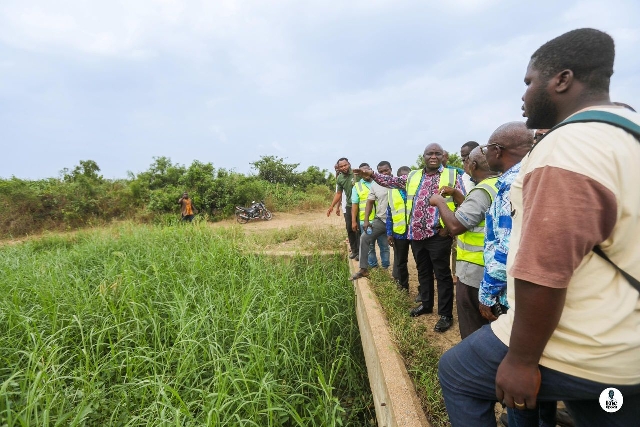
The rehabilitation of the Kpong Irrigation Scheme is part of the World Bank-funded Food Systems Resilience Programme (FSRP). According to Mr. Philip Daniel Laryea, Operations Manager of the programme, the project is now about 75 percent complete, at a cost of US$22.5 million.
When finished, the scheme will:
Beyond rice, the scheme supports banana production, aquaculture, and industrial activities, making it a major economic enclave in the region.
This is not just about farming—it is about building a resilient food system that can withstand global shocks, climate change, and market disruptions.
During the visit, Mr. Opoku also highlighted progress on the government’s Farmer Service Centre initiative, aimed at supporting smallholder farmers, who make up nearly 80 percent of Ghana’s farming population.
Under Phase One of the programme, 70 districts will benefit from fully equipped service centres offering:
“This year, we have budgetary allocation to begin implementation in the 70 selected districts,” the Minister said. “These centres will ensure farmers have unimpeded access to modern equipment, tailored inputs, and technical training.”
For many small-scale farmers, access to machinery and quality inputs remains one of the biggest barriers to productivity. The service centres are designed to bridge that gap and move Ghana’s agriculture from subsistence to enterprise.
Increased production alone does not guarantee prosperity. Mr. Opoku acknowledged that many farmers are discouraged from expanding output because of unreliable markets.
To address this, he announced that resources have been released to the National Food Buffer Stock Company to intervene, particularly in the rice market. Through partnerships with millers and aggregators, the company will procure paddy rice, mill it, and supply the buffer stock.
This approach aims to:
The Minister also pledged to provide an excavator to support operations at the Kpong Scheme and confirmed that the Kpong road network will be included in government’s plan to rehabilitate 1,000 kilometres of agricultural roads nationwide.
Improved roads are critical. Without reliable transport links, farmers struggle to move produce to markets, and the benefits of increased production are lost.
Mr. Opoku noted that his visit was not just symbolic—it was about seeing the reality on the ground.
“I wanted to verify progress personally rather than rely solely on technical reports,” he said.
This hands-on approach reflects the government’s recognition that agriculture cannot be transformed from behind a desk. Projects like Kpong succeed only when policy, funding, and field-level execution align.
For farmers who have waited through delays and uncertainty, the Minister’s assurance offers renewed confidence. The resumption of works will not only complete a long-awaited project but also mark a shift toward a more resilient agricultural system.
The Kpong Irrigation Scheme embodies a broader vision for Ghana’s future: one where food security is not hostage to rainfall, where farmers have the tools to thrive, and where agriculture becomes a pillar of economic transformation.
As climate change intensifies and global food systems face growing pressure, irrigation-led farming is no longer optional—it is essential.
With payments fast-tracked and works set to resume, Kpong stands at the edge of becoming what it was always meant to be: a lifeline for farmers, a bulwark against food insecurity, and a cornerstone of Ghana’s agricultural renaissance.
For thousands of farmers and millions of consumers, the revival of Kpong is more than infrastructure—it is hope, flowing back into the fields.
Join African360 WhatsApp Channel for more News update: https://whatsapp.com/channel/0029Vb7Oc6nGk1FpdCN0xn44