Physical Address
304 North Cardinal St.
Dorchester Center, MA 02124
Physical Address
304 North Cardinal St.
Dorchester Center, MA 02124

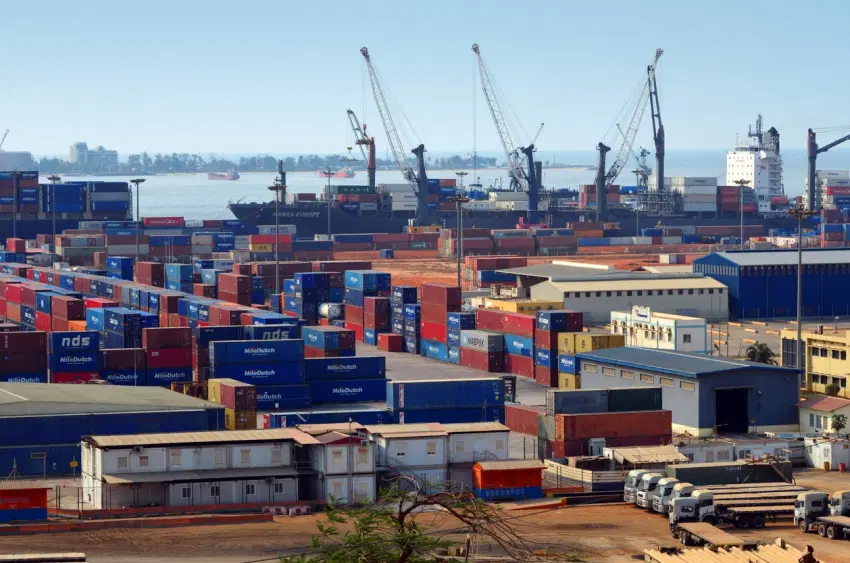
The National Shippers Association of Nigeria has rejected recent port service charge increases, warning they will raise import costs, worsen inflation, and hurt businesses. Stakeholders demand suspension.
The National Shippers Association of Nigeria (NSAN) has strongly opposed the recent increase in port service charges approved by the Nigerian Shippers’ Council (NSC), warning that the move could escalate trade costs, worsen inflation, and deepen economic pressures on businesses and consumers.
Speaking to journalists on Wednesday after a maritime stakeholders’ meeting, NSAN leaders said the upward review of port tariffs was flawed and procedurally defective. They alleged that critical stakeholders—particularly shippers and cargo owners—were excluded from the consultations required under the Nigerian Shippers’ Council Act.
According to the association, the new charges, if implemented, will raise the landing cost of imported goods, disrupt supply chains, and fuel further inflation at a time when Nigerians are already grappling with rising prices and weak purchasing power.
“The implications of this increase go beyond the ports,” NSAN said in a statement. “It will affect manufacturers, traders, transporters, and ultimately the Nigerian consumer.”
The association called for the immediate suspension of the new charges and demanded an inclusive stakeholder engagement process to develop a transparent and fair framework for tariff reviews.
“We trust that the Nigerian Shippers’ Council will act with the fairness envisioned in its enabling Act,” said Alhaji Jamilu M. Goma, Acting National President of NSAN. “Any review of port charges must be participatory, transparent, and sensitive to the economic realities of the country.”
NSAN’s Chairman of the Board of Trustees, Alhaji Ali Madugu, was more direct in his criticism. He accused shipping lines and service providers of acting unilaterally and imposing steep increases without adequate engagement.
“The decision by the shipping lines to increase tariffs by almost 60 percent was made arbitrarily,” Madugu said. “They woke up one day and raised their charges without consulting us—the cargo owners—or other relevant stakeholders in the shipping industry.”
He stressed that shippers are central players in the maritime value chain and cannot be sidelined in decisions that directly affect their costs and operations.
“We reject the recent tariff increase by service providers in the shipping industry,” he added. “It is unjust, untimely, and damaging to the economy.”
According to NSAN, port-related costs already account for a significant portion of import expenses. With exchange rate volatility, high energy prices, and elevated logistics costs, businesses are under immense pressure. Any additional burden, the association warned, will likely be passed on to consumers in the form of higher prices.
“This is how inflation spreads,” one stakeholder at the meeting observed. “Every increase at the port echoes across the entire economy.”
Reacting to the controversy, the Nigerian Shippers’ Council, through its Head of Public Relations, Rebecca Adamu, said the recent adjustments were approved strictly under the Council’s statutory mandate as the Port Economic Regulator.
She explained that the NSC is empowered by law to regulate port tariffs and ensure a balance between the interests of service providers and port users.
However, amid growing resistance from industry players, the NSC has also taken a firm stance against unilateral action by port operators.
The Council ordered all shipping companies, agents, and terminal operators at Nigerian ports to halt any tariff increases or adjustments until they have fully consulted with stakeholders.
In a statement, the NSC emphasized that all tariff reviews must follow a transparent, structured, and well-defined regulatory process.
“Notwithstanding, shipping companies, agents, and terminal operators are hereby directed to suspend any intended review of charges until they have duly consulted and engaged their stakeholders,” the Council said.
“As the Port Economic Regulator, the NSC will wield the big stick against any port service providers disrupting port operations.”
This directive appears to align, at least in part, with NSAN’s demand for suspension and broader engagement. However, industry groups insist that trust has already been eroded by the manner in which the increases were announced.
Analysts warn that higher port charges could have far-reaching consequences for Nigeria’s economy. Ports serve as gateways for raw materials, machinery, consumer goods, and food items. Any increase in port-related fees raises the base cost of imports, which then filters through manufacturing, wholesale, and retail prices.
At a time when Nigeria is battling inflation, currency depreciation, and declining consumer purchasing power, stakeholders argue that policy decisions must be carefully calibrated.
“Port charges may seem technical, but they directly affect the price of rice, cement, medicine, spare parts—everything,” said a logistics operator in Lagos. “Once costs go up at the port, no business can absorb them forever.”
Small and medium-sized enterprises, which rely heavily on imported inputs, are particularly vulnerable. Many are already operating on thin margins and could be forced to scale down or shut operations if costs rise further.
NSAN warned that uncertainty over tariffs also discourages investment and planning. Importers and manufacturers require predictable cost structures to make informed decisions.
“When charges change suddenly and without consultation, it creates instability,” the association said. “Businesses cannot plan, and investors lose confidence.”
The shippers’ body is now urging the Federal Government and the NSC to convene an urgent, inclusive stakeholders’ forum involving cargo owners, shipping lines, terminal operators, freight forwarders, and government agencies.
The goal, NSAN said, should be to agree on:
Such a framework, the association believes, will protect both service providers and port users while supporting national economic objectives.
“We are not opposed to fair and justified adjustments,” Goma clarified. “But the process must be lawful, consultative, and sensitive to the wider economy.”
As pressure mounts, the handling of the port fees dispute will test the regulatory credibility of the NSC and the government’s commitment to easing the cost of doing business.
For shippers and consumers alike, the stakes are high. In an economy already strained by inflation, every policy decision that affects prices matters—and the battle over port charges may shape the next phase of Nigeria’s trade and logistics landscape.