Physical Address
304 North Cardinal St.
Dorchester Center, MA 02124
Physical Address
304 North Cardinal St.
Dorchester Center, MA 02124

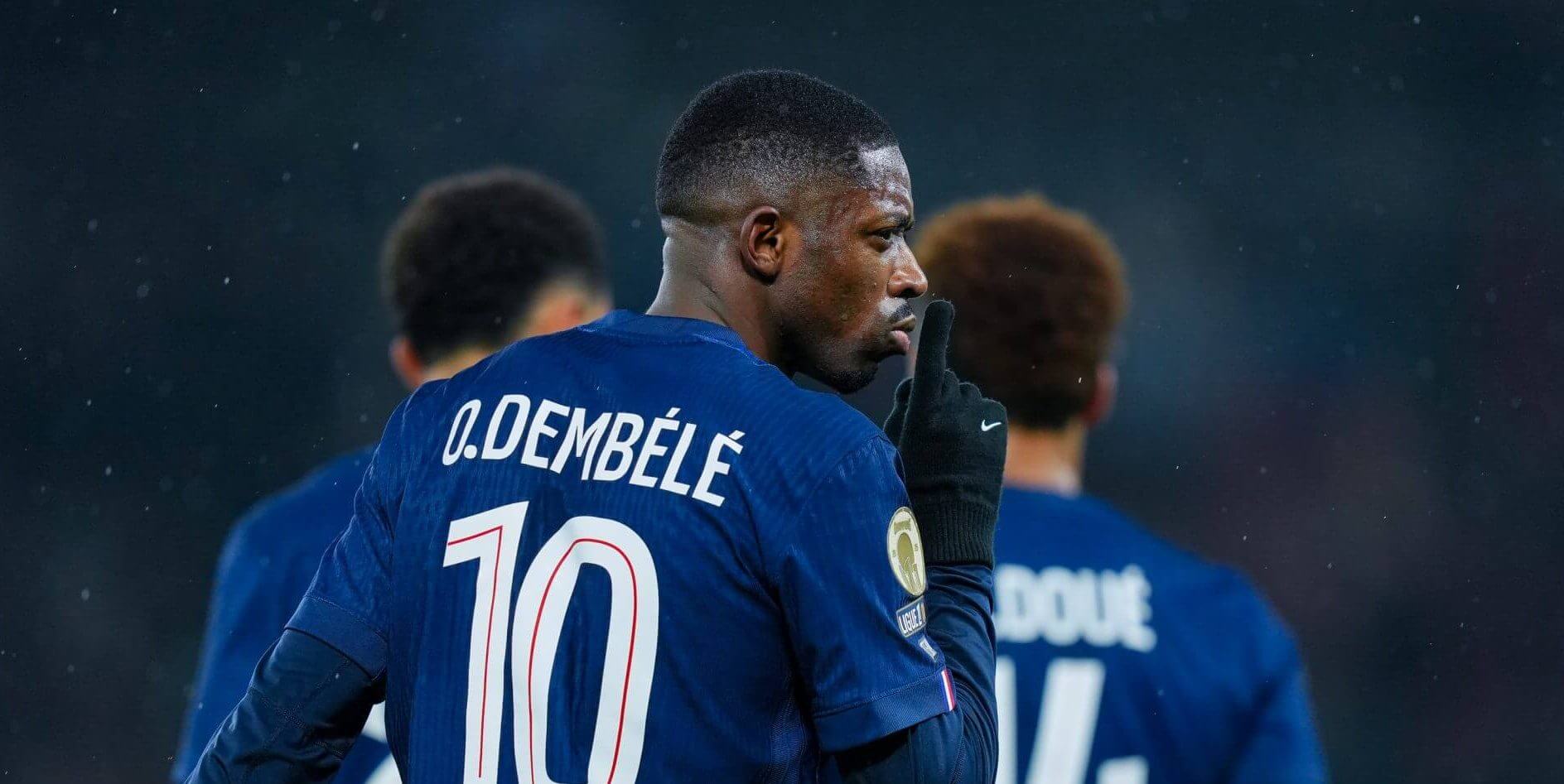
Despite dominating matches, Paris Saint-Germain are faltering in Europe and domestically. As inefficiency, injuries, and defensive errors creep in, can Luis Enrique rediscover last season’s magic?
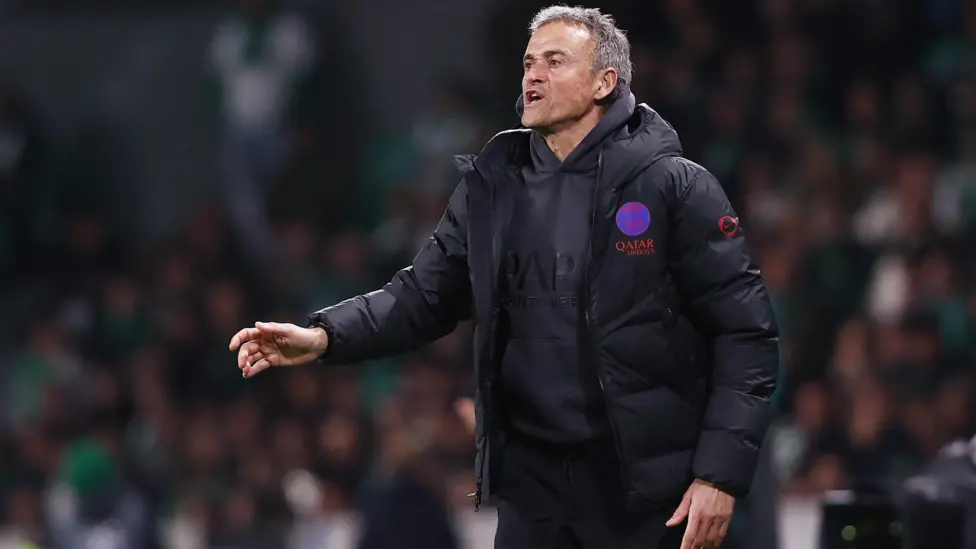
Luis Enrique is not a manager who readily admits weakness. Known for his composure and calculated messaging, the Spaniard rarely opens the door to doubt. That is why his assessment of Paris Saint-Germain’s recent Champions League defeat at Sporting Lisbon raised eyebrows.
He described the loss as PSG’s “best away performance” since his arrival in 2023.
On the surface, that sounds implausible. After all, PSG have already won at Barcelona this season and scored seven goals in Leverkusen. But when viewed through a statistical lens, his claim is not entirely unfounded. Against Sporting, PSG dominated possession, fired 28 shots, and even had three goals ruled out. By most technical measures, they controlled the contest.
Yet football is not won on spreadsheets.
PSG left Portugal with nothing, undone by two late goals from Sporting striker Luis Suárez. The result revived uncomfortable memories from last season’s rocky start in Europe, when otherwise authoritative performances were sabotaged by defensive lapses and blunt finishing.
“We deserved to win, but that’s football,” Luis Enrique said afterward.
The problem is that this explanation is becoming familiar.
Last season, PSG’s treble-winning campaign was powered by efficiency. Chances were few in tough away matches, but they were taken. Low defensive blocks were dismantled by a fluid front three led by Ousmane Dembélé operating as an energetic false nine. PSG were unpredictable, vertical, and clinical.
This season, that edge has dulled.
Instead of incisive movement and rapid transitions, PSG often circulate the ball endlessly, dominating territory without creating decisive moments. Long spells of sterile possession have become a theme, as seen in league defeats to Marseille and Monaco.
Injuries offer partial explanation. During the autumn, Dembélé, Désiré Doué, Nuno Mendes, and Achraf Hakimi were sidelined. The rhythm of the team suffered. But recent results suggest something deeper is misfiring.
The shock Coupe de France defeat to Paris FC earlier this month felt like a warning sign. A convincing win over Lille briefly suggested a revival, punctuated by a stunning Dembélé lob. Yet that spark faded quickly. PSG were wasteful in Portugal and again in a narrow 1-0 league win over Auxerre.
“We’re creating chances,” Luis Enrique admitted. “But we’re lacking confidence and accuracy in finishing.”
That lack of conviction is now PSG’s defining flaw.
For much of last season, PSG thrived without a traditional centre-forward. Dembélé’s movement drew defenders out of position, his pressing set the tone, and he delivered a career-best goal return.
This season, his absences have exposed the fragility of the system.
Gonçalo Ramos has struggled to impose himself when starting. The Portuguese striker has the tools to lead the line but often disappears, crowded out by defenders and starved of space. When he drops deep, he links play well—but goals have come more in cameo appearances than sustained runs.
Dembélé’s recent return brought immediate impact, providing the assist for Bradley Barcola’s late winner against Auxerre. Yet he is only just regaining full fitness, and PSG’s other forwards have been too inconsistent to compensate in his absence.
The result is an attack that looks dominant in theory but hesitant in practice.
Luis Enrique’s commitment to youth has been one of his most admirable traits. PSG’s academy graduates are finally being trusted, and the long-term benefits are clear. But progress is rarely linear.
Senny Mayulu has been deployed across multiple positions—centre-forward, winger, midfielder, even right-back—with mixed results. Ibrahim Mbaye, fresh from impressing with Senegal at the Africa Cup of Nations, looked off the pace when thrust straight back into the starting XI.
Warren Zaïre-Emery, still only 19, has admirably filled in for Hakimi at full-back. But the Moroccan’s attacking influence is irreplaceable. Hakimi’s imminent return from injury could transform PSG’s right flank and provide a much-needed attacking outlet.
These are not failures—they are growing pains. But at elite level, every misstep is magnified.
PSG’s issues are not confined to the final third.
In Lisbon, goalkeeper Lucas Chevalier was beaten by Suárez for Sporting’s opener, then parried a shot directly into the striker’s path for the second. Defender Illia Zabarnyi was too passive in the build-up. These individual errors have become recurring themes.
Luis Enrique has defended his new signings, warning that Paris is a brutal environment.
“At PSG, you’ll be criticised in your first season whatever you do,” he said.
He is right. The spotlight is unforgiving, and adaptation takes time. But at Champions League level, mistakes are fatal.
Some have pointed to PSG’s compressed calendar. A short summer break, a Super Cup just a month after the Club World Cup final, and a travel-heavy schedule—including a midweek trip to Kuwait—have stretched a depleted squad.
Luis Enrique dismisses fatigue.
“It’s all in the head,” he said. “When we’re winning 5-0, nobody’s tired. When we lose, everybody’s tired.”
His message is clear: the solution is psychological as much as tactical.
Before facing Newcastle, Luis Enrique urged his players to play with authority.
“We have to control matches and passages of play. We have to know the ball is ours.”
This feels eerily familiar. At this stage last year, PSG were flirting with European elimination before a dramatic turnaround sparked the greatest night in the club’s history.
The stakes are lower now, but the need is the same: rediscover identity.
PSG do not need perfection. They need clarity, conviction, and the attacking spark that once made them irresistible. With key players returning, the tools are there.
The question is whether the European champions can remember who they are before control becomes comfort—and dominance without danger becomes their new normal.
Join African360 WhatsApp Channel for more News update: https://whatsapp.com/channel/0029Vb7Oc6nGk1FpdCN0xn44