Physical Address
304 North Cardinal St.
Dorchester Center, MA 02124
Physical Address
304 North Cardinal St.
Dorchester Center, MA 02124
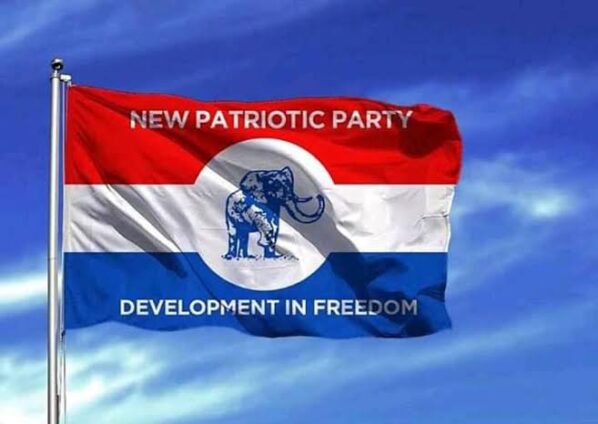
The New Patriotic Party (NPP) is calling for the establishment of a broad-based Constituent or Consultative Assembly before Ghana proceeds with proposed amendments to the 1992 Constitution.
The NPP says the proposed constitutional reforms should first go through a formal deliberative process involving political parties and a wide range of organised groups before any referendum or parliamentary amendment process is undertaken.
Speaking at a press conference on Thursday, September 17, 2026, the party’s Policy Coordination Committee Chairman, Kojo Oppong Nkrumah, urged the government to introduce a Constituent or Consultative Assembly Bill in Parliament to provide a legal foundation for the proposed body.
According to the former Information Minister, the proposed assembly should include representatives of political parties, organised labour, professional bodies, the National House of Chiefs, religious organisations, women’s groups, persons with disabilities, students and young people, the private sector, civil society organisations and Ghana’s regions.
The NPP argues that such a body would provide a platform for stakeholders to deliberate on areas of disagreement before proposals are presented to the Ghanaian electorate.
Mr Oppong Nkrumah said the party believes the scale of the proposed constitutional changes makes a broad-based deliberative process necessary.
The Constitution Review Committee, chaired by Professor H. Kwasi Prempeh, submitted a report containing 147 proposed amendments to existing constitutional provisions and 59 new provisions — 206 proposals in total. The proposals cover areas including the Executive, Parliament, the Judiciary, independent constitutional institutions and local government.
The NPP says the volume and scope of the recommendations go beyond what it considers a routine amendment exercise.
Mr Oppong Nkrumah argued that the proposed assembly would allow the different political and social constituencies to negotiate areas where there are disagreements between the government’s position and the recommendations of the independent review committee.
He said the party’s preferred sequence would be:
Constitution Review Committee → Constituent Assembly → Public Referendum
The NPP believes this approach would allow a broad consensus to emerge before proposals are put before voters.
Mr Oppong Nkrumah warned that without a broad deliberative mechanism, the NPP would not support the government’s proposed amendments.
He said the party would oppose the relevant bills in Parliament and campaign against the proposed amendments at a referendum if the process proceeds without the assembly it is demanding.
The NPP also pointed to the constitutional requirements governing amendments to entrenched provisions.
Under Article 290, a referendum on entrenched constitutional provisions requires at least 40 per cent of registered voters to participate, with at least 75 per cent of those voting supporting the proposal.
Mr Oppong Nkrumah argued that the constitutional thresholds underline the importance of securing broad public and political agreement on major constitutional changes.
The party also referenced Ghana’s constitutional history, arguing that previous constitutional transitions involved broader representative deliberation.
Mr Oppong Nkrumah cited the constitutional processes associated with 1969, 1979 and 1992, saying Ghana had previously used representative bodies to deliberate on constitutional arrangements before they received legal force.
The NPP wants a similar approach adopted for the current exercise.
The party says its proposal is not intended to prevent constitutional reform but to create a process through which the reforms can gain wider political and societal acceptance.
The NPP’s position comes after the government established an 11-member Constitution Review Implementation Committee (CRIC) in August 2026.
The committee, chaired by Presidential Legal Counsel and former Attorney-General Marietta Agyeiwaa Brew, has been tasked with examining the government’s position paper alongside the report of the Constitution Review Committee and developing a framework for implementing the proposals.
The government has defended the broader review process, noting that the Prempeh Committee itself conducted extensive consultations before submitting its report.
According to the government’s position paper, the committee engaged more than 21,500 people, held 10 thematic stakeholder engagements involving more than 500 experts and practitioners, consulted 11 eminent persons and reviewed 785 written submissions.
The government has also indicated that constitutional provisions requiring a referendum will ultimately be subjected to the constitutionally prescribed referendum process, while other amendments will follow the parliamentary procedure applicable to them.
The NPP’s proposal adds another dimension to an increasingly significant national debate over how Ghana should amend its 1992 Constitution.
Other civil society voices have also raised questions about the legal framework and roadmap for implementing the review proposals. The Centre for Public and Comparative Research, for example, has called for a clear legal framework to guide the implementation process and ensure continuity and accountability.
Meanwhile, the Institute of Economic Affairs has separately published its own position on several of the proposed reforms, demonstrating that constitutional review has generated debate beyond the two major political parties.
Ghana’s constitutional review is moving from the stage of gathering recommendations into the more politically sensitive phase of deciding which proposals should actually become law and how that should happen.
The central issue raised by the NPP is therefore not simply whether the Constitution should be changed, but how consensus should be built around changes that could reshape major institutions of the Ghanaian state.
The government, on the other hand, has already established an implementation committee and points to the extensive consultations undertaken by the Prempeh Committee.
For the process to command broad public confidence, the key questions will include whether political parties and major stakeholder groups have sufficient opportunity to examine the proposals, how disagreements between the review committee and government are resolved, and how the constitutionally required parliamentary and referendum procedures are followed.
The debate is likely to intensify as Ghana moves closer to the next stages of the constitutional reform process.