Physical Address
304 North Cardinal St.
Dorchester Center, MA 02124
Physical Address
304 North Cardinal St.
Dorchester Center, MA 02124

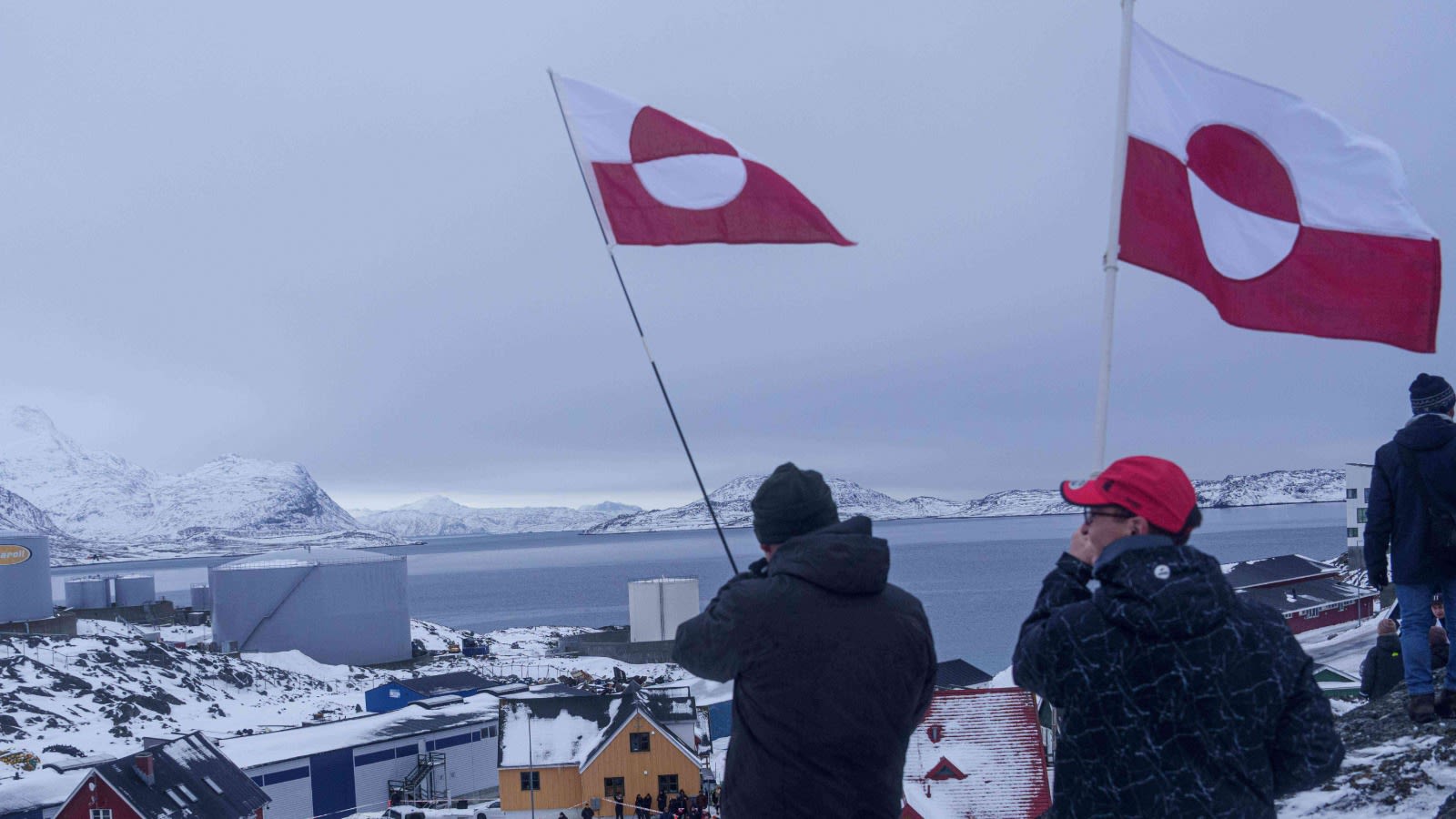
The United States, Denmark and Greenland have reached a security agreement that would significantly expand America’s military role on the Arctic island, following months of diplomatic tension over President Donald Trump’s demands for greater U.S. control.
The United States and Denmark have reached an agreement on the future security arrangements for Greenland, potentially ending months of tension triggered by President Donald Trump’s repeated calls for Washington to acquire or control the strategically important Arctic territory.
Trump announced the agreement on Friday, September 18, saying it would give the United States “permanent control” over Greenland’s security and other security-related needs.
However, the agreement does not make Greenland U.S. territory. Greenland remains an autonomous territory within the Kingdom of Denmark, while Denmark and Greenland say the arrangement recognises the sovereignty and territorial integrity of the Kingdom and the Greenlandic people’s right to self-determination.
The deal is expected to be formally signed during the United Nations General Assembly in New York next week and will still have to go through the necessary parliamentary procedures before taking effect.
Although the full text has not yet been publicly released, U.S. officials have described several important provisions.
According to a U.S. State Department official, the agreement would provide the United States with permanent access, basing and overflight rights in Greenland.
It would also prevent non-NATO countries from establishing military bases on the island and restrict sensitive investments by countries considered U.S. adversaries.
The agreement is reportedly designed to remain in force even if Greenland becomes independent from Denmark in the future.
Trump has also said the United States will begin developing plans for a larger military presence on the island.
The precise scale and location of any future expansion, however, remain unclear because the complete agreement has not yet been published.
While Washington has presented the agreement as a major strategic achievement, Copenhagen and Nuuk have been more cautious in describing its implications.
Danish Prime Minister Mette Frederiksen said the agreement would strengthen security in the Arctic and North Atlantic while recognising the sovereignty and territorial integrity of the Kingdom of Denmark.
Greenland’s Prime Minister Jens-Frederik Nielsen also welcomed the agreement, saying it would strengthen the security of Greenland, Denmark, the United States and the wider Western alliance.
Both leaders have stressed that the agreement still has to pass the required parliamentary procedures.
That means Friday’s announcement represents an agreement between the parties, but not yet a fully implemented treaty.
The agreement follows months of unusually intense tensions between Washington and Copenhagen.
Trump repeatedly argued that Greenland was strategically essential to U.S. national security because of its location in the Arctic, its proximity to North America and the presence of potential competitors such as Russia and China.
He had previously raised the possibility of the United States acquiring Greenland and, at various points, refused to rule out the use of military force.
Those comments generated strong reactions in Denmark, Greenland and other NATO countries.
The latest agreement appears to move the relationship away from the question of U.S. ownership and towards expanded American security and military access instead.
The United States already maintains a military installation in Greenland.
The Pituffik Space Base, located in the northwest of the island, supports missions including missile warning, missile defence and space surveillance.
The United States also has broad military access rights under a 1951 defence agreement with Denmark, which has provided Washington with significant freedom to maintain and operate military facilities in Greenland.
This has raised questions about what additional powers the new agreement actually provides and how significantly it changes the existing arrangement.
Washington has framed the agreement largely around preventing strategic competitors from gaining a military or economic foothold in Greenland.
U.S. officials have specifically cited Russia and China, saying the new arrangement would prevent non-NATO adversaries from establishing bases or making sensitive investments that could threaten U.S. security interests.
The Arctic has become increasingly important to major powers because of its strategic location, emerging shipping routes and access to natural resources.
Greenland’s geographic position between North America and Europe also gives it considerable military significance for monitoring activity across the North Atlantic and Arctic regions.
Security is not the only reason Greenland has attracted increasing international attention.
The island possesses significant deposits of rare earth elements and other minerals that are important to modern industries, including electronics, renewable energy and electric vehicles.
Many of these resources remain largely undeveloped.
The combination of strategic location, mineral resources and growing Arctic competition has made Greenland increasingly important in the geopolitical calculations of the United States, Europe, Russia and China.
U.S. Secretary of State Marco Rubio described the agreement as a historic achievement, saying it permanently addresses Washington’s national-security concerns regarding Greenland.
Rubio said Greenland would remain part of what he described as the strategic defence area of North America and that the arrangement would prevent adversaries from gaining a military foothold there.
Trump has similarly presented the agreement as a major success for the United States.
However, the full implications cannot be assessed until the official text is released and the parliamentary procedures in Denmark and Greenland are completed.
The Greenland agreement marks a significant shift from the confrontation that dominated U.S.-Danish relations for much of the past year.
Trump’s earlier focus was on acquiring or controlling Greenland itself. The emerging agreement instead appears to establish a framework for expanded U.S. security and military access while leaving Greenland’s formal status within the Kingdom of Denmark unchanged.
The biggest unanswered question is therefore not who owns Greenland, but how much additional military and strategic authority the United States will actually receive under the final agreement.
The absence of the full text also means some of the most consequential claims about future bases, investment restrictions and U.S. powers remain subject to further clarification.
For Denmark and Greenland, maintaining sovereignty and the Greenlandic people’s right to self-determination remains central.
For Washington, the agreement is about ensuring that the strategically located Arctic territory remains firmly within the Western defence architecture and that potential rivals do not establish a foothold there.
The next major test will come when the agreement is formally signed and its detailed provisions are made public.