Physical Address
304 North Cardinal St.
Dorchester Center, MA 02124
Physical Address
304 North Cardinal St.
Dorchester Center, MA 02124

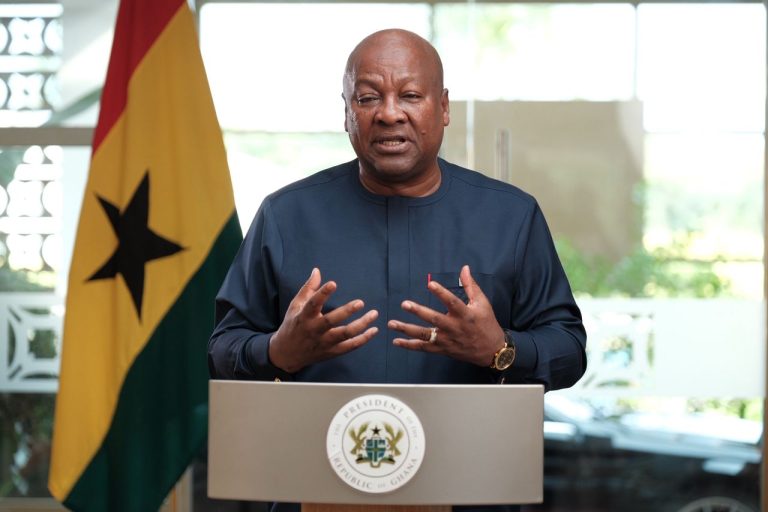
At WASSA 2026 in Accra, President John Mahama cut the sod for 2,000 housing units for the Ghana Armed Forces, announced salary increases, vehicle donations, and plans to clear gratuity arrears.
The 2026 edition of the West African Soldiers Social Activities (WASSA) has gone beyond its traditional role of promoting camaraderie among security personnel. This year’s celebration has become a powerful platform for major policy announcements and long-awaited interventions aimed at improving the welfare of the Ghana Armed Forces (GAF).
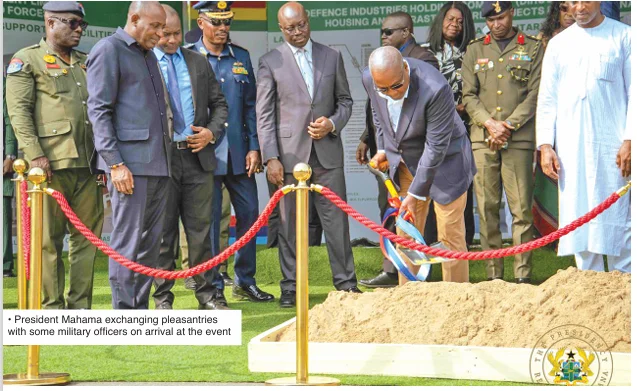
At a sod-cutting ceremony held at Burma Camp in Accra, President John Dramani Mahama officially launched the construction of 2,000 housing units for military personnel. The project represents the first phase of an ambitious 10,000-unit housing scheme to be rolled out over the next five years under a partnership between the Defence Industrial Holding Company and FT Global.
The ceremony formed part of activities marking WASSA 2026, during which the President also commissioned a fleet of vehicles for the Armed Forces, underscoring a renewed commitment to security sector reform and welfare.
Housing remains one of the most persistent challenges facing Ghana’s security agencies. According to President Mahama, the sector faces an annual housing deficit of about 14,000 units, leaving thousands of personnel and their families in difficult living conditions.
For decades, many service members have had to rely on overcrowded barracks, rented accommodation, or informal housing arrangements. This reality not only affects morale but also places financial strain on officers whose salaries must stretch to cover rent and utilities.
The President described the new project, together with the ongoing Barracks Regeneration Programme, as clear evidence of the government’s determination to improve the living standards of military families.
“These initiatives demonstrate our commitment to ensuring that the men and women who risk their lives for this nation are housed in dignity,” he stated.
By situating the first phase at Burma Camp, the heart of Ghana’s military infrastructure, the government has signaled that this programme is not symbolic—it is practical, urgent, and strategic.
In what many personnel will regard as one of the most significant announcements of the event, President Mahama revealed that salaries for members of the Ghana Armed Forces will increase from March 2026.
The adjustment will be based on a newly approved pay structure, with arrears for January and February 2026 to be paid in March. This decision comes at a time when the cost of living continues to rise, placing additional pressure on public sector workers, including those in uniform.
For many service members, this pay rise represents more than financial relief—it is recognition of their sacrifice and dedication.
In a profession defined by discipline, risk, and national service, improved remuneration is a powerful morale booster. It reinforces the message that the state values its protectors.
As part of a broader GH¢1 billion retooling initiative for the security agencies, President Mahama presented a fleet of pick-up trucks, buses, and sports utility vehicles to the Ghana Armed Forces.
These vehicles are expected to enhance operational efficiency, mobility, and response capacity across the country. In modern security operations, logistics and transport are as critical as manpower. Well-equipped forces are better positioned to respond to emergencies, maintain peace, and safeguard national stability.
The gesture also reflects a shift toward modernizing Ghana’s security infrastructure, aligning it with contemporary operational demands.
Beyond housing and salaries, the President turned attention to a sensitive and long-standing issue: retirement benefits.
He explained that although C.I. 129, introduced in 2020, extended the length of service and increased gratuity payments, no financial allocation was made at the time to implement the policy. This oversight resulted in a staggering GH¢1 billion debt owed to about 3,000 personnel across various ranks.
To address the matter, President Mahama announced that he had directed the Minister of Finance to release funds to clear gratuity arrears for the 1995 and 1996 year groups. He further assured that steps were underway to resolve outstanding arrears under C.I. 219.
For retired and retiring personnel, this intervention restores hope and dignity. Gratuity is not a luxury—it is a right earned through years of service, often under demanding and dangerous conditions.
Traditionally, WASSA serves as an annual social event that brings together members of the security services to promote unity, interaction, and camaraderie. But WASSA 2026 has demonstrated that the platform can also drive policy momentum.
By aligning major welfare reforms with the event, the government has transformed it into a space where appreciation for service is matched with tangible action.
The combined impact of housing development, salary increases, retooling, and gratuity payments marks a turning point in how Ghana approaches the welfare of its Armed Forces.
These interventions recognize a simple truth: national security is only as strong as the people who uphold it. When service personnel are housed decently, paid fairly, equipped adequately, and retired with dignity, the entire nation benefits.
WASSA 2026 may be remembered not just as a celebration of unity among soldiers, but as the moment when welfare reform for the Ghana Armed Forces moved from promise to reality.
Join African360 WhatsApp Channel for more News update: https://whatsapp.com/channel/0029Vb7Oc6nGk1FpdCN0xn44