Physical Address
304 North Cardinal St.
Dorchester Center, MA 02124
Physical Address
304 North Cardinal St.
Dorchester Center, MA 02124

African360 News | Business and Finance
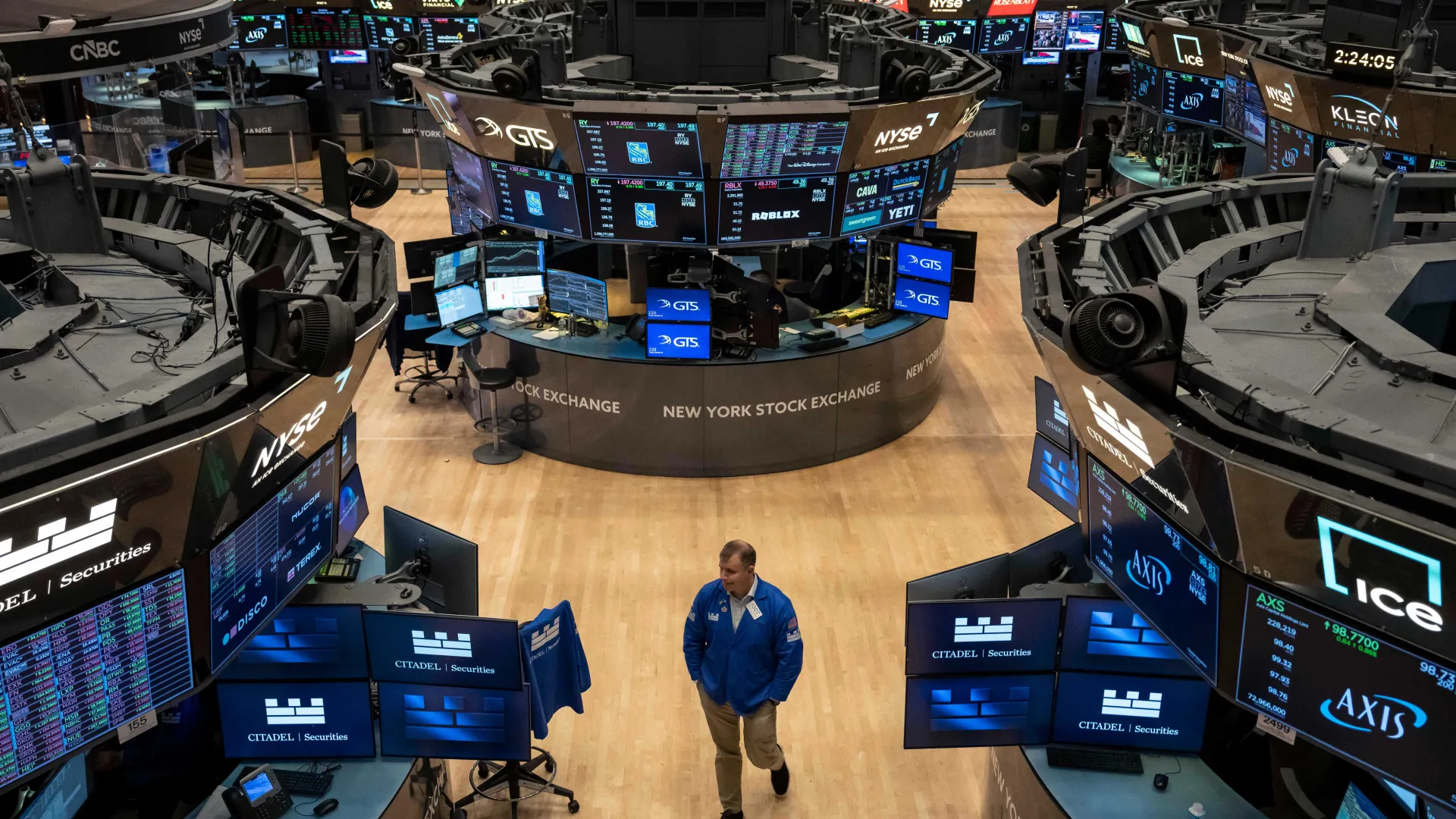
US technology stocks suffered a sharp sell-off on Thursday as investors grew increasingly concerned about whether the enormous sums being invested in artificial intelligence (AI) will generate sufficient returns.
The technology-heavy Nasdaq Composite plunged 2.6%, its steepest daily decline since June 5, while the broader S&P 500 fell 1.2%, recording its biggest drop since July 29. The downturn followed fresh earnings reports that reignited concerns about the cost of building AI infrastructure and the financial returns expected from the technology.
The sell-off affected several of the biggest companies driving the AI boom, with six of the so-called “Magnificent Seven” technology stocks ending the session lower. Apple was the exception, gaining 1.2%.
Meta Platforms, the parent company of Facebook and Instagram, was among the hardest-hit major technology firms. Its shares fell nearly 7% after it raised the lower end of its projected capital expenditure for 2026, with spending now expected to reach between $135 billion and $145 billion.
The company’s latest results also intensified investor concerns about the financial pressure associated with its expanding AI commitments.
Amazon shares dropped 4.6%, while Nvidia, a leading supplier of AI chips, declined 4.4%. Tesla and Alphabet each lost 3.1%, while Microsoft fell 2.2%.
The losses extended beyond the largest technology companies. Chipmakers Intel and Advanced Micro Devices (AMD) both declined by approximately 8%, while Broadcom fell 4.3%.
Following Thursday’s losses, the Nasdaq Composite stood about 5.8% below its record high reached on October 6.
Higher oil prices added to the uncertain market environment, as geopolitical tensions in the Middle East raised concerns about global energy supplies and inflation.
Brent crude futures climbed approximately 4% on Thursday, moving above $114 per barrel in subsequent trading. Higher energy costs can increase operating expenses for businesses and put pressure on consumers, while potentially complicating central banks’ efforts to manage inflation.
The combination of geopolitical uncertainty, higher energy prices and concerns about technology valuations contributed to a more cautious mood among investors.
Asian stock markets also experienced significant swings on Friday, as investors assessed the technology sell-off and its potential implications for global markets.
Japan’s Nikkei 225 fell more than 2% during morning trading before recovering much of its losses to close 0.3% lower.
South Korea’s KOSPI dropped as much as 3.5% before ending the session 0.3% higher. Hong Kong’s Hang Seng Index gained 0.7% after earlier slipping by around 0.5%.
The mixed closing performances highlighted the volatility in global markets, with investors responding to changing sentiment around technology stocks, economic conditions and geopolitical developments.
The latest market decline has renewed debate over whether the surge in AI-related investment could create a speculative bubble similar to the one that preceded the dot-com crash of the early 2000s.
Major technology companies are committing enormous resources to data centres, advanced processors and other infrastructure needed to develop and operate AI systems. Supporters argue that these investments could transform industries, improve productivity and create substantial long-term revenue opportunities.
However, some analysts question whether companies will generate enough income from AI services to justify the scale of their spending. The concern is particularly significant when investment costs rise faster than cash generation or when expected returns take longer than anticipated to materialise.
Jay Goldberg, a senior analyst at Seaport Research Partners, told Al Jazeera that the market swings appeared to reflect investor sentiment more than a fundamental change in business conditions.
He acknowledged that concerns about AI investments were legitimate but argued that the extent of the market movement was being driven largely by uncertainty and investor anxiety.
According to Gartner, worldwide spending on AI is forecast to reach $2.7 trillion in 2026, reflecting the scale of investment being directed towards the technology.
The central question for investors is whether this spending will translate into sustainable profits and long-term economic value.
For now, Thursday’s sell-off illustrates the growing pressure on technology companies to demonstrate that their massive AI investments can deliver financial returns that justify their cost. It does not, on its own, establish that an AI market bubble is about to burst.
Source: Reuters, Associated Press and Gartner.
African360 WhatsApp Channel for more News update: https://whatsapp.com/channel/0029Vb7Oc6nGk1FpdCN0xn44