Physical Address
304 North Cardinal St.
Dorchester Center, MA 02124
Physical Address
304 North Cardinal St.
Dorchester Center, MA 02124

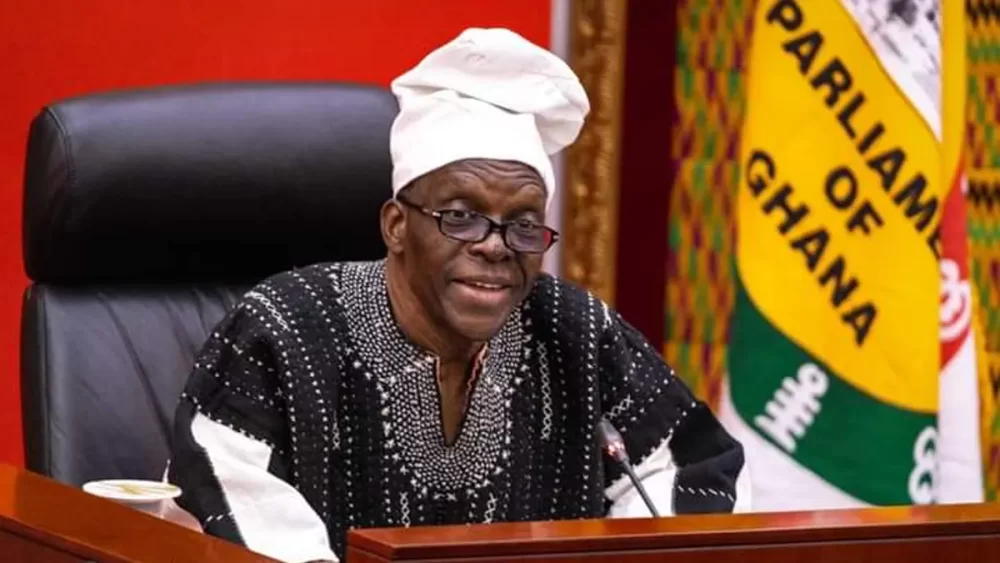
Speaker of Parliament Alban Sumana Kingsford Bagbin has urged political parties to stop rewarding or promoting politicians whose public prominence is built around abusive and inflammatory language, warning that such practices could weaken Ghana’s democratic culture.
Mr Bagbin said political parties and their leaders had a responsibility to encourage a political environment where strong disagreements and criticism could take place without personal insults, abuse or language intended to demean opponents.
Speaking during Parliament’s emergency sitting on Tuesday, September 29, 2026, he said rewarding politicians for inflammatory remarks could encourage others to adopt similar behaviour.
“Don’t reward only bitter tongues. That is what I have observed up to date and that encourages others to copy that because that is how they will be recognised,” he said.
The Speaker said robust political disagreement was an essential part of democracy, but argued that political criticism should not be confused with personal attacks.
“Robust disagreement is legitimate. Strong criticism is legitimate. Holding government, the opposition, the Speaker, leadership and every institution of state to account is legitimate,” he said.
“But insult is not argument. Abuse is not scrutiny.”
Mr Bagbin said Ghana’s democratic system was sustained not only by the Constitution, elections, Parliament and the courts, but also by discipline, decency and respect for opposing views.
He cautioned that the growing use of abusive, threatening and inflammatory language, particularly on social media and other digital platforms, could deepen divisions within society.
The Speaker acknowledged that social media had expanded Ghana’s democratic space by giving citizens more opportunities to participate in national discussions, criticise public officials, expose wrongdoing and demand accountability.
However, he said freedom of expression should not become a justification for degrading public discourse.
According to him, political dissent, satire, disagreement and vigorous debate are legitimate features of a democratic society, but they should be expressed without turning political opponents into enemies.
He also called on politicians, journalists, broadcasters, bloggers, influencers and other content creators to exercise responsibility in their public engagements.
Mr Bagbin said political leaders could not reasonably ask citizens to moderate their language if politicians themselves failed to demonstrate restraint.
The Speaker’s comments also addressed remarks made by the Member of Parliament for Walewale, Dr Abdul Kabiru Tia Mahama, concerning the manner in which Parliament had been recalled.
Dr Tia Mahama had described the Speaker’s decision to recall Parliament as “rude” during a media engagement.
Mr Bagbin said MPs had the right to question parliamentary decisions and challenge procedures they believed were wrong, but such criticism should not diminish the dignity of Parliament or the office of the Speaker.
He subsequently asked Dr Tia Mahama to withdraw the remark and apologise to Parliament and the Speaker.
The Walewale MP complied and withdrew the expression unreservedly. He explained that, in hindsight, the word should not have been used.
Mr Bagbin said the incident demonstrated the importance of separating legitimate criticism from language that could undermine public institutions.
He stressed that MPs remain representatives of Parliament even when speaking outside the Chamber, particularly when commenting on parliamentary proceedings and decisions.
“Members may criticise decisions or question reasonings. Members may challenge the procedure where you believe it is wrong. But members must do without diminishing the dignity of the institutions through which our democracy functions,” he said.
The Speaker warned that Ghana should not take its democratic stability for granted.
He said the cumulative effect of inflammatory political language could deepen social divisions and create tensions that might become increasingly difficult to reverse.
“Our democracy is too valuable to be endangered by a political culture in which insults replace arguments, abuse replaces persuasion and opponents are treated as enemies,” he said.
Mr Bagbin’s comments came during an emergency sitting of Parliament that was convened amid controversy surrounding recent narcotics seizures linked to Ghana.
The Minority had sought a parliamentary inquiry into the seizures, but the Speaker ruled the proposed motion inadmissible, citing overlap with ongoing investigations and court proceedings.
Minority Leader Alexander Afenyo-Markin subsequently criticised the ruling, arguing that the Speaker had wrongly restricted Parliament’s oversight role. The Minority has said it intends to pursue the matter through other legitimate avenues.
Against this backdrop, Bagbin’s call for political actors to moderate their language adds to a broader national conversation about political communication, freedom of expression and the standards expected from public officials.
The Speaker’s central message was that political disagreement should remain possible—and even vigorous—without allowing insults and personal attacks to replace substantive debate.
African360 WhatsApp Channel for more News update: https://whatsapp.com/channel/0029Vb7Oc6nGk1FpdCN0xn44