Physical Address
304 North Cardinal St.
Dorchester Center, MA 02124
Physical Address
304 North Cardinal St.
Dorchester Center, MA 02124
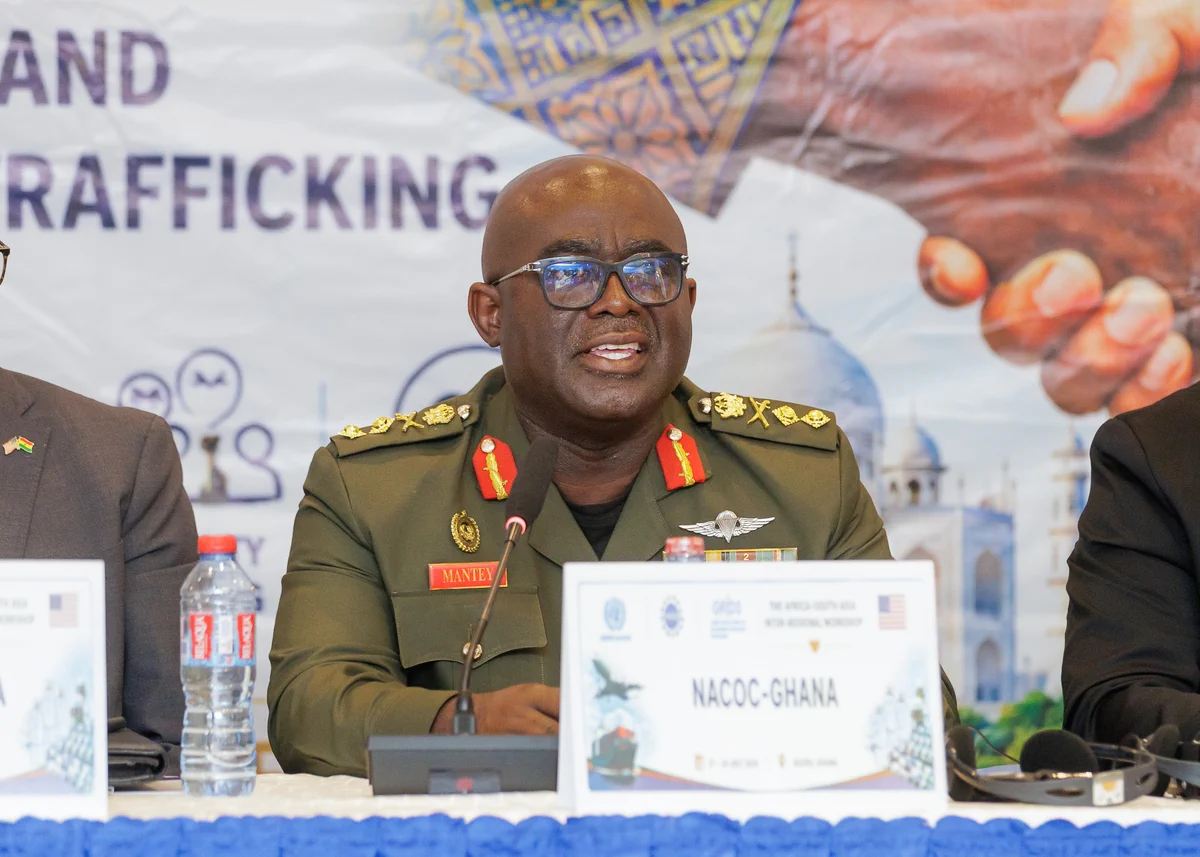
Ghana’s Narcotics Control Commission (NACOC) has arrested three suspects following the seizure of nearly 3.9 tonnes of cocaine in France, in a case that authorities say may be connected to the international network of fugitive Dutch drug trafficker Jos Leijdekkers, popularly known as “Bolle Jos.”
The cocaine was discovered by French customs at the port of Dunkirk in a container carrying plastic waste that had arrived from Ghana.
French authorities estimate the shipment’s street value at approximately €225 million (about US$261 million).
NACOC announced the arrests on Monday, September 14, saying the three suspects were allegedly involved in representing or facilitating the activities of Leijdekkers in Ghana.
The suspects are currently assisting investigators as authorities work to establish their alleged roles in the international trafficking operation.
French customs officials seized the shipment on September 10 after authorities intercepted the container at Dunkirk.
Reports indicate that the cocaine was concealed inside a shipment of plastic waste.
Part of the consignment was reportedly destined for Antwerp, Belgium, one of Europe’s major ports and an important gateway for international cargo.
French authorities have launched an investigation into the criminal network believed to be behind the shipment.
Reports indicate that investigators are examining possible offences including organised narcotics trafficking and participation in a criminal association.
The scale of the seizure immediately attracted international attention.
Nearly four tonnes of cocaine represents an enormous quantity of narcotics, with an estimated street value exceeding a quarter of a billion US dollars.
The case has taken another major turn with the reported connection to Jos Leijdekkers, a Dutch fugitive known as “Bolle Jos.”
NACOC says the three suspects arrested in Ghana are alleged to have represented or facilitated Leijdekkers’ activities in the country.
International reporting has previously identified Leijdekkers as a major figure in organised drug trafficking and one of Europe’s most wanted fugitives.
Some reports say he is believed to be hiding in West Africa, although his precise whereabouts remain a matter of investigation and reporting.
The alleged connection means the Ghana arrests could become part of a much broader international investigation involving authorities in Ghana, France, Belgium and the Netherlands.
It is important to stress that the allegations against the suspects have not been proven in court.
NACOC has strongly rejected the idea that Ghana should become a safe haven or operational base for international drug trafficking organisations.
The Commission said it would continue working with both domestic and international law enforcement agencies to disrupt the people, finances and infrastructure supporting the illegal drug trade.
NACOC also emphasised that the rights and legal protections of everyone under investigation would be respected.
The arrests represent an important development because authorities are not only investigating the physical movement of the cocaine but are also looking at the people allegedly connected to the wider network.
The seizure has triggered calls in Ghana for a more comprehensive investigation into how such a huge shipment could have originated from the country.
Madina MP and member of Parliament’s Foreign Affairs Committee Francis-Xavier Kojo Sosu has called for a thorough investigation, warning that Ghana’s international reputation could be damaged by the activities of individuals involved in international drug trafficking.
Sosu said Ghana’s reputation as a country committed to democratic governance and international cooperation should not be undermined by individuals seeking to profit illegally.
He urged authorities to establish the circumstances surrounding the shipment and identify anyone in Ghana who may have been involved.
The MP said anyone found culpable should face the full force of the law, regardless of their position or connections.
The controversy has also moved into Ghana’s Parliament.
The Minority has called for a parliamentary investigation into a number of major drug seizures that it says have been linked to Ghana.
The Caucus has raised questions about investigations into previous cases and wants key security and port authorities to account for measures being taken to prevent Ghanaian ports, airports and territorial waters from being exploited by international drug networks.
Among the institutions it wants questioned are NACOC, the Ghana Ports and Harbours Authority, Ghana Immigration Service and the Bureau of National Investigation.
The political debate is therefore shifting from the latest seizure to a much bigger question:
How are international drug organisations able to use Ghana-linked supply chains to move such large quantities of narcotics?
The latest seizure has also triggered warnings that repeated international drug cases could harm Ghana’s reputation.
Ranking Member on Parliament’s Defence and Interior Committee Rev. John Ntim Fordjour has argued that a pattern of major drug seizures linked to Ghana is creating serious concerns about the country’s image.
He has questioned why some major international drug cases have not resulted in high-profile prosecutions of the people allegedly financing or organising the shipments.
His comments have added pressure on Ghanaian authorities to demonstrate that the country is not merely intercepting shipments after they leave its borders, but is also dismantling the networks responsible for organising them.
The case also highlights a broader challenge facing West Africa.
The region’s location between South America and Europe has made it attractive to international trafficking organisations seeking routes into European markets.
Ghana’s ports and international connections make effective screening, intelligence sharing and cooperation with foreign law enforcement agencies particularly important.
The Dunkirk seizure shows how international investigations can uncover shipments only after they have travelled thousands of kilometres.
That makes intelligence and prevention at the point of origin critical.
The biggest question following the NACOC arrests is not simply who packed the cocaine into the container.
It is who financed the shipment, who organised it, who facilitated its movement and who was supposed to receive it in Europe?
Those are the questions that could determine whether this case becomes another headline about a huge cocaine seizure — or a genuine breakthrough against an international trafficking network.
The reported connection to Jos Leijdekkers makes the investigation even more significant.
If investigators can establish the identities of the financiers, facilitators and other key players allegedly connected to the shipment, Ghanaian and international authorities could potentially disrupt a much wider network.
But that will require cooperation across borders.
France has the seized cocaine.
Ghana has arrested three suspects.
Belgium is relevant because part of the shipment was reportedly destined for Antwerp.
And Dutch authorities have a longstanding interest in the activities of Leijdekkers.
The case therefore extends far beyond Ghana.
Several questions remain unanswered:
Those answers could be far more important than the cocaine seizure itself.
For Ghana, the stakes are also high.
The country has every interest in demonstrating that its ports and territory are not being used as convenient corridors for international drug cartels.
The €225 million cocaine seizure may have happened in France, but the investigation in Ghana could determine how much of the network is ultimately exposed.