Physical Address
304 North Cardinal St.
Dorchester Center, MA 02124
Physical Address
304 North Cardinal St.
Dorchester Center, MA 02124

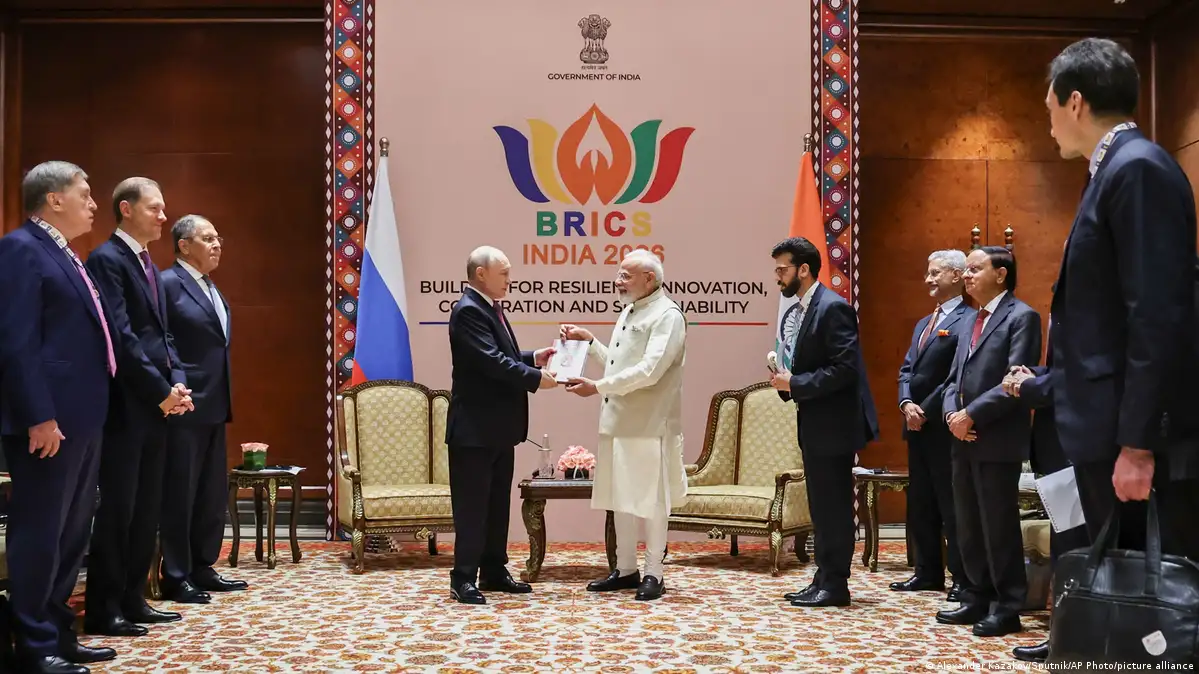
India has brought some of the world’s most influential and divided powers around the same table, as BRICS members push for a greater role in shaping the future of the global economy and international politics.
Indian Prime Minister Narendra Modi used the BRICS summit in New Delhi to argue that member states should increasingly become “rule-shapers” rather than “rule-takers” in a changing international system.
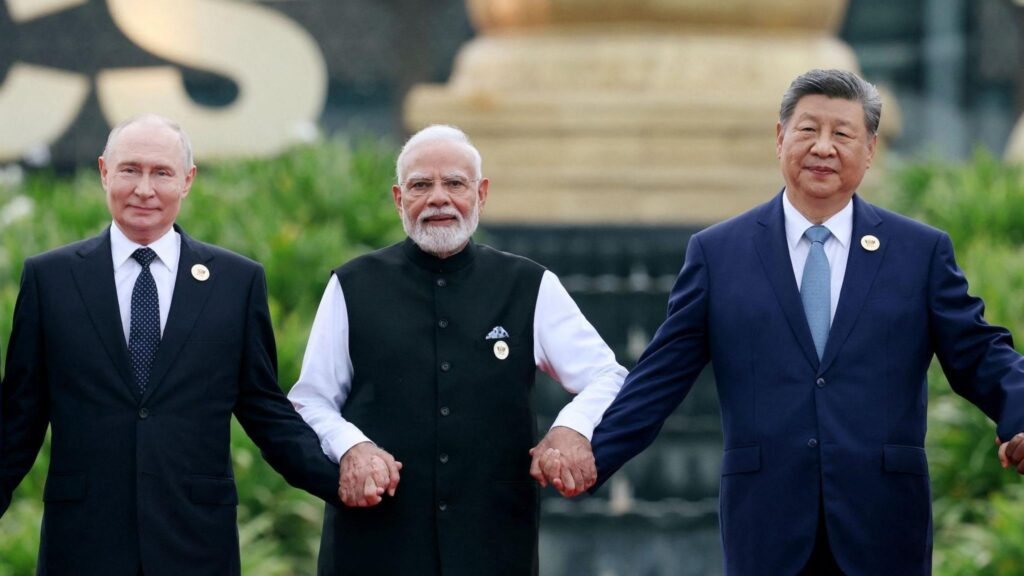
Around the table were Chinese President Xi Jinping, Russian President Vladimir Putin, Iranian President Masoud Pezeshkian, South African President Cyril Ramaphosa and Abu Dhabi Crown Prince Sheikh Khaled bin Mohamed bin Zayed Al Nahyan.
The gathering was significant because these countries are far from natural allies.
Some have long-standing strategic disagreements, while others have experienced serious military confrontation.
India and China, for example, remain cautious following their deadly 2020 border clash.
Iran and the United Arab Emirates have also found themselves on opposing sides of the wider Middle East conflict.
Yet they were all in Delhi — a demonstration of India’s growing diplomatic importance and the ability of BRICS to bring competing powers into the same room.
The bigger challenge, however, is whether BRICS can turn that diplomatic gathering into a coherent alternative to the existing global order.
BRICS has increasingly become a platform for countries seeking greater influence in a global system historically dominated by Western institutions.
China, Russia and Iran are among the members most interested in reducing Western economic and political dominance.
But India has resisted describing BRICS as an anti-Western alliance.
Modi stressed that the grouping is “not against anyone”, reflecting Delhi’s broader foreign-policy strategy of maintaining relationships with countries that often disagree with one another.
For India, BRICS is therefore less about creating an anti-American bloc and more about increasing strategic independence.
That balancing act was evident throughout the summit.
The members managed to produce a joint declaration despite significant disagreements, but the compromises also revealed the limits of the organisation.
Earlier meetings between BRICS ministers had failed to produce joint statements because of divisions among members.
The New Delhi Declaration eventually secured consensus.
But much of that agreement was achieved by carefully avoiding the issues on which members are most deeply divided.
On the Middle East conflict, the declaration called for maximum restraint and condemned attacks on civilian infrastructure and peaceful nuclear facilities without assigning responsibility.
It reaffirmed support for a two-state solution and opposed forced displacement of Palestinians, while framing its position around established United Nations resolutions.
Notably, the declaration did not mention Russia’s war in Ukraine — a significant departure from some previous BRICS statements.
The approach demonstrated the central challenge facing the organisation.
BRICS wants to speak with a stronger collective voice, but its members do not necessarily agree on what that voice should say.
Economic issues provided another area of concern.
The declaration criticised what it described as rising tariffs and condemned unilateral sanctions, but stopped short of directly naming the United States.
That was a carefully calculated choice.
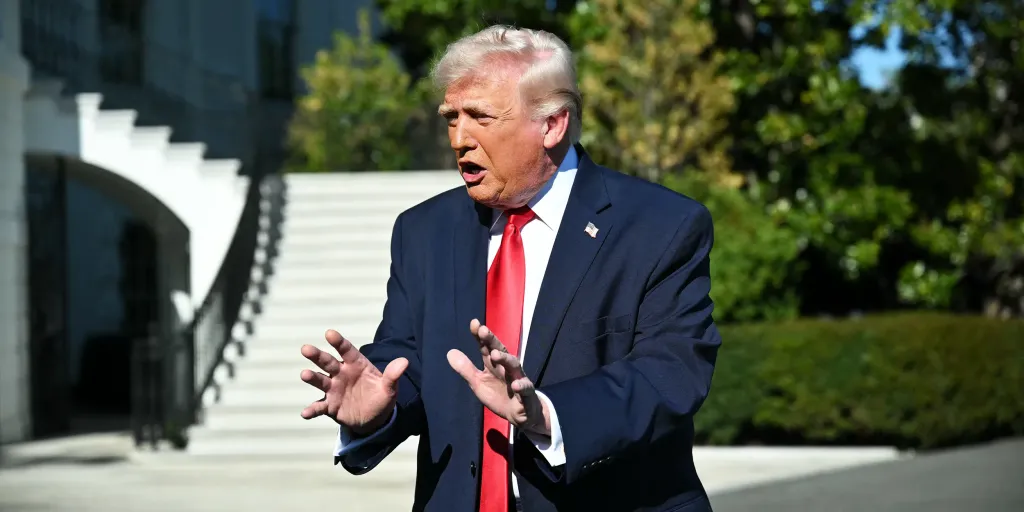
US President Donald Trump has previously criticised BRICS initiatives and warned against moves that could challenge the dollar’s global position.
For several BRICS economies, an open confrontation with Washington would carry significant economic consequences.
India, in particular, has strong reasons to avoid turning BRICS into an explicitly anti-US organisation.
The result is a delicate balancing act: members want greater economic independence while still maintaining important commercial relationships with Western economies.
The summit also created opportunities for high-level diplomatic meetings that would have been difficult to imagine only months earlier.
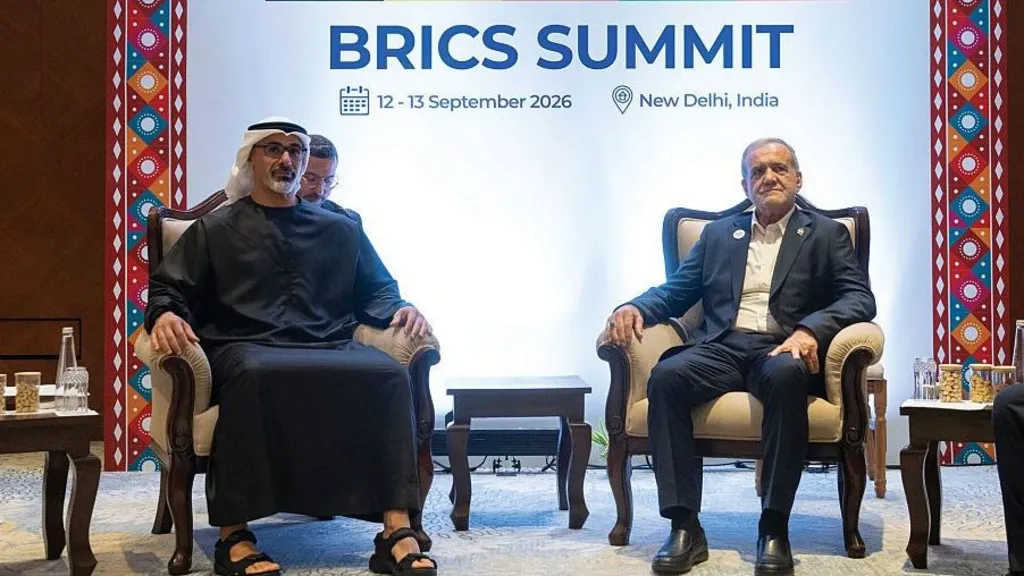
Iranian President Masoud Pezeshkian held talks with Abu Dhabi Crown Prince Sheikh Khaled bin Mohamed bin Zayed Al Nahyan.
The meeting was particularly significant given the tensions between Iran and Gulf states amid the wider regional conflict.
For Tehran, the summit offered an opportunity to demonstrate that it still has diplomatic and economic partners despite pressure from the United States and Israel.
Pezeshkian also used the gathering to push for deeper economic cooperation with other BRICS members, including India, Malaysia and Ethiopia.
For Iran, stronger relationships with emerging economies could provide important alternatives as it attempts to withstand sanctions and economic pressure.
Another major moment came with Chinese President Xi Jinping’s return to India.
It was Xi’s first visit to Delhi in seven years.
Relations between China and India have been heavily influenced by their border dispute, while a major trade imbalance continues to complicate their economic relationship.
The meeting between Xi and Modi was therefore closely watched.
The two leaders agreed to strengthen business ties and transport connections while working to address trade barriers, according to official readouts.
However, expectations remain cautious.
The relationship has improved in recent years, but deep strategic mistrust has not disappeared.
For India, cooperation with China could bring economic benefits while also creating difficult security and geopolitical calculations.
This may be the biggest question emerging from the summit.
BRICS members clearly believe that the global system is changing.
The rise of China, India’s growing economic influence, Russia’s confrontation with the West, the increasing importance of the Gulf states and the growing role of emerging economies are all challenging the traditional balance of power.
But recognising that change is easier than agreeing on what comes next.
Should BRICS create stronger financial institutions?
Should members reduce their dependence on the US dollar?
Can they develop alternative cross-border payment systems?
Should the group become a more coordinated geopolitical force?
Or should it remain a flexible platform where countries with different interests cooperate when their priorities overlap?
The New Delhi summit provided few definitive answers.
For Africa, the evolution of BRICS is becoming increasingly important.
South Africa is already a member, while Egypt, Ethiopia and other emerging economies have expanded the group’s reach across the continent and developing world.
A stronger BRICS could potentially create new opportunities for African countries in areas such as trade, infrastructure, investment, technology, energy and alternative financial arrangements.
But African governments will also need to avoid simply replacing one form of dependency with another.
The most valuable opportunity may be greater choice.
If emerging economies can build stronger trade and investment relationships among themselves, African countries could have more options when negotiating with traditional Western partners, China, India, Gulf states and other major economies.
For countries such as Ghana, the question should not simply be whether to align with BRICS or the West.
It should be how to use a more competitive global environment to secure better trade, investment and development outcomes.
The New Delhi summit revealed both the strength and weakness of BRICS.
Its strength is simple: countries with enormous populations, economies, natural resources and geopolitical influence are willing to meet and discuss a different future.
The fact that India could bring China, Russia, Iran, South Africa and Gulf leadership together at a moment of intense global tension is itself significant.
But BRICS’ weakness is equally obvious.
Its members do not share the same political systems, security interests or foreign-policy objectives.
India does not want BRICS to become an anti-Western alliance.
China wants greater global influence.
Russia wants to challenge Western pressure.
Iran needs economic and diplomatic alternatives.
Gulf states want strategic flexibility while maintaining relationships with both Western and Eastern powers.
African members want development, investment and a stronger voice in global institutions.
Those interests overlap — but they are not identical.
That means the future of BRICS is unlikely to be determined by dramatic declarations alone.
Its real influence will depend on whether its members can translate meetings into trade agreements, investment, financial cooperation, infrastructure projects and practical institutions.
The New Delhi summit proved that BRICS can create a room where rivals sit together.
The harder challenge is turning that room into a force capable of reshaping the world outside it.
And as the global balance of power continues to shift, Africa will be watching closely.