Physical Address
304 North Cardinal St.
Dorchester Center, MA 02124
Physical Address
304 North Cardinal St.
Dorchester Center, MA 02124
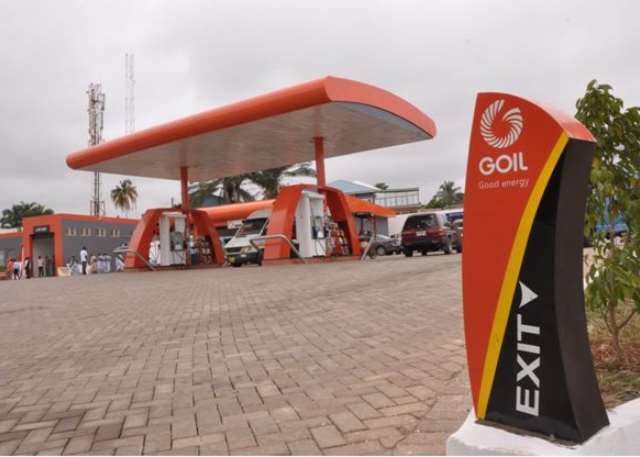
GOIL PLC recorded marginal profit growth in 2025 despite falling revenue, as rising assets, higher liabilities, and tight liquidity shape its outlook.
State-owned oil marketing firm Ghana Oil Company Limited (GOIL PLC) has delivered a financial performance in 2025 that reflects resilience under pressure, even as it highlights growing structural and liquidity challenges. According to the company’s unaudited financial statements for the year ended December 31, 2025, GOIL managed to maintain profitability despite a notable contraction in revenue.
Group profit after tax edged up slightly to GH¢85.9 million, compared with GH¢84.7 million in 2024. While the increase is modest, it underscores the company’s ability to defend its bottom line in a difficult operating environment marked by volatile fuel prices, currency pressures, and tighter financing conditions.
GOIL’s top line told a less encouraging story. Total Group revenue fell by approximately 12 per cent to GH¢17.1 billion, down from the previous year. The decline reflects softer sales values, which may be linked to price movements in petroleum products rather than a collapse in volumes, given the company’s extensive nationwide retail network.
Despite the drop in revenue, GOIL succeeded in holding profits steady, suggesting tighter cost controls and operational efficiency. For analysts, this points to a company prioritising margin protection at a time when market conditions are less favourable.
Earnings per share for shareholders remained virtually unchanged at GH¢0.215, reinforcing the picture of stability rather than growth from an investor perspective.
One of the most striking elements of GOIL’s 2025 financials is the expansion of its asset base. Total assets rose by more than GH¢419 million to GH¢5.23 billion, reflecting aggressive investment and balance-sheet growth.
A key contributor to this increase was capital expenditure on fixed assets, which amounted to GH¢234.8 million during the year. These acquisitions signal GOIL’s continued push to expand and modernise its infrastructure, potentially strengthening its long-term competitive position in Ghana’s downstream petroleum sector.
Such asset growth suggests management is betting on scale, logistics capacity, and strategic investments to sustain relevance and profitability over the long term.
However, the expansion in assets has been accompanied by a sharp rise in liabilities, particularly short-term obligations. Group accounts payable surged to GH¢3.4 billion, up from GH¢2.63 billion in 2024, pointing to increased reliance on supplier and creditor financing.
Although short-term loans declined significantly—from GH¢623.3 million to GH¢274.3 million—they still represent a sizeable burden. The structure of GOIL’s liabilities suggests that while bank borrowings have eased, trade credit and other payables have taken on a larger role in funding operations.
This shift may provide flexibility in the short term but also increases exposure to creditor pressure if cash flows tighten further.
Perhaps the most concerning aspect of GOIL’s financial position lies in its liquidity. The Group ended the year with net cash and cash equivalents of just GH¢1.69 million, a strikingly low figure for a company of its size.
This thin cash position stands in sharp contrast to a bank overdraft balance of GH¢320.68 million, underscoring the tightness of liquidity and the company’s dependence on short-term financing facilities to support day-to-day operations.
The cash flow statement suggests that while GOIL remains profitable on paper, converting earnings into free cash remains a challenge—an issue that could limit flexibility in the event of market shocks.
The financial report also highlights GOIL’s strategic investment in African Bitumen Terminal Limited (ABTL), a joint venture in which the company holds a 60 per cent stake. ABTL was established in partnership with Societe Multinationale De Bitumes of Côte d’Ivoire and is accounted for using the equity method.
GOIL’s total investment in ABTL, including equity and shareholder loans, stands at approximately GH¢264.3 million. This investment reflects a deliberate move to diversify into bitumen storage and handling, potentially opening new revenue streams linked to road construction and infrastructure development across the region.
While the long-term benefits could be significant, such investments also tie up capital at a time when liquidity is already constrained.
In a statement included in the financial report, management assured stakeholders that the accounts present a fair and accurate picture, noting that the statements do not contain misleading information or omit material facts to the best of their knowledge.
Overall, GOIL’s 2025 performance presents a nuanced picture. Profitability has been preserved despite falling revenue, and the company is clearly investing for the future through asset expansion and strategic partnerships. At the same time, rising liabilities and limited cash buffers underline the need for careful financial management in the year ahead.
As Ghana’s energy market continues to evolve, GOIL’s ability to balance growth ambitions with liquidity discipline will likely determine whether this period of heavy investment translates into sustainable long-term value.
Join African360 WhatsApp Channel for more News update: https://whatsapp.com/channel/0029Vb7Oc6nGk1FpdCN0xn44