Physical Address
304 North Cardinal St.
Dorchester Center, MA 02124
Physical Address
304 North Cardinal St.
Dorchester Center, MA 02124

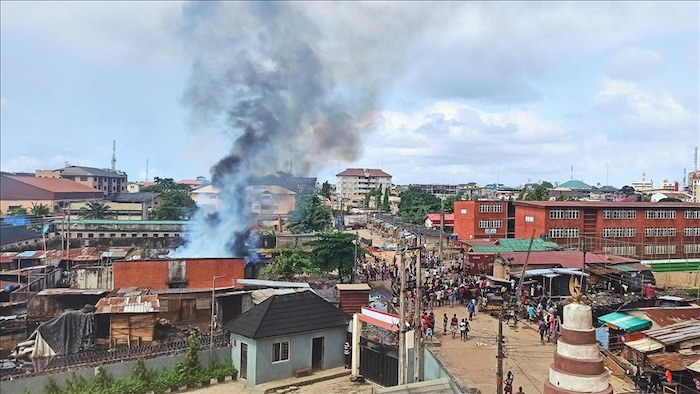
Heavy gunfire and explosions erupted near Niamey’s international airport in Niger, triggering fear, flight diversions, and fresh security concerns under military rule.
Residents in Niger’s capital were jolted awake in the early hours of Thursday as sustained gunfire and loud explosions echoed across neighbourhoods near the Diori Hamani International Airport on the outskirts of Niamey. What began shortly after midnight quickly spiralled into two hours of fear and confusion, with eyewitnesses describing scenes that felt closer to a battlefield than a residential area.
Videos circulating online showed what appeared to be air defence systems engaging unidentified projectiles in the sky. The flashes and booming sounds were visible and audible from several kilometres away. For many residents, it was a first encounter with such intensity.
“We didn’t sleep at all,” one woman living near the airport told reporters. “Our room and the whole house was shaking from the gunshots and explosions.” Another resident said she had never before heard gunfire in her life. “We were so scared,” she said, capturing the shock felt by many in the community.
The blasts occurred close to the airport, which houses an air force base and lies about 10 kilometres from the presidential palace. According to local accounts cited by news agencies, calm eventually returned after roughly two hours. An official later said the situation was “under control,” but offered no explanation about what had triggered the incident or whether anyone had been injured.
As of now, there has been no formal statement from Niger’s military authorities, leaving the public and observers to piece together events through scattered reports. Some unconfirmed accounts suggest that unknown assailants threw explosive devices toward the airport area before exchanging fire with security forces. Others claim that shots were fired from outside the airport, possibly targeting aircraft.
Flight data points to real disruption. According to tracking services, several flights bound for Niamey were diverted. By morning, heavy security was deployed around the airport, reinforcing the sense that authorities were taking no chances.
The timing and location of the incident have fueled speculation. Niger is under military rule following a coup in 2023 that brought General Abdourahamane Tiani to power. Since then, the country has navigated diplomatic isolation, economic pressure, and rising security threats. Like its neighbours Mali and Burkina Faso, Niger is locked in a long and brutal struggle against jihadist groups operating across the Sahel.
Yet the airport incident may also be linked to another sensitive issue: uranium.
Niger is one of the world’s major producers of uranium, a resource central to global nuclear energy markets. A large shipment destined for export has reportedly been stuck at the airport due to unresolved legal and diplomatic tensions with France following the military government’s decision to nationalise uranium mines. A foreign affairs ministry official, quoted by Anadolu news agency, said authorities were trying to determine whether the gunfire was connected to that shipment.
If true, this would add a geopolitical dimension to the mystery. Uranium is not merely a commodity in Niger; it is a strategic asset tied to international relations, national revenue, and sovereignty. Any threat around its storage or export could carry implications far beyond the airport perimeter.
The lack of clarity has not stopped political reactions. Early Thursday morning, supporters of the military government took to the streets of Niamey to demonstrate solidarity with the authorities. Their presence signalled both loyalty to the regime and anxiety about stability. In a nation where coups, insurgent attacks, and foreign pressure have become intertwined, public displays of support often double as assertions of resilience.
For ordinary citizens, however, the night’s events were less about geopolitics and more about survival. Gunfire in the dark, explosions rattling walls, and rumours spreading through neighbourhoods revive memories of conflict in a region already scarred by years of violence. Even if the authorities insist that everything is under control, the psychological impact lingers.
The airport episode underscores a wider truth about Niger’s current reality. Under military rule, the state projects strength and sovereignty, yet it remains vulnerable to both internal and external shocks. The country faces insurgent threats in its border regions, economic strain from sanctions and strained partnerships, and now fresh uncertainty around critical infrastructure in its capital.
Airports are symbols of connection to the outside world. When gunfire erupts around them, it sends a message that insecurity has reached the gates of international engagement. For travellers, investors, and diplomats, such images carry weight. For residents, they mark a worrying shift in the geography of fear, from distant borderlands to the heart of the capital.
Whether the incident was the result of an attack, an attempted sabotage, or a misinterpreted security response, it exposes how fragile calm can be. In regions grappling with conflict, even a few minutes of unexplained violence can unsettle trust in stability.
The silence from authorities may be tactical, but it also feeds uncertainty. In the absence of clear information, rumours flourish. Was it a jihadist probe? A criminal act? A dispute linked to uranium exports? Or an internal security mishap? Each possibility carries different implications for Niger’s future.
What is certain is that Thursday’s events have added another layer of tension to an already complex national landscape. Niger’s leadership insists it is charting a path of independence and strength. Yet nights like this remind citizens that sovereignty without security is fragile.
As the dust settles, the people of Niamey will be watching closely. They want reassurance that the explosions they heard will not become routine. They want to believe that “under control” means more than a temporary lull. And they want clarity about what truly happened near their airport in the dark hours of the night.
In a country standing at the crossroads of conflict, resources, and political transformation, even a few hours of gunfire can echo far beyond the city’s edge.
Join African360 WhatsApp Channel for more News update: https://whatsapp.com/channel/0029Vb7Oc6nGk1FpdCN0xn44