Physical Address
304 North Cardinal St.
Dorchester Center, MA 02124
Physical Address
304 North Cardinal St.
Dorchester Center, MA 02124

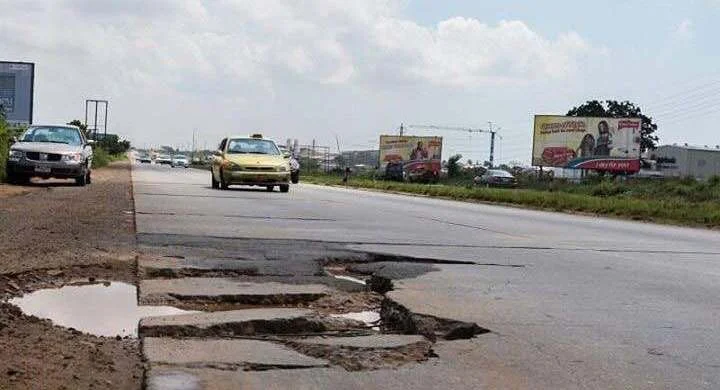
Ghana’s Tema Motorway expansion is 35% complete, transforming the historic highway into a 10-lane modern corridor. Despite construction challenges, the project promises safer roads, reduced congestion, and stronger trade links.
More than half a century after it first opened, Ghana’s iconic Tema Motorway is being reimagined for a modern era. Reconstruction works on the long-awaited expansion project are now about 35 percent complete, offering a glimpse into what will become one of the most advanced urban highways in the country.
The transformation, however, has not come without discomfort. Temporary funding challenges slowed progress earlier in the project, and commuters continue to grapple with diversions, dust, and delays. Yet beneath the inconvenience lies a bold national investment designed to redefine mobility, trade, and safety along Ghana’s most important transport corridor.
The new motorway is being rebuilt as a three-part highway system. The existing dual carriageway will be retained and upgraded with a concrete surface for high-speed through traffic. On either side, two new three-lane urban highways will be constructed in asphalt to serve local movements and relieve pressure on the expressway.
In total, the project will deliver a 10-lane divided highway, blending fully access-controlled express lanes with partially controlled urban lanes for community use. It is a design that reflects Accra’s transformation from a modest coastal capital into a sprawling metropolitan hub.
Beyond widening the road, the project represents a complete overhaul of the corridor’s infrastructure. It includes:
At Tetteh Quarshie, one of Accra’s busiest nodes, widening works are well underway. Substructure works have been completed, and beam fabrication is ongoing as the interchange is expanded to three lanes on each side.
Valued at over $350 million, the project is being executed under a Public-Private Partnership (PPP) by Maripoma Limited, a wholly Ghanaian-owned firm. It is expected to be completed within 36 months.
According to project engineer Mr. Kwabena Bempong, the works form part of the broader Accra–Tema Motorway and Extensions Project, which spans 27.7 kilometres and is divided into three sections. The first and most critical phase—currently under construction—runs from Tema to Tetteh Quarshie, covering 19.5 kilometres.
One of the most technically demanding aspects, he explained, has been extensive earthworks. Large volumes of unsuitable soil have been excavated and replaced to ensure the road’s long-term durability.
As construction progresses, traffic will eventually be diverted onto the completed urban highways, allowing the main concrete expressway to be built with fewer disruptions. This phased approach is expected to improve traffic management over time.
For now, however, daily life along the corridor remains challenging.
Commuters and residents describe a landscape shaped by dust, detours, and congestion. Sandra Asantewa Saim, who travels the route regularly, says navigating the motorway has become increasingly difficult, especially during peak hours when traffic bottlenecks stretch for kilometres.
For commercial drivers, the impact is financial. Thomas Aikens, a trotro driver on the Accra–Tema route, explains that what was once a predictable journey now depends entirely on timing. Delays trigger passenger complaints and raise fuel costs, cutting into already thin margins.
Residents are also feeling the strain. Regina Aggrey, who lives near the corridor, says dust from construction, noise from heavy machinery, and restricted access to homes and shops have become part of daily life. Some roadside traders, she notes, have seen a drop in patronage as customers avoid the area.
Yet even amid the frustration, there is a shared sense of anticipation.
For drivers like Kwame Atta Mensah, a haulage operator transporting goods between Tema Port and Accra, the expansion is nothing short of essential.
“This road is the main gateway to the port,” he says. “The traffic is frustrating now, but when the expansion is completed, it will reduce congestion, improve safety, and help us move goods faster.”
He is right. The Tema Motorway is not just a commuter route—it is a national economic artery.
Opened in November 1965 under President Dr. Kwame Nkrumah, the 19-kilometre highway was designed for a far smaller population and a fraction of today’s vehicle numbers. It primarily served to connect Accra to Tema’s industrial and port enclave.
Over time, rapid population growth in the Greater Accra Region and a surge in vehicle ownership transformed the motorway into a heavily used urban road. Communities such as Spintex, Lashibi, Ashaiman, and Community 18 expanded along its edges, turning what was once a limited-access highway into a congested metropolitan artery.
The original four-lane configuration became inadequate. Heavy-duty trucks accelerated wear on the surface, while poor lighting, informal access points, and encroachment on the right-of-way worsened safety risks.
For more than a decade, successive governments acknowledged the need for expansion. But funding constraints delayed action. A major PPP collapsed in 2020, and subsequent attempts relied on phased financing rather than full upfront investment.
The result has been years of congestion on a road that carries the heartbeat of Ghana’s trade.
In response to public concerns, Mr. Bempong says mitigation measures are being implemented, including:
He cautions motorists against illegal U-turns and warns them not to pay money to individuals posing as road workers. The motorway, he stresses, remains an active construction zone, and drivers must observe road signs and reduce speed.
The inconvenience is real, but so is the opportunity.
The Tema Motorway expansion is more than a construction project—it is a statement about Ghana’s future. It reflects the challenge of aligning infrastructure with rapid urban growth, rising vehicle numbers, and the demands of a modern economy.
When complete, the corridor will:
For now, Accra endures the discomfort of transition. But in that dust and delay lies the foundation of a transport system built for the next generation.
The motorway that once symbolized Ghana’s industrial ambition in 1965 is being reborn—wider, safer, and ready for a nation on the move.
Join African360 WhatsApp Channel for more News update: https://whatsapp.com/channel/0029Vb7Oc6nGk1FpdCN0xn44