Physical Address
304 North Cardinal St.
Dorchester Center, MA 02124
Physical Address
304 North Cardinal St.
Dorchester Center, MA 02124
Ghana’s Ministry of Education has clarified concerns over the AI education tool pilot, assuring that Ga and Adangbe will be included in future phases. Here’s what the clarification means for inclusive digital learning.
The Ministry of Education (MoE) has stepped in to calm growing concerns surrounding the rollout of an Artificial Intelligence (AI)-powered education tool, following public reactions over the apparent exclusion of Ga and Adangbe from the pilot phase of the project.
In recent days, members of the Ga and Adangbe communities expressed disappointment and unease after learning that their languages were not among the four selected for a proposed collaboration between the Ministry and Google. For many, the omission raised fears of marginalisation in yet another national initiative, especially one that promises to shape the future of learning in Ghana.
But according to the Ministry, those fears are misplaced.
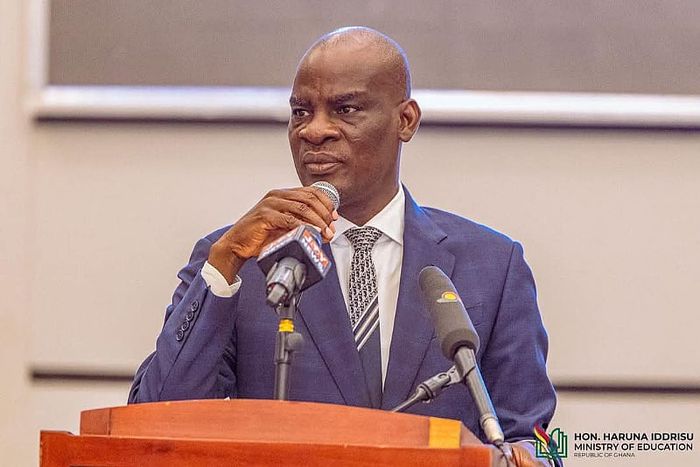
In a statement issued in Accra and signed by the Press Secretary to the Minister for Education, Mr. Hashmin Mohammed, the MoE clarified that the announcement made by the Minister for Education, Mr. Haruna Iddrisu, referred strictly to a pilot phase of the programme. The purpose of the pilot, the statement explained, is to test the effectiveness, adaptability, and educational impact of the AI tool before it is expanded nationwide.
“The programme is designed to be inclusive,” the statement emphasized. It further assured that once the pilot phase is completed and evaluated, the AI-powered education platform will be expanded to cover all 12 approved Ghanaian languages, including Ga and Adangbe.
This clarification is significant. In a country as linguistically and culturally diverse as Ghana, language is more than a means of communication—it is a marker of identity, heritage, and belonging. Any national policy or programme that appears to sideline a group, even unintentionally, risks undermining public trust.
The Ministry’s explanation highlights an important reality about large-scale technological initiatives: pilots are, by design, limited. They exist to test systems in controlled environments before full deployment. In this case, the AI tool aims to enhance learning outcomes by delivering content in Ghanaian languages, making education more accessible and relatable to young learners.
By starting with only four languages, the Ministry hopes to assess how well the technology performs, how students and teachers interact with it, and what adjustments are needed before scaling up.
However, in a society where historical experiences have sometimes left communities feeling overlooked, even temporary exclusions can trigger deep concerns. The reaction from the Ga and Adangbe community reflects a broader sensitivity about representation in national development efforts.
The MoE’s response, therefore, is not just a technical clarification—it is a reassurance of belonging.
The Ministry was careful to state that the pilot phase “was not meant to marginalise or permanently exclude any linguistic or cultural group.” Instead, it forms part of a gradual process toward a nationwide system that reflects Ghana’s full linguistic landscape.
By reaffirming its commitment to Ghana’s linguistic diversity, the MoE positioned the AI initiative as part of a broader vision for equitable education. The statement stressed that the Ministry remains dedicated to ensuring fair representation and access in all national education programmes, especially those that leverage emerging technologies.
This is an important framing. Technology has the power either to bridge gaps or to widen them. An AI tool that only serves a few linguistic groups could deepen inequalities. But one that eventually speaks to every child in their own language has the potential to transform classrooms across the country.
The controversy surrounding the pilot phase underscores a key lesson for policymakers: innovation must travel with communication.
As Ghana embraces digital tools in education, healthcare, and governance, the success of these initiatives will depend not only on their technical strength but also on public confidence. Communities must feel seen, heard, and valued in the process.
The Ministry’s assurance that Ga and Adangbe will be included in subsequent phases is a step toward restoring that confidence. Equally important is the pledge to continue engaging stakeholders, traditional authorities, and communities nationwide as the programme evolves.
This collaborative approach could help ensure that the final, nationwide version of the AI education tool is not only technologically sound but also socially grounded.
Ghana’s move toward an AI-driven education system reflects a bold ambition: to harness technology in ways that improve learning outcomes and prepare students for a rapidly changing world. If implemented thoughtfully, such a system could:
But these benefits will only be fully realized if inclusivity remains at the core of the project.
The Ministry’s clarification offers reassurance that this is indeed the goal. By confirming that all 12 approved Ghanaian languages will eventually be covered, the MoE has sent a message that no community will be left behind in Ghana’s digital education journey.
The challenge now is to translate that promise into action—and to ensure that as the pilot progresses, communication remains open, transparent, and respectful of the diverse voices that make up the nation.
Join African360 WhatsApp Channel for more Education update: https://whatsapp.com/channel/0029Vb7Oc6nGk1FpdCN0xn44