Physical Address
304 North Cardinal St.
Dorchester Center, MA 02124
Physical Address
304 North Cardinal St.
Dorchester Center, MA 02124

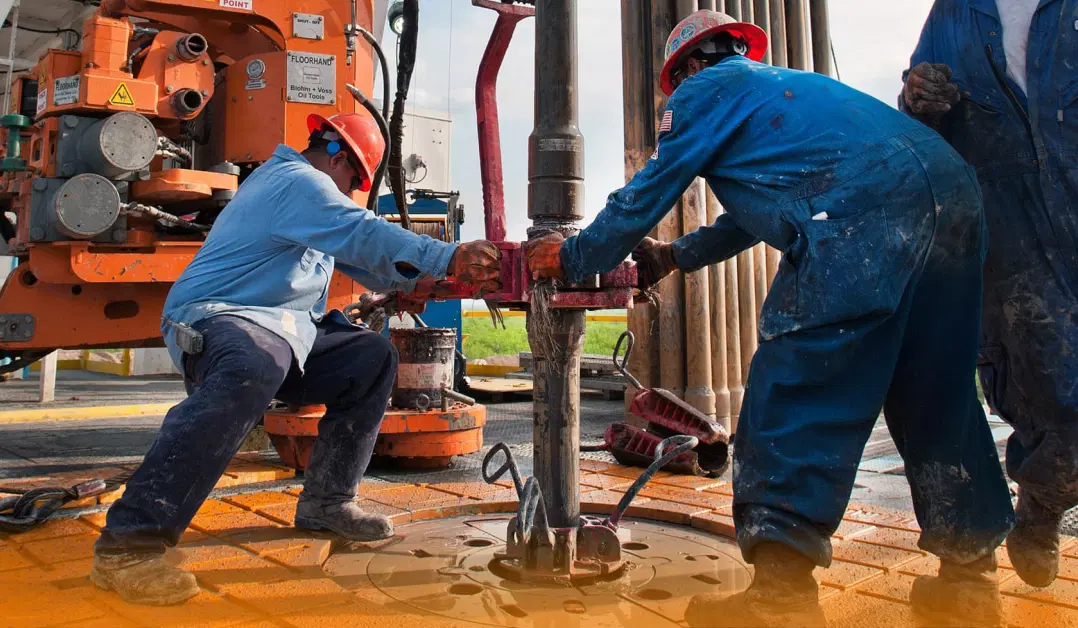
Nigeria’s oil production dropped 8.3% year-on-year to 1.544 million barrels per day in December 2025, missing both OPEC quota and budget targets, NUPRC reports.
Nigeria’s crude oil production, including condensate, declined by 8.3 percent year-on-year to 1.544 million barrels per day (bpd) in December 2025, down from 1.684 million bpd recorded in the same month of 2024.
The figures were released by the Nigerian Upstream Petroleum Regulatory Commission (NUPRC), which did not specify the exact causes of the decline. However, industry indicators point to limited investment and production challenges as key factors.
On a month-on-month basis, output also dipped slightly from 1.599 million bpd in November 2025 to 1.544 million bpd in December.
The report shows that Nigeria failed to meet its 1.5 million bpd OPEC quota, as 122,385 bpd of the total output came from condensate, which the Organisation of Petroleum Exporting Countries (OPEC) does not recognise in its quota calculations.
It also means the Federal Government missed its 2025 budget benchmark of 2.06 million bpd, which was based on an oil price of $75 per barrel and an exchange rate of about ₦1,500 to $1.
According to NUPRC:
“Lowest and peak combined crude oil and condensate were 1.52 million bopd and 1.82 million bopd, respectively. The average crude oil production represents 95% of OPEC quota (1.5 mbpd).
“Daily average production was 1,544,345 barrels per day, comprising both crude oil (1,421,960 bopd) and condensate (122,385 bopd).”
In its January 2026 Monthly Oil Market Report, OPEC confirmed that Nigeria’s crude oil output—excluding condensate—fell marginally to 1.422 million bpd in December 2025, from 1.436 million bpd in November, representing a 0.9 percent decline.
OPEC noted that the figures, based on direct communication, showed Nigeria once again fell short of its production quota.
Reacting to the trend, Professor Emeritus of Petroleum Economics and Executive Director of the Emmanuel Egbogah Foundation, Wumi Iledare, attributed the decline to long-standing structural challenges.
“The reasons are familiar: insecurity, a mature basin with no major new discoveries, and the failure to offer fresh hydrocarbon blocks for bidding,” he said.
“Governance gaps remain overwhelming, and policy uncertainty continues to weaken investor confidence.
“The selective implementation of the Petroleum Industry Act must stop. Nigeria urgently needs a clearly designated leader with institutional authority to drive the sector. Too many proxy drivers will not work. I cannot recall the last time Nigeria met its OPEC quota.”
The continued shortfall underscores the urgency of reforms and fresh investment if Nigeria is to stabilise and grow its oil production in the years ahead.