Physical Address
304 North Cardinal St.
Dorchester Center, MA 02124
Physical Address
304 North Cardinal St.
Dorchester Center, MA 02124

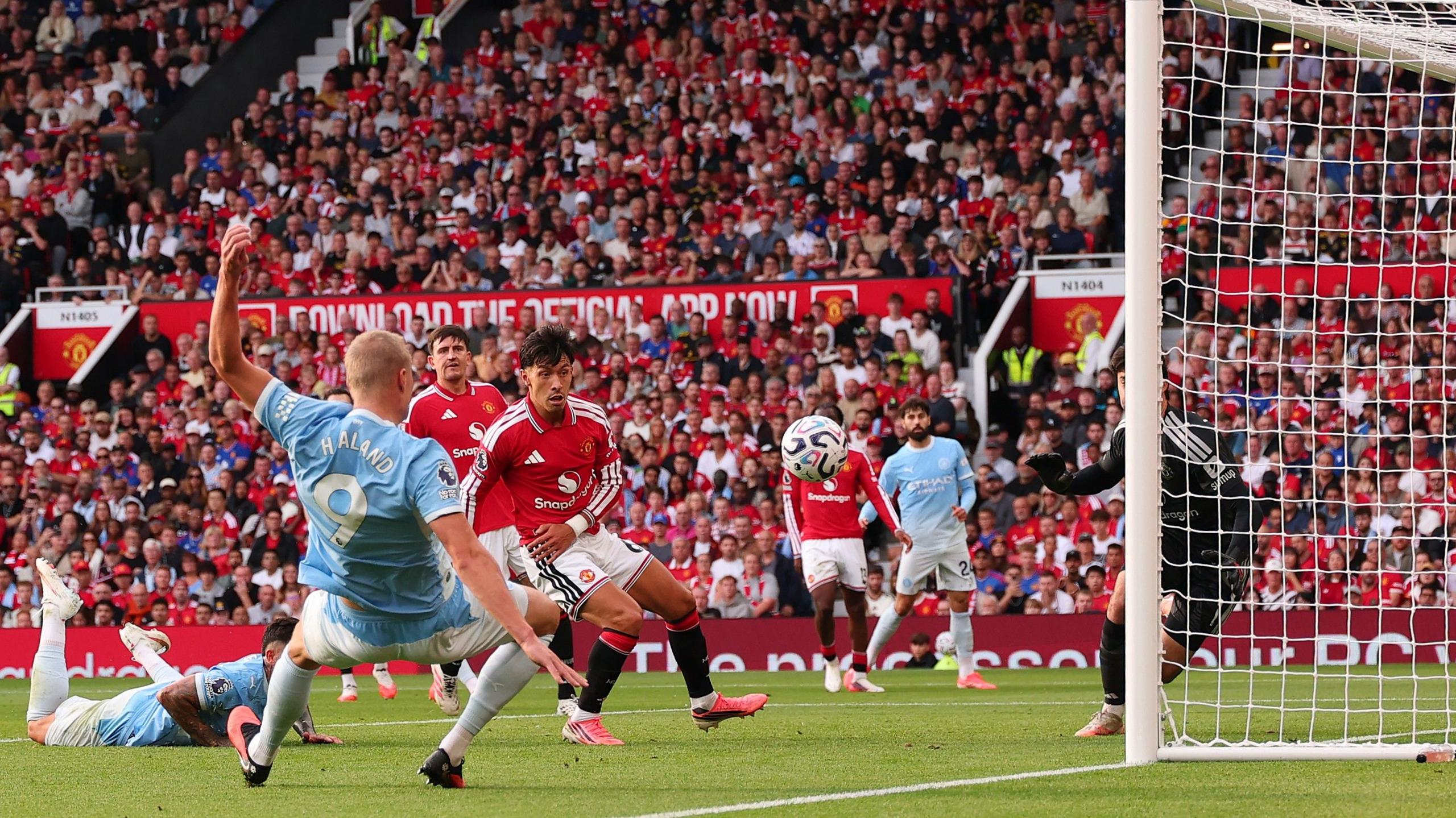
Premier League refereeing body Pro Ref has admitted an “error of judgement” was made during Manchester City’s controversial derby victory over Manchester United after Erling Haaland’s winning goal was allowed to stand.
Haaland scored the decisive goal in the 60th minute at Old Trafford as Manchester City secured a dramatic victory, but the strike immediately became the centre of controversy.
The goal was initially ruled out for offside after Haaland finished at the back post from Josko Gvardiol’s cross.
VAR intervened, however, and determined that Haaland was actually onside because Manchester United defender Patrick Dorgu’s boot played him on.
The goal was therefore awarded.
But that was not the end of the controversy.
Manchester United midfielder Enzo Fernandez was in an offside position and appeared to make an attempt to play the ball, raising the question of whether he was interfering with an opponent.
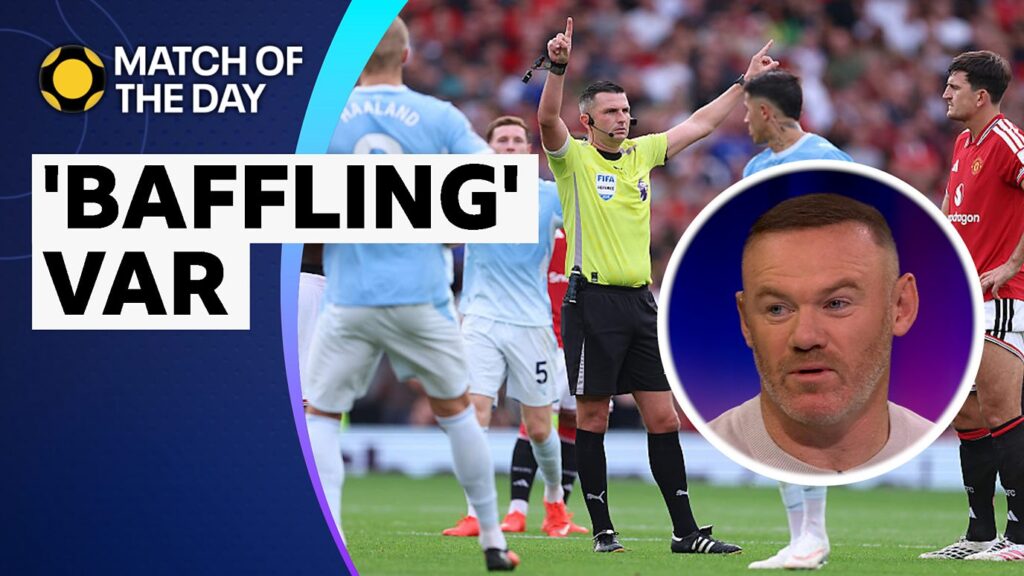
Pro Ref has now acknowledged that the VAR should have recommended an on-field review.

In a statement, Pro Ref explained that Fernandez did not make contact with the ball, making the question of whether he committed an offside offence a subjective decision.
However, the organisation said the VAR failed to properly consider the impact of Fernandez’s position and movement on the play.
The refereeing body subsequently contacted Manchester United to acknowledge what it described as an “error of judgement”, with the incident set to be reviewed.
That admission is significant because it confirms that, while VAR correctly established that Haaland himself was onside, the officials did not properly deal with the second and more complicated offside question involving Fernandez.
The controversy centred on what happened as Gvardiol’s cross travelled into the penalty area.
Haaland was positioned towards the back post, while Fernandez was closer to the centre of the six-yard box.
Fernandez appeared to be ahead of Dorgu’s boot and threw himself towards the ball in an attempt to make a diving header.
He did not touch it.
Under the offside law, however, touching the ball is not necessarily required for an offence to occur.
A player in an offside position can be penalised if they are clearly attempting to play a nearby ball and that action impacts an opponent.
That is where the debate becomes crucial.
United defender Lisandro Martinez was positioned behind Fernandez and was also attempting to react to the incoming ball.
The question for VAR was therefore whether Fernandez’s attempt to play the ball affected Martinez’s ability or decision to defend the cross.
If the answer was yes, Fernandez could have been considered offside even though he never touched the ball.
The incident produced an unusual scenario.
The referee initially ruled out the goal because he believed Haaland was offside.
That decision was incorrect.
VAR correctly identified that Dorgu’s boot had played Haaland onside and overturned the original decision.
But once that happened, the officials still had to consider Fernandez’s involvement.
Because that aspect of the offside law involves interpretation rather than a simple question of position, the VAR should have recommended that referee Michael Oliver review the incident himself.
That did not happen.
Instead, the goal was awarded.
According to the analysis surrounding the decision, the correct procedure could have resulted in the goal being ruled out after the review, despite the original offside call against Haaland being wrong.
It would have been an unusual outcome — but one consistent with the laws of the game.
United players and staff were understandably unhappy.
Defender Lisandro Martinez described the decision as an “injustice”, expressing frustration over what he sees as repeated inconsistencies in the interpretation of football’s rules.
Manchester United manager Michael Carrick was equally critical.
Carrick questioned whether the interpretation of what constitutes interfering with play was becoming increasingly difficult for players, coaches and supporters to understand.
His frustration was particularly focused on the fact that several officials and VAR personnel had access to multiple camera angles and replays, yet the crucial subjective element of the incident was not sent to the referee for review.
For United, the problem is simple.
The decision cannot be changed, but it potentially had a decisive impact on the derby.
The Haaland goal was not the only major refereeing controversy at Old Trafford.
Manchester City were reduced to 10 men in the first half after Phil Foden was shown a straight red card for kicking out at Bruno Fernandes.
Fernandes had initially challenged Foden and appeared to kick him in the back before Foden reacted while on the ground.
Foden’s retaliation resulted in the red card.
The incident was reviewed by VAR, which upheld the referee’s decision.
But Fernandes escaped punishment.
That decision also divided opinion.
Former Manchester United striker Wayne Rooney argued that Foden’s action did not warrant a red card, describing it as more of a gesture than a serious kick.
Gary Neville questioned why Fernandes was not booked for his role, while Roy Keane argued that Fernandes was the player who initiated the violent element of the incident.
The result was a first half filled with controversy before the Haaland goal added another major talking point.
The Haaland incident appears to demonstrate one of the biggest challenges facing VAR.
The technology can establish factual matters with remarkable precision.
Was Haaland ahead of the defensive line?
No.
Dorgu’s boot played him onside.
But whether Fernandez’s attempt to play the ball affected an opponent requires human interpretation.
That is precisely why Pro Ref believes Oliver should have been sent to the monitor.
The problem was not necessarily that the officials could not identify the facts.
It was that the subjective part of the decision was apparently not properly considered.
VAR was introduced to reduce major refereeing errors.
Yet incidents like this demonstrate that technology cannot completely eliminate controversy.
In fact, VAR can sometimes create a different kind of frustration.
Fans now expect every major decision to be examined from multiple angles, and when an obvious-looking issue appears to be missed, the criticism becomes even stronger.
In this case, the original decision against Haaland was wrong — VAR corrected it.
But the review appears to have stopped too early.
The officials correctly answered one question:
Was Haaland offside? No.
But they needed to answer another:
Did Fernandez’s offside position and attempt to play the ball interfere with an opponent?
That second question required further examination.
Pro Ref’s admission that the VAR should have recommended an on-field review effectively confirms that the process was incomplete.
For Manchester United, that offers little comfort.
The points are gone.
The derby result stands.
But the incident will inevitably reignite the debate over whether VAR is making football fairer — or simply creating more complicated ways for refereeing decisions to dominate the conversation.
And with the Premier League title race often decided by the smallest margins, one controversial goal can become much more important than just three points.