Physical Address
304 North Cardinal St.
Dorchester Center, MA 02124
Physical Address
304 North Cardinal St.
Dorchester Center, MA 02124

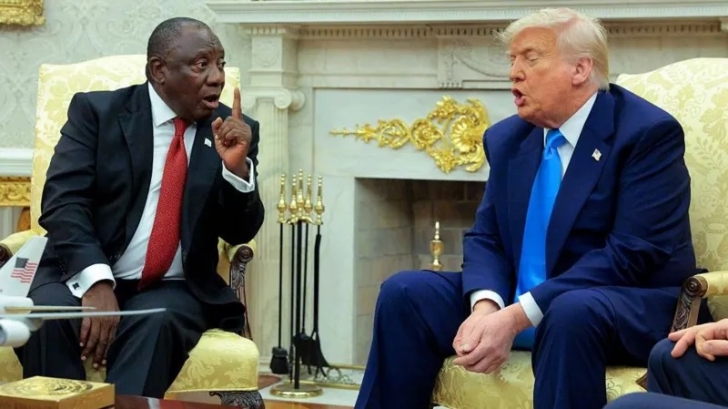
US President Donald Trump has notified Congress of plans to remove South Africa and Rwanda from the African Growth and Opportunity Act (AGOA) preferential trade programme, effective January 1, 2027.
The proposed move could affect the two African countries’ access to duty-free exports to the United States under the programme, which allows eligible African nations to export thousands of products to the American market without paying certain import duties.
US Trade Representative Jamieson Greer said an annual review had found that South Africa and Rwanda were engaging in practices inconsistent with AGOA’s eligibility requirements.
According to Washington, the concerns include barriers to American trade and investment, as well as issues relating to national security and foreign policy.
The decision comes amid strained diplomatic relations between the Trump administration and both African countries.
South Africa’s Trade Minister, Parks Tau, described Washington’s decision as unfortunate, arguing that the United States was introducing new concerns that had not featured prominently in trade negotiations between the two countries, which began in 2025.
Tau said Pretoria would continue working to diversify its export markets to protect jobs and reduce its dependence on preferential access to the American market.
South Africa has also sought to explain that the potential loss of AGOA benefits would not necessarily end its wider trade relationship with the United States.
Government figures indicate that approximately 89 per cent of South African exports to the US entered under ordinary World Trade Organization most-favoured-nation terms in 2025, while around 10 per cent benefited from AGOA.
The proportion of exports benefiting from the programme had fallen from 28 per cent in 2024.
The value of South African exports under AGOA also declined from approximately US$4 billion in 2024 to US$1.7 billion in 2025, according to Tau.
Despite the relatively smaller share of exports benefiting from AGOA, economists have warned that losing preferential access could put additional pressure on South Africa’s manufacturing industry.
Oxford Economics senior economist Jee-A van der Linde said affected exporters could struggle to redirect some products to alternative markets.
He also warned that the development comes at a difficult time for South African manufacturers, who are facing international trade disruptions and increased competition from lower-cost Chinese imports, particularly in the automotive sector.
However, he noted that South Africa had previously managed to redirect some exports affected by tariffs to markets including Europe and China.
South Africa also maintains substantial economic links with the United States.
Bilateral trade between the two countries reached US$28.8 billion in 2025, while more than 600 American companies operate in South Africa, supporting approximately 134,600 jobs.
Pretoria has also highlighted the importance of its mineral resources, noting that it supplies 12 of the 50 minerals considered critical by the United States.
South Africa further supplies approximately 70 per cent of the isotopes used by the US for applications including cancer treatment.
US Ambassador to South Africa Leo Brent Bozell III said the decision was regrettable but blamed South African government policies for the development.
In a statement on X, he argued that the outcome could have been avoided if Pretoria had addressed concerns raised by Washington.
In a letter to South African President Cyril Ramaphosa, Trump also raised concerns about South Africa’s international security relationships and cooperation with governments viewed by Washington as problematic.
The US president further criticised what he described as barriers to American trade and investment, including agricultural market access, regulatory requirements, investment protections and intellectual property issues.
The disagreement adds to existing diplomatic tensions between the two governments.
Rwanda has also been targeted by the proposed removal from AGOA, with Washington raising concerns about human rights, political pluralism, the rule of law and workers’ rights.
The announcement follows US Treasury sanctions against Rwanda’s Defence Ministry over allegations of support for the M23 armed group operating in eastern Democratic Republic of Congo.
The US Treasury accused Rwanda’s military of providing troops, weapons, equipment, logistics and training to the rebel group.
Rwanda has repeatedly denied supporting M23.
According to US import data, Rwanda’s exports to the American market increased to US$43.3 million in 2025, compared with US$13.1 million in 2024.
However, Oxford Economics economist Alexander Venter said the United States accounted for approximately two per cent of Rwanda’s merchandise exports in 2025.
He added that only around four per cent of Rwanda’s exports to the US benefited from AGOA preferences, with neighbouring African countries and Asian markets continuing to dominate Rwanda’s trade.
The African Growth and Opportunity Act was established by the United States to promote trade and economic cooperation with eligible African countries.
The programme provides qualifying countries with preferential access to the American market for thousands of products, supporting industries such as agriculture, textiles, manufacturing and automotive production.
Losing AGOA eligibility could make affected exports more expensive in the United States, depending on the applicable tariff arrangements.
The proposed January 2027 deadline gives both countries a limited period to address Washington’s concerns or prepare for the potential loss of preferential trade access.
For South Africa and Rwanda, the development raises questions about their future economic relationships with the United States and the importance of expanding trade partnerships with other international markets.
African360 News
African360 WhatsApp Channel for more News update: https://whatsapp.com/channel/0029Vb7Oc6nGk1FpdCN0xn44