Physical Address
304 North Cardinal St.
Dorchester Center, MA 02124
Physical Address
304 North Cardinal St.
Dorchester Center, MA 02124
African360 News | World News
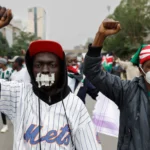
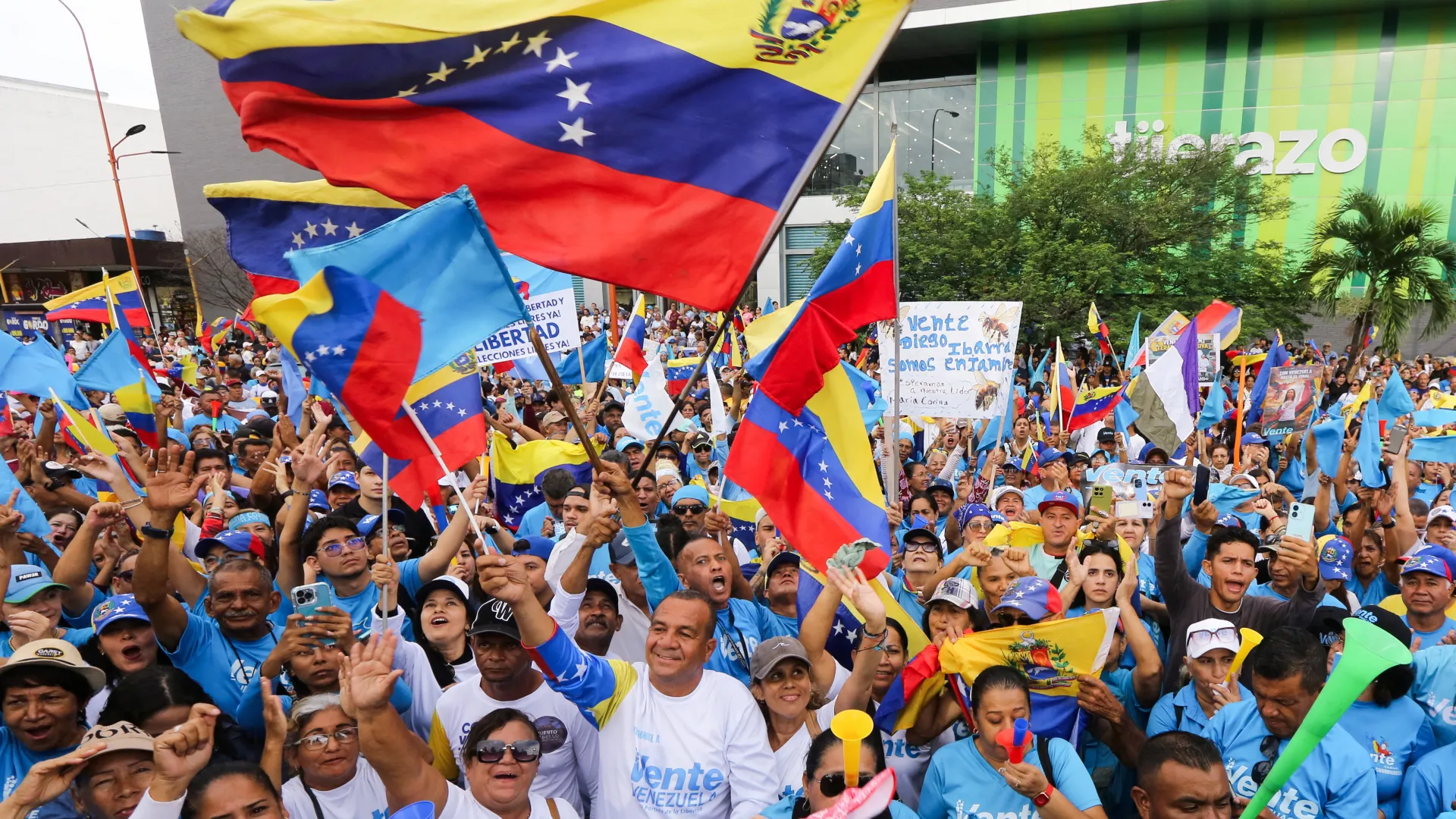
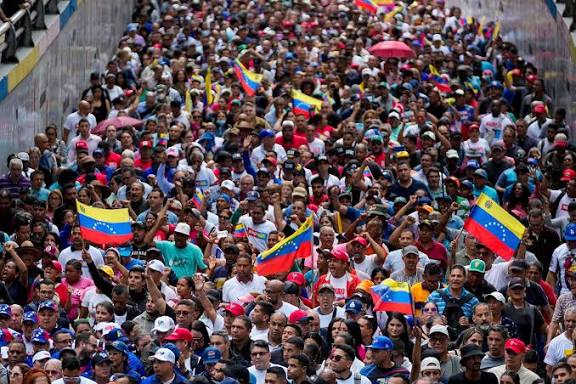
Thousands of Venezuelans have taken to the streets across the country to demand free elections, political reforms and a clear timetable for choosing the country’s next president.
The demonstrations on Thursday, October 22, marked the first nationwide opposition protest in nearly two years. Organised by opposition leader María Corina Machado’s Vente Venezuela movement, the rallies took place in Caracas and several other cities, including Valencia, Maracay, San Cristóbal and Maracaibo.
The protests come amid continuing uncertainty over Venezuela’s political future following the removal of former President Nicolás Maduro by US forces in January 2026.
Acting President Delcy Rodríguez and US President Donald Trump have both said elections will take place, but no date has been announced for a presidential vote. Machado has called for elections to be held by July 2027.
Among those who joined the demonstrations was 18-year-old cosmetology student Leosmary Hernández, who said she remained hopeful about the country’s future despite the economic and educational difficulties she had experienced.
Hernández said she wanted her voice to be heard and believed political change was possible.
Her comments reflected the hopes of demonstrators seeking a new political direction and an opportunity to choose their country’s leadership through elections.
Machado, a Nobel Peace Prize laureate and one of Venezuela’s most prominent opposition figures, has spent an extended period outside the country after living in hiding following the disputed 2024 presidential election.
Her movement has demanded a firm election date, her safe return to Venezuela and the release of political prisoners.
Venezuela has been led by interim President Delcy Rodríguez since January 2026. She previously served as Maduro’s vice president and belongs to the United Socialist Party of Venezuela (PSUV), which has governed the country since the late Hugo Chávez took office in 1999.
Despite the change in the presidency, the ruling political movement remains in power.
The US administration has maintained close involvement in Venezuela’s political and economic affairs, including negotiations over oil resources and pressure for institutional reforms. Trump has backed Rodríguez’s leadership while supporting efforts to move the country towards elections.
Venezuelan authorities and ruling-party figures have faced longstanding allegations of human rights violations, including arbitrary detention and mistreatment of political opponents. The interim government’s commitments to political change have therefore remained a key issue for opposition groups and rights advocates.
The opposition demonstrations took place alongside a march organised by the ruling Socialist Party in Caracas.
The government-backed event was scheduled to commemorate Breast Cancer Awareness Month, with supporters marching from Plaza Venezuela towards an area near the presidential palace.
Interior Minister Diosdado Cabello was pictured attending the government-aligned march on state television.
Opposition demonstrators moved to a nearby location, while reports indicated that security forces maintained a limited presence at many protest sites. In several smaller cities, protesters dispersed before nightfall.
The demonstrations unfolded as representatives of the interim government and a faction of the opposition continue negotiations aimed at reforming key political institutions ahead of eventual elections.
The talks have included proposals to reform the Supreme Court and electoral institutions. However, Machado’s Vente Venezuela movement has not been directly represented in the negotiations, although Machado has said she would not obstruct efforts that could advance political change.
Recent rounds of discussions have yet to produce a publicly announced presidential election date. The exclusion of Machado’s movement and the pace of reforms remain sources of concern among sections of the opposition.
The political dispute also reflects the unresolved legacy of the 2024 presidential election. Opposition candidate Edmundo González Urrutia has maintained that opposition vote tallies showed he won the contest, while Maduro and state institutions upheld the incumbent’s victory. The government did not publish a complete set of polling-station results to settle the dispute independently.
Maduro and his wife, Cilia Flores, are facing drug-related and other charges in the United States. Both have pleaded not guilty.
Thursday’s demonstrations have renewed pressure on Venezuela’s interim leadership to turn promises of elections and political reform into concrete commitments.
For opposition supporters, the key demands include a confirmed election date, credible electoral institutions, political freedoms and the release of people detained for political reasons.
The government’s negotiations with parts of the opposition may shape the next stage of the country’s transition, but uncertainty remains over the timing and conditions of a presidential vote.
As Venezuela continues to navigate a period of political upheaval, the central question is whether ongoing negotiations will lead to an electoral process that competing political groups and voters regard as credible.
African360 WhatsApp Channel for more News update: https://whatsapp.com/channel/0029Vb7Oc6nGk1FpdCN0xn44