Physical Address
304 North Cardinal St.
Dorchester Center, MA 02124
Physical Address
304 North Cardinal St.
Dorchester Center, MA 02124

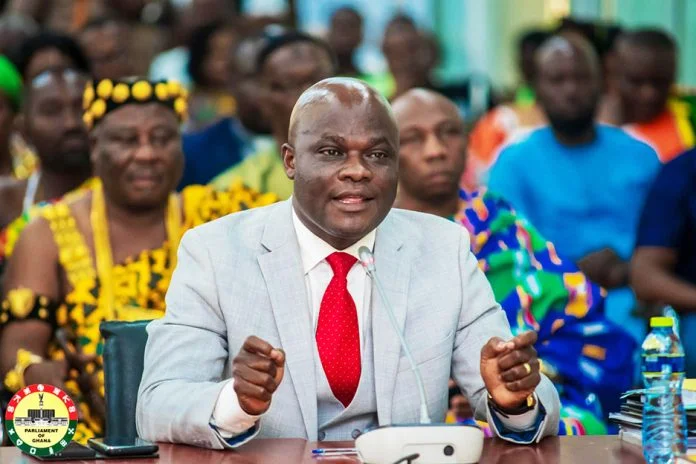
Accra, Ghana: Contractors who abandon government projects or leave construction sites idle without credible justification could soon find themselves shut out of future government contracts.
The Minister for Works, Housing and Water Resources, Ahmed Ibrahim, has issued a strong warning to contractors, saying the government is prepared to blacklist companies that fail to deliver on public projects.
Speaking in Accra at the close of a three-day strategic retreat organised by the ministry, the minister made it clear that contractors who take government contracts must be prepared to complete them.
“If we come and you are not on site, we will blacklist you.”
According to the minister, once a contractor is blacklisted, the company will not be allowed to bid for contracts under the ministry’s agencies and departments.
For years, abandoned government projects have remained a major concern in Ghana.
Roads, schools, hospitals, housing projects, water infrastructure and other public facilities have sometimes remained incomplete for years, leaving communities frustrated while government resources are tied up in unfinished projects.
The minister said the Ministry of Works, Housing and Water Resources would therefore undertake inspections of major projects across the country.
Where contractors cannot provide satisfactory explanations for delays or have abandoned project sites, the government may terminate the contracts and repackage and re-award them to other contractors.
This could mark a significant shift in the government’s approach to dealing with delayed public projects.
Mr Ibrahim also directed agencies under the ministry to develop a consolidated action plan containing measurable targets, implementation timelines and regular progress reports.
He stressed that the success of the strategic retreat would not be judged by speeches and presentations but by actual implementation.
A comprehensive status report is also expected to be prepared on government projects nationwide. The report will categorise projects as ongoing, completed, stalled or delayed and identify the major challenges preventing their completion.
The issue of abandoned projects is particularly important in Ghana’s housing sector, where the country continues to face a significant housing deficit.
Chief Director of the ministry, Irene Odokai Messiba, said inadequate housing supply, delayed projects and limited access to long-term financing continue to affect efforts to provide affordable housing.
The ministry is focusing on completing projects including Saglemi, Pokuase-Afiaman and Community 26 housing projects.
Mrs Messiba also called for stronger public-private partnerships, innovative construction technologies and a sustainable housing finance framework.
The minister also pointed to Kenya’s housing levy as an example of a financing mechanism Ghana could study and potentially adapt to increase affordable housing delivery.
While such a proposal could provide an alternative source of long-term housing finance, the government would need to carefully consider affordability, public acceptance, transparency and how such funds would be managed.
The ministry’s concerns go beyond housing and construction.
Ghana’s water resources are facing increasing pressure from pollution linked to illegal mining, declining renewable water resources, ageing infrastructure and rising demand for potable water.
The ministry is therefore calling for stronger enforcement against water pollution, increased investment in water infrastructure and greater use of digital systems in regulatory services.
The retreat also considered flood control, coastal protection, rural water systems, public infrastructure maintenance and the Akosombo resettlement programme.
The minister’s threat to blacklist non-performing contractors sends a strong message: securing a government contract should come with an obligation to deliver.
For Ghanaian taxpayers, the bigger question is whether this new approach will translate into the completion of projects that have remained unfinished for years.
Blacklisting contractors may be necessary, but it will only solve part of the problem.
The government must also strengthen project monitoring, ensure realistic financing arrangements, improve procurement processes and hold all parties involved in public projects accountable.
At the end of the day, Ghanaians do not need more abandoned project sites. They need completed roads, houses, water systems and public infrastructure that improve lives.
African360.com will continue to monitor how the government’s new measures against abandoned projects are implemented.