Physical Address
304 North Cardinal St.
Dorchester Center, MA 02124
Physical Address
304 North Cardinal St.
Dorchester Center, MA 02124

By African360 News
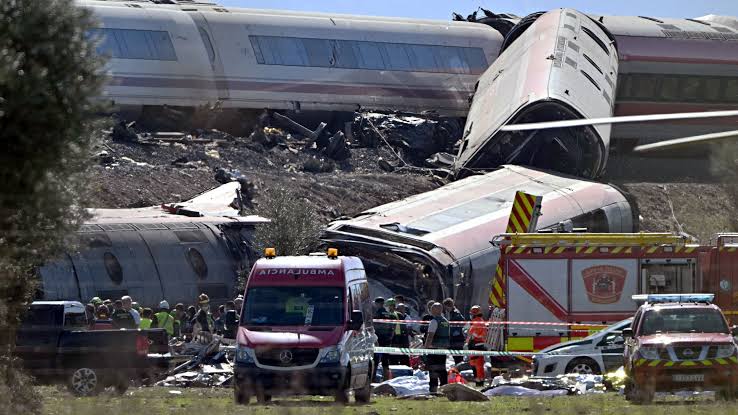
At least 68 people have died after two high-speed trains collided on a railway line south of Madrid, Spain, in one of the country’s deadliest rail disasters in recent decades.
The collision occurred at approximately 8:53 a.m. local time on Wednesday, October 28, near Urda in Toledo province, along the high-speed route connecting Madrid with Seville and southern Spain.
The accident involved a state-operated Renfe train and a privately operated Iryo train. According to Spanish authorities, the Renfe train struck the rear of the Iryo train, which had stopped on the tracks. Several carriages derailed, with some tumbling down an embankment.
More than 500 passengers were travelling aboard the two trains. Emergency crews, firefighters, police officers and medical teams were dispatched to the scene, while helicopters assisted the rescue operation.
Dozens of people were injured, with authorities reporting that many required hospital treatment. The full extent of the casualties remains subject to official updates.
Spanish Transport Minister Óscar Puente said a failure involving the railway’s LZB safety system had disrupted train movements shortly before the crash.
The malfunction reportedly caused several trains to stop. The control centre subsequently authorised the Renfe train to resume its journey at normal speed, despite a train being stopped further ahead.
Puente described the decision as inexplicable and said investigators would examine why the train was allowed to continue under those circumstances. He indicated that the train should not have been authorised to resume normal-speed operations while the relevant stop signal remained active.
Audio recordings published by Spanish media reportedly capture exchanges between train drivers and railway controllers before the collision. In one exchange, a driver was instructed to disconnect and reconnect the LZB system before continuing at normal speed.
Another recording reportedly indicates that the Iryo driver had informed the control centre that the train remained stationary near a signal at Urda.
Investigators are examining these communications and the sequence of instructions issued before the crash. Authorities have not yet established the full chain of events or determined individual responsibility.

Rescue workers faced a challenging operation as they searched damaged carriages and the area around the railway embankment.
Hospitals across the region received injured passengers, while some medical facilities reportedly postponed planned procedures to accommodate emergency cases.
Blood donation services in Madrid appealed for urgent donations as authorities prepared for additional medical needs. Spain’s Civil Guard also established offices in several cities to assist families searching for missing relatives and to coordinate identification procedures.
The scale of the disaster prompted widespread concern across Spain, with emergency services continuing their work while investigators secured evidence from the site.

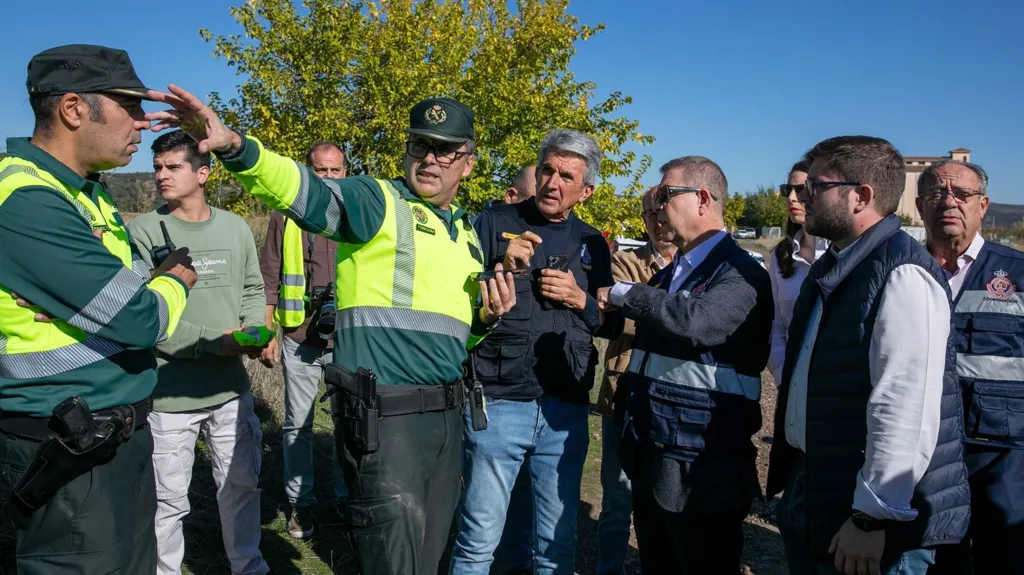
Prime Minister Pedro Sánchez visited the crash site and expressed condolences to the victims and their families.
He said the country was grieving and pledged that the government would establish what had happened.
Sánchez also promised that any negligence would be brought to light and that any failures in the railway safety system would be addressed.
Spain declared three days of official mourning from Thursday, October 29, through Saturday, October 31. Political parties suspended or cancelled several public engagements as the country mourned the victims. Spain’s royal family also expressed shock and offered condolences to those affected.
The collision has renewed questions about railway safety and infrastructure management in Spain.
In January 2026, another serious high-speed rail disaster near Adamuz in Córdoba province killed 46 people after a derailment involving trains operated by Renfe and Iryo.
The two incidents have increased public scrutiny of the country’s railway network. However, Spanish officials have cautioned that the causes of the two crashes appear to be different.
For now, investigators are focusing on the events leading up to Wednesday’s collision, including the safety-system disruption, instructions from the control centre and the movements of both trains.
Authorities have pledged to establish the facts and determine whether any failures or negligence contributed to the tragedy.
African360 WhatsApp Channel for more News update: https://whatsapp.com/channel/0029Vb7Oc6nGk1FpdCN0xn44