Physical Address
304 North Cardinal St.
Dorchester Center, MA 02124
Physical Address
304 North Cardinal St.
Dorchester Center, MA 02124

By African360 News
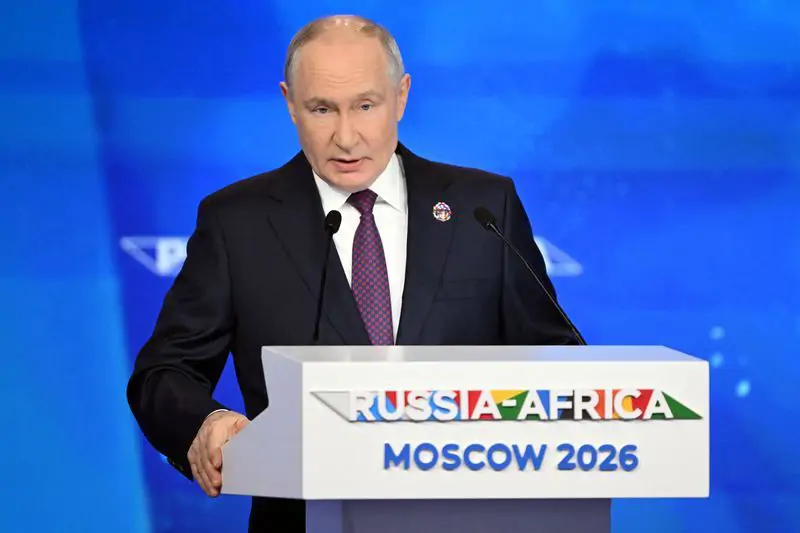
Russian President Vladimir Putin has told African leaders that Russia does not engage in “neo-colonial exploitation” of Africa, presenting Moscow as an alternative partner to Western countries as it seeks to expand its economic, political and security relationships across the continent.
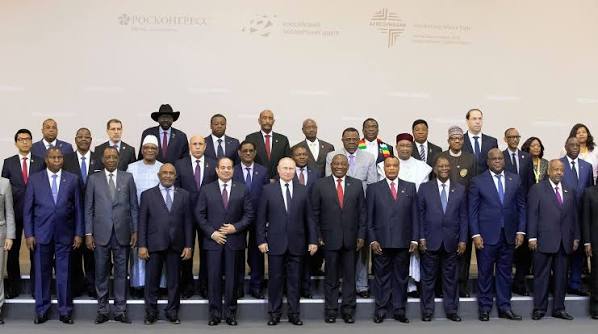
Putin made the remarks on Wednesday, October 28, 2026, during the third Russia-Africa Summit in Moscow, where delegations from 48 African countries gathered, including 22 represented by their heads of state.
The Russian leader accused Western countries of continuing to exploit Africa’s natural resources and using debt to constrain the continent’s development.
“Africa is increasingly asserting itself as one of the key players in the global economy and politics,” Putin told the gathering, arguing that the emergence of a multipolar world faced resistance from countries unwilling to accept changes in the global balance of power.
He said Russian businesses focused on processing raw materials locally rather than simply extracting resources, a model he argued could create jobs, generate tax revenue and support African industrial development.
Putin criticised what he described as attempts by Western countries to push African nations into debt and make financial assistance available on unfavourable terms.
He argued that such arrangements could slow long-term economic development and called for greater African influence in international financial institutions, including the International Monetary Fund and the World Bank.
Russia has sought to strengthen its position as a partner for African governments through trade, investment, military cooperation, education and energy projects.
However, Moscow’s growing role on the continent has also attracted scrutiny, particularly over the activities of Russian security personnel in parts of the Sahel and Central African Republic. Western governments have accused Russian forces of supporting military governments and expanding Moscow’s influence, allegations Russia rejects.
Agriculture and food security were among the major issues discussed at the summit.
Putin said Russia had supplied 13 million metric tonnes of agricultural products to African countries during the first nine months of 2026 and was prepared to expand deliveries to more countries.
He also highlighted Russia’s willingness to cooperate on agricultural infrastructure, transport projects and fertiliser supplies.
The offer comes amid continuing disruption to global food and fertiliser markets. Attacks affecting shipping in the Black Sea have complicated grain exports from Russia and Ukraine, while the conflict involving the United States, Israel and Iran has added pressure to international supply chains.
For African countries that rely on imported grain and fertiliser, the availability and affordability of these products remain important concerns for food production and consumer prices.
The two-day summit, held on October 28 and 29, is intended to deepen cooperation between Russia and African countries.
Putin is scheduled to hold bilateral discussions with African leaders on issues including trade, security, arms supplies, grain deliveries, technology and investment.
Moscow has also expressed interest in sharing technical expertise, supporting local manufacturing and developing joint infrastructure projects.
The gathering forms part of Russia’s wider effort to strengthen ties with countries across the Global South amid strained relations with Western governments over the war in Ukraine and other international disputes.
African governments, meanwhile, have varied relationships with Russia and other global powers, reflecting different national priorities in areas such as security, trade, debt management and access to investment.
Putin’s remarks underline Russia’s effort to position itself as a partner in Africa’s pursuit of economic development and greater influence in global affairs.
However, the practical impact of closer ties will depend on whether summit commitments translate into concrete agreements, investment, local job creation, technology transfer and reliable supplies of essential goods.
African governments will also need to assess the terms of individual partnerships, including their economic costs, long-term benefits and implications for national interests.
The summit is expected to conclude with a declaration outlining priorities for future cooperation between Russia and African nations.
For African countries, the central question is how partnerships with Russia and other international powers can deliver measurable benefits while preserving the freedom to determine their own economic and diplomatic priorities.
African360 WhatsApp Channel for more News update: https://whatsapp.com/channel/0029Vb7Oc6nGk1FpdCN0xn44