Physical Address
304 North Cardinal St.
Dorchester Center, MA 02124
Physical Address
304 North Cardinal St.
Dorchester Center, MA 02124
By African360 News
The United States has imposed sanctions on Rwanda’s Ministry of Defence and a financial institution serving the country’s security services over alleged support for the M23 rebel group in the eastern Democratic Republic of Congo (DR Congo).
Announced on Wednesday, October 28, 2026, the measures target Rwanda’s Ministry of Defence and Zigama Credit and Savings Society. Washington accuses the two entities of helping sustain M23’s armed campaign through military assistance, financial transactions, logistics and alleged involvement in the movement of minerals from rebel-controlled territory.
US Treasury Secretary Scott Bessent said the sanctions were intended to hold Rwanda accountable for its commitments under the US-brokered Washington Accords.
“Rwanda must halt its support for M23 and withdraw its troops from eastern DRC,” Bessent said.
The sanctions increase pressure on Kigali as fighting continues in eastern DR Congo despite diplomatic efforts to end the conflict.
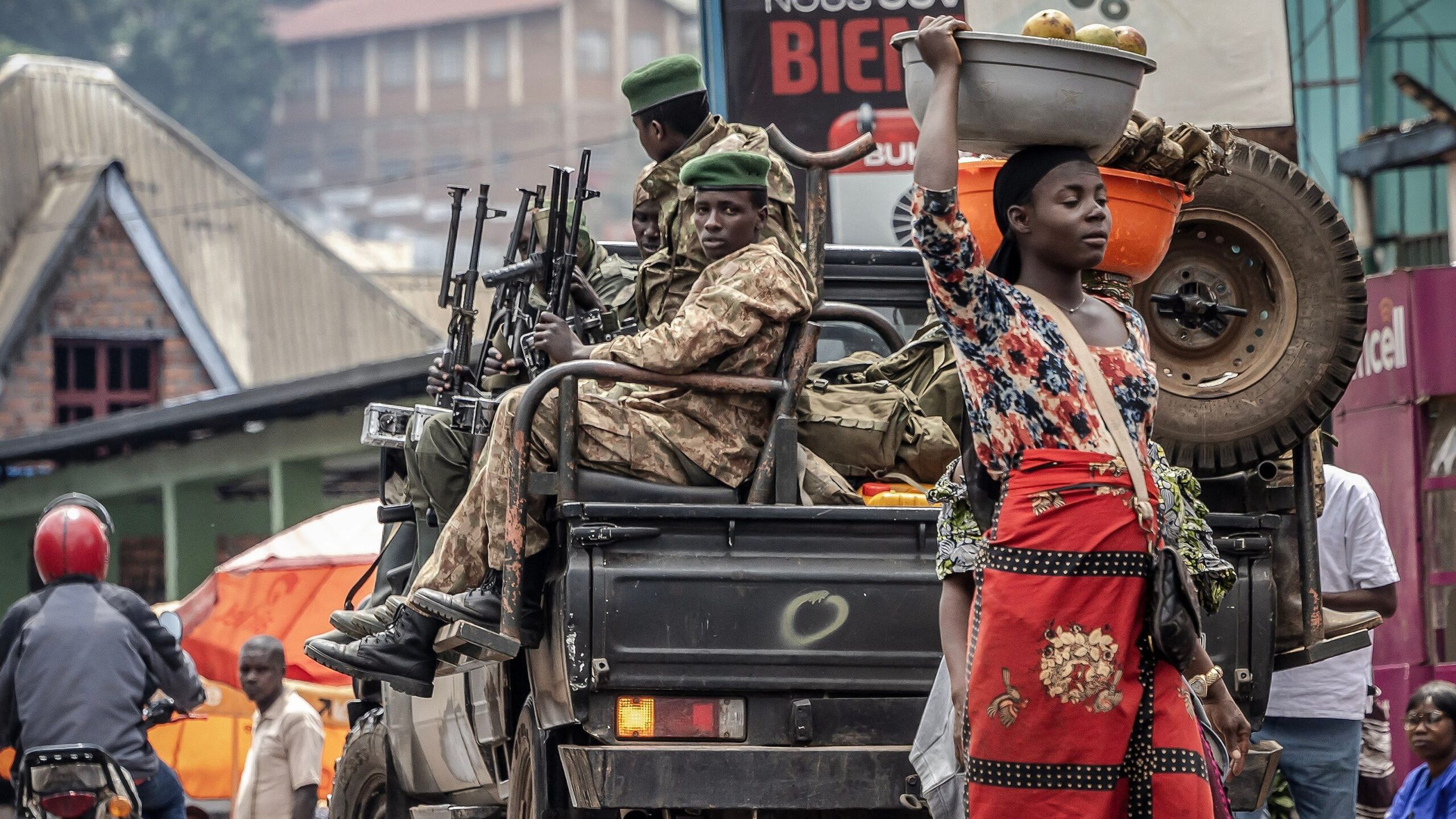
The US Treasury’s Office of Foreign Assets Control (OFAC) said the Rwandan Ministry of Defence had directed thousands of Rwanda Defence Force troops to operate alongside M23 in North and South Kivu provinces.
Washington alleges that the troops have supplied the rebel group with weapons, military equipment, logistical assistance and training. It also says advanced military equipment, including air-defence systems and electronic jamming devices, has been introduced into the conflict zone.
The Treasury said the ministry was sanctioned for materially supporting the Rwanda Defence Force’s activities in eastern DR Congo.
Zigama Credit and Savings Society, which serves Rwanda’s security services, was also designated. According to US authorities, the institution facilitated tens of millions of dollars in transactions benefiting M23 and its political wing, the Congo River Alliance.
Washington further alleges that Zigama helped finance military equipment purchases and enabled gold originating from M23-controlled territory to be transported to Kigali.
Under the measures, assets belonging to the designated entities within US jurisdiction must be frozen. US individuals and businesses are generally prohibited from conducting transactions involving them unless authorised or exempted. Certain foreign parties may also face penalties for violating or evading the restrictions.
The government of DR Congo welcomed Washington’s decision and called on Rwanda to fulfil its commitments under the Washington Accords, respect the United Nations Charter and withdraw its troops from Congolese territory.
Kinshasa has repeatedly accused Rwanda of supporting M23 and contributing to the conflict that has displaced civilians and disrupted communities across eastern DR Congo.
M23 captured the provincial capitals of Goma and Bukavu in early 2025 and has maintained control over strategically important areas, including locations associated with gold and coltan mining.
The group’s presence in mineral-rich territory has also raised concerns about the trade in conflict minerals and the financing of armed groups.
The US Treasury alleges that minerals originating in areas controlled by M23 enter supply chains through Rwanda. It has pointed to a disparity between Rwanda’s reported mineral exports and its domestic mining capacity as part of its concerns.
Rwanda denies supporting M23 and says its security concerns must be addressed as part of any lasting peace agreement.
Government spokesperson Yolande Makolo said Rwanda remained prepared to implement the Washington Accords but argued that the Democratic Republic of Congo had not fulfilled its commitments concerning the Democratic Forces for the Liberation of Rwanda (FDLR).
The FDLR is an armed group linked to perpetrators of Rwanda’s 1994 genocide. Kigali considers the group a security threat and has cited its presence in eastern DR Congo as a concern.
Makolo said Rwanda expected all parties to fulfil their obligations and the mediator to hold them accountable.
The competing positions underline the difficulties facing diplomatic efforts to end the conflict. While Washington and Kinshasa are demanding the withdrawal of Rwandan troops and an end to alleged support for M23, Kigali insists that its own security concerns must also be addressed.
The sanctions come less than a year after the presidents of Rwanda and DR Congo signed the Washington Accords for Peace and Prosperity on December 4, 2025, under US mediation.
The agreement was intended to support a peaceful resolution to the conflict while expanding regional trade and investment and improving transparency in critical mineral supply chains.
However, fighting has continued in eastern DR Congo, raising questions about the agreement’s implementation.
The latest measures follow US sanctions announced in March 2026 against the Rwanda Defence Force and four senior military officials. In June, Washington also sanctioned a Rwandan gold refinery and companies accused of facilitating the movement of conflict minerals from DR Congo.
On October 24, Congolese President Félix Tshisekedi called for increased international pressure on Rwanda as efforts to secure peace continued.
The new sanctions signal Washington’s willingness to use financial restrictions to pressure the parties to comply with their commitments.
Pressure on Rwanda is also extending to its international commercial and sporting relationships.
On October 26, US senators Jeff Merkley and Marsha Blackburn urged National Basketball Association (NBA) commissioner Adam Silver to reconsider the league’s commercial relationship with Rwanda.
In a letter, the senators raised concerns about the partnership in light of allegations involving Rwanda’s role in the DR Congo conflict and broader human rights issues. Their concerns reflect growing scrutiny of how international sporting partnerships intersect with governments’ foreign policies and human rights records.
Rwanda has used major sporting partnerships to raise its international profile and promote tourism.
Earlier in October, Formula 1 announced a 10-year agreement to bring the African Grand Prix to Rwanda in the early 2030s, subject to the development of a new circuit in Bugesera. The agreement is part of the country’s wider strategy to attract international visitors, investment and sporting events.
Rwanda’s eight-season partnership with Arsenal ended in June 2026. Bayern Munich has also ended its commercial partnership with Visit Rwanda, although its relationship with the country continues through academy-related activities.
The latest sanctions add to international pressure on Rwanda as the conflict in eastern DR Congo continues.
Washington says its objective is to secure compliance with the Washington Accords, end alleged support for M23 and promote stability in the Great Lakes region.
However, a lasting settlement will depend on whether the parties can address their competing security concerns, implement their commitments and reduce hostilities on the ground.
For communities affected by the conflict, the immediate priorities remain security, humanitarian assistance and the safe return of displaced people.
The coming weeks will test whether the new sanctions can help push the parties towards meaningful progress in the peace process.
African360 WhatsApp Channel for more News update: https://whatsapp.com/channel/0029Vb7Oc6nGk1FpdCN0xn44