Physical Address
304 North Cardinal St.
Dorchester Center, MA 02124
Physical Address
304 North Cardinal St.
Dorchester Center, MA 02124

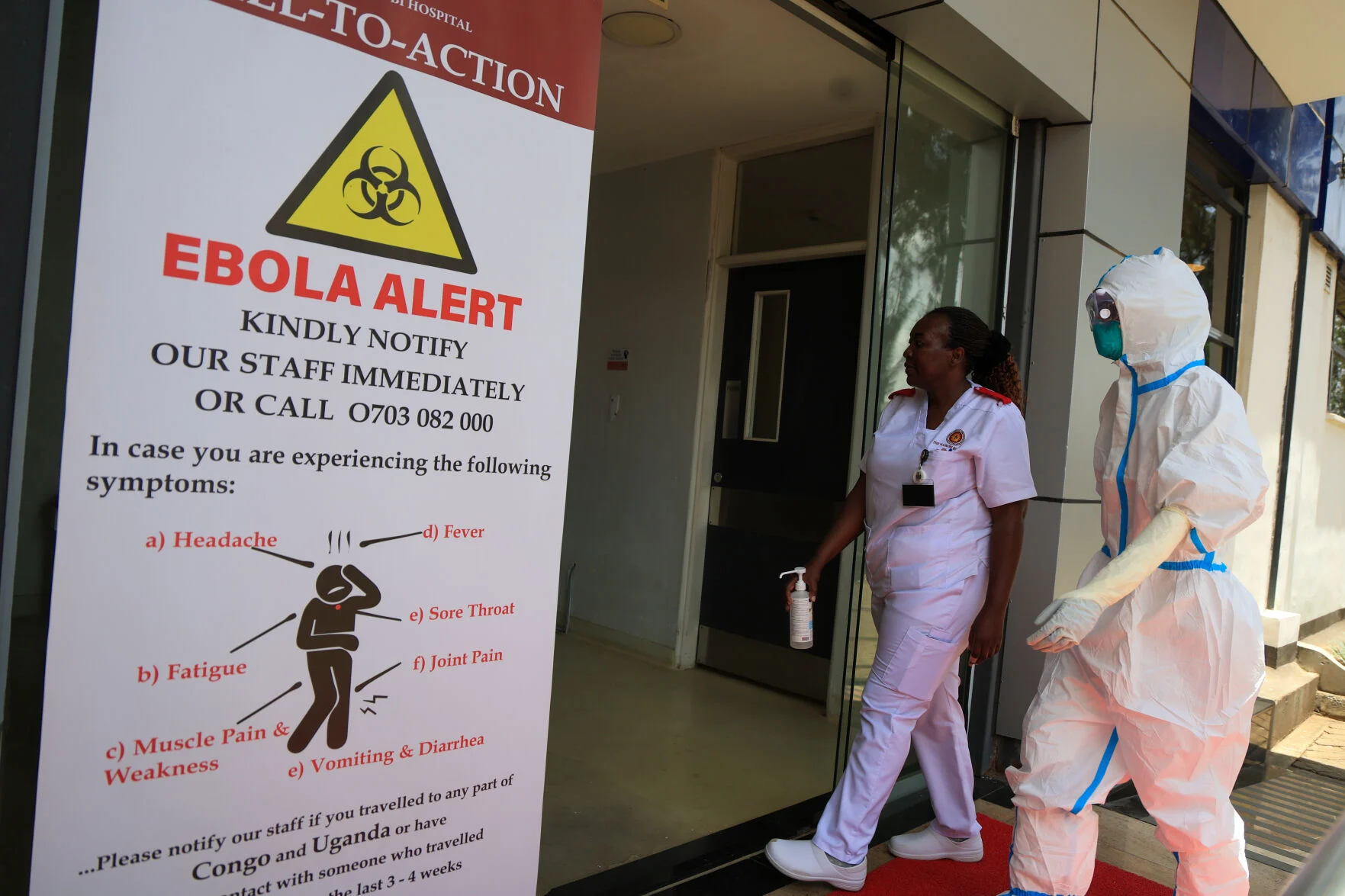
KAMPALA, Uganda — Uganda has introduced a mandatory 21-day quarantine for citizens returning from the Democratic Republic of the Congo (DRC) who have a history of travel there, as authorities strengthen measures to prevent the spread of Ebola.
Health Minister Chris Baryomunsi announced the measure on Sunday, October 25, as health officials investigate possible links between recent Ebola cases reported in Kenya and Nigeria. Returning Ugandans subject to the measure will be required to pay for their quarantine, according to the Ministry of Health.
The government has also intensified health screening at Entebbe International Airport and land border crossings. Incoming travellers are required to complete forms providing contact information to support monitoring and contact tracing.
Uganda declared its latest Bundibugyo Ebola outbreak over in July after recording 20 confirmed infections and two deaths. However, the emergence of cases in neighbouring countries has prompted renewed concern about cross-border transmission.
The investigation has focused partly on a Ugandan-born woman married to a Swiss diplomat who tested positive for Ebola in Nigeria on October 20, after travelling to Abuja, the Nigerian capital.
Swiss authorities have indicated that she contracted the virus during a visit to Uganda in September. Baryomunsi, however, questioned whether investigators had fully examined other possible routes of exposure.
The Ugandan minister said relatives of the woman who had previously travelled to the DRC had met her in a Kampala suburb. He argued that investigators needed to determine whether this contact could explain the infection.
“We should speak science, not politics,” Baryomunsi said.
The World Health Organization (WHO) said information available to it as of October 23 did not indicate that the woman herself had travelled to the DRC. Nigerian and Ugandan authorities are continuing to investigate her movements and the possible source of infection. No definitive transmission route has been established.
Authorities are also examining the movements of a Kenyan man who travelled from the DRC through Uganda before flying to Nairobi on October 3. He died two days later, and Kenya has since reported a second Ebola-related death.
Both patients passed through Entebbe International Airport on the same day. Ugandan officials said security footage showed no physical interaction between them.
Nigerian authorities have reported that genetic testing found closely related viruses in the Kenyan and Nigerian cases, although investigators have not established a direct link between the two infections.
Baryomunsi said 60 people in Uganda who were traced following possible contact with the Kenyan patient had completed 21 days of monitoring and been discharged.
The DRC continues to face a major outbreak of Bundibugyo virus disease. According to the WHO’s October 23 update, the country had recorded 9,704 confirmed cases and 4,687 deaths as of October 20, across eight provinces.
The outbreak has spread across numerous health zones, with sustained transmission reported in several areas. The WHO has urged countries to strengthen surveillance, contact tracing and cooperation across borders.
Bundibugyo virus is a strain of Ebola for which there is currently no approved vaccine or specific treatment. The virus spreads through direct contact with the bodily fluids of an infected person, and symptoms can take up to 21 days to develop.
Despite the outbreak, the WHO has advised against imposing travel or trade restrictions on affected countries, while calling for stronger public-health measures and cross-border coordination.
Source: World Health Organization
African360 WhatsApp Channel for more News update: https://whatsapp.com/channel/0029Vb7Oc6nGk1FpdCN0xn44