Physical Address
304 North Cardinal St.
Dorchester Center, MA 02124
Physical Address
304 North Cardinal St.
Dorchester Center, MA 02124

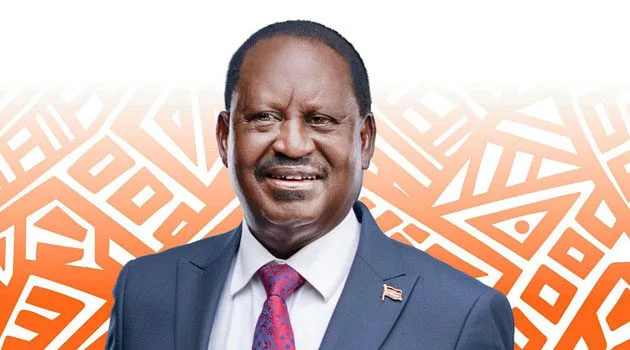
One year after the death of veteran Kenyan opposition leader Raila Odinga, the Orange Democratic Movement (ODM) is grappling with internal divisions over its relationship with President William Ruto’s government, raising questions about the party’s future and the direction of Kenya’s opposition.
NAIROBI, Kenya — Raila Odinga’s death on October 15, 2025, marked a turning point in Kenyan politics. A year later, the movement he led for decades is struggling to maintain unity as disagreements over political cooperation, party leadership and opposition independence continue to grow.
Odinga was a central figure in Kenya’s struggle for multiparty democracy and constitutional reform. For generations of supporters, he represented resistance to political exclusion and a demand for greater accountability.
But his passing has exposed a difficult challenge for the Orange Democratic Movement: how to preserve its founding principles while navigating a political landscape in which its relationship with the government has become a major source of disagreement.
At the centre of the dispute is ODM’s cooperation with President William Ruto. The removal of Edwin Sifuna from the party’s secretary-general position has sharpened tensions between those who support closer engagement with the administration and those who believe the party must maintain a more independent opposition role.
Odinga’s influence extended beyond his formal political positions. His ability to negotiate alliances, mobilise supporters and bring competing interests together helped shape Kenya’s opposition for decades.
Political analyst Professor Herman Manyora argues that the opposition has struggled to find a figure capable of uniting the different political interests that Odinga once brought together.
His assessment highlights a wider question facing political movements built around influential individuals: can the organisations they leave behind develop institutions and leadership structures strong enough to sustain their political identity?
ODM’s current divisions suggest that the challenge involves more than selecting a new leader. The party must also establish a shared vision that can command support across its different factions.
Without a common agenda, disagreements over alliances and leadership risk overshadowing the policy issues the party seeks to champion.
Odinga’s decision to cooperate with Ruto in 2024 remains one of the most debated aspects of his later political career.
The move followed widespread youth-led protests against the government’s Finance Bill and broader grievances over taxation, governance and accountability. Many young demonstrators were dissatisfied with established political leaders and the way political decisions were being made.
Odinga’s engagement with Ruto was viewed differently across the political spectrum. Supporters of dialogue saw cooperation as a possible route to political stability and reforms, while critics worried that the opposition risked losing its independence by working with the administration it had previously challenged.
Manyora argues that Odinga’s intervention helped Ruto’s government through a period of political pressure. That is an interpretation of the alliance’s consequences, rather than proof that the government would otherwise have collapsed.
For some members of the younger generation, the partnership also created a gap between the reformist image associated with Odinga’s political history and the choices he made near the end of his life.
Joshua Okayo, a lawyer and human rights activist who identifies with Gen Z, expressed appreciation for Odinga’s contribution to democracy and social justice while describing the alliance as a source of disappointment.
His position reflects a broader tension: whether political compromise can advance reform or whether it risks alienating citizens who want a clearer break from established political arrangements.
The question remains relevant as Kenya approaches its next general election cycle. Younger citizens who mobilised outside traditional party structures have demonstrated that political participation does not necessarily depend on established opposition leaders. Their demands for accountability and responsive governance remain important to the national debate.
The dispute surrounding Edwin Sifuna has become a focal point in ODM’s struggle over its political direction.
Sifuna opposed closer cooperation with Ruto’s administration, while party officials backing engagement have argued that the relationship should be judged by the commitments made between the two sides.
Catherine Omanyo, identified in reporting as ODM’s secretary-general, has defended cooperation on the basis of a 10-point agreement signed by Odinga and Ruto. She argues that the party’s principles include democracy, devolution, social justice and the rights of ordinary Kenyans.
That position places the emphasis on what the agreement can deliver, rather than on whether ODM should automatically oppose the government.
However, an agreement alone cannot demonstrate that progress has been achieved. Its implementation, transparency and measurable outcomes are central to determining whether cooperation is serving the interests the party says it represents.
The controversy also raises questions about internal democracy within ODM: how disagreements are handled, how party decisions are reached and whether members who oppose the leadership’s direction can continue to participate meaningfully in party affairs.
For a party with a long history of challenging those in power, maintaining credibility may depend on demonstrating that its own internal processes reflect the democratic principles it advocates.
Cooperation between political rivals is not necessarily incompatible with opposition politics. Parties can negotiate reforms, support specific initiatives or engage with a government while continuing to scrutinise its decisions.
The central issue for ODM is whether it can establish clear limits to that cooperation.
That means explaining which commitments it expects the government to implement, how progress will be measured and what action it will take if those commitments are not fulfilled.
It also means being willing to criticise policies or decisions that conflict with the party’s stated principles, even when doing so creates tension within the political arrangement.
If ODM can demonstrate tangible results while preserving its ability to challenge the administration, its leaders can argue that cooperation offers a practical route to reform.
If progress remains unclear and criticism is constrained by political considerations, opponents within the party will have greater grounds to question whether the alliance is weakening its independent role.
These questions extend beyond the personalities involved. They concern the ability of political parties to build durable institutions, establish transparent decision-making and remain accountable to their supporters.
Odinga’s death has left ODM with an important historical legacy, but his influence on Kenyan politics cannot be measured solely by the fortunes of the party he led.
His career was associated with campaigns for multiparty democracy, constitutional change and political accountability. Those themes remain part of Kenya’s public debate, even as political alliances and leadership structures change.
The country’s wider opposition also faces the task of developing credible alternatives, organising around policies and responding to public concerns. Divisions within ODM are significant, but they do not alone determine the future of opposition politics across Kenya.
Ultimately, the test of Odinga’s legacy will depend on what political leaders and institutions do with the principles associated with his career.
For ODM, that means deciding how it will balance negotiation with scrutiny, cooperation with independence, and the memory of its founding leader with the need to build a political future beyond him.
One year after his death, the central question is no longer simply who can replace Raila Odinga. It is whether the movement he helped build can sustain its stated ideals through its decisions, policies and treatment of internal dissent.
The answer will be shaped less by appeals to his memory than by the party’s actions and the results it delivers for Kenyans.
African360 WhatsApp Channel for more News update: https://whatsapp.com/channel/0029Vb7Oc6nGk1FpdCN0xn44