Physical Address
304 North Cardinal St.
Dorchester Center, MA 02124
Physical Address
304 North Cardinal St.
Dorchester Center, MA 02124
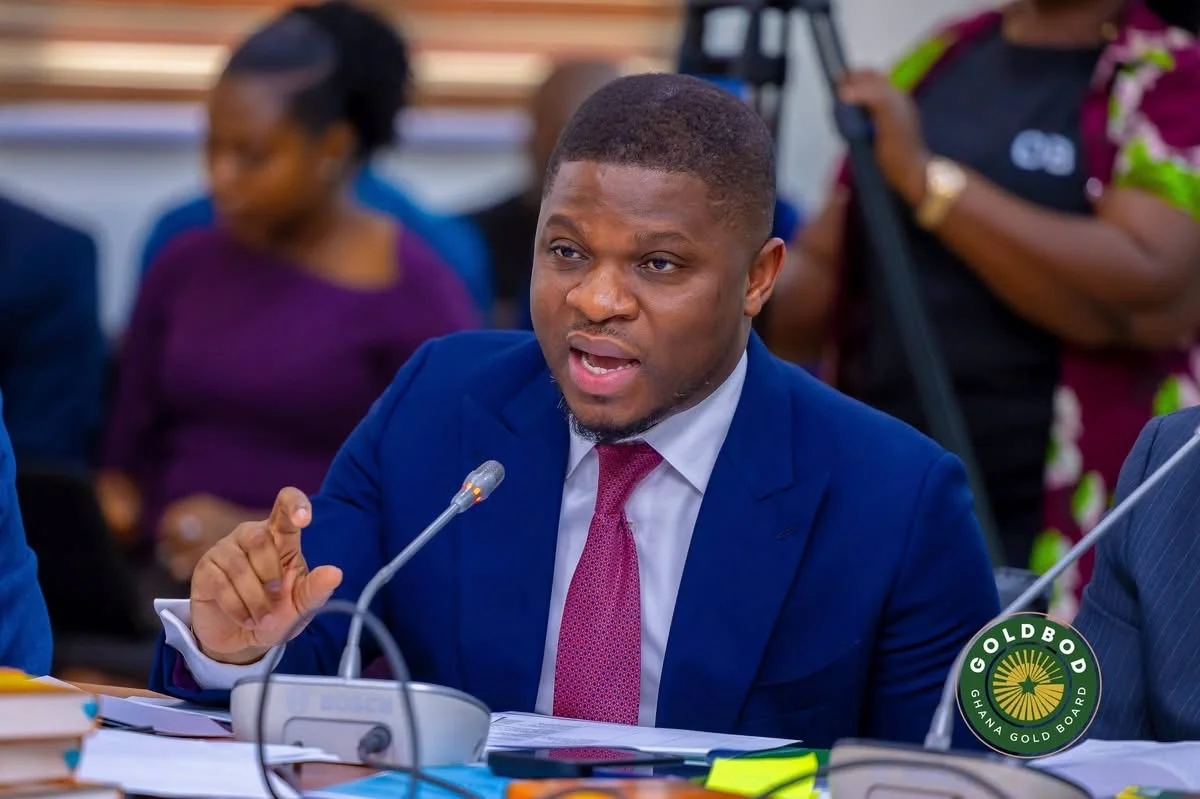
Ghana Gold Board (GoldBod) Chief Executive Officer Sammy Gyamfi has told Parliament’s Public Accounts Committee (PAC) that the Board does not trade in foreign exchange but sells forex generated through its statutory gold operations.
Mr Gyamfi made the clarification on Tuesday, October 13, 2026, during a sitting of the committee, where members questioned whether GoldBod was authorised to operate in the foreign exchange market and whether it held the necessary licence from the Bank of Ghana.
He explained that GoldBod was established under the Ghana Gold Board Act, 2025 (Act 1140), with a mandate to generate foreign exchange for the country and support the Bank of Ghana’s gold reserve accumulation.
According to him, the Board does not buy foreign currency for speculative or trading purposes. Instead, it sells foreign exchange generated through its statutory activities to make funds available to the economy and obtain the cedis needed to purchase gold.
“The Gold Board does not trade currency,” Mr Gyamfi told the committee, distinguishing the Board’s operations from those of licensed foreign exchange dealers who buy and sell currencies as a business.
Mr Gyamfi said GoldBod’s foreign exchange sales were directly connected to its statutory responsibilities rather than an independent currency-trading business.
He explained that the Board generates foreign exchange through its gold operations and makes the proceeds available to the Bank of Ghana and commercial banks in exchange for cedis.
The cedi proceeds are then used to finance the purchase of gold, which forms part of the Board’s work under the national gold programme.
He cited Section 2B of the Ghana Gold Board Act, 2025, as the basis for the Board’s mandate to generate foreign exchange for Ghana.
Mr Gyamfi maintained that selling the forex generated through these operations was necessary to fulfil that mandate.
The GoldBod CEO disclosed that the Board wrote to the Bank of Ghana on September 23, 2026, seeking guidance and authorisation for its funding model after obtaining policy approval from the Minister of Finance.
He said the central bank had subsequently provided the guidance and authorisation sought by the Board.
Mr Gyamfi also referred to Section 12 of Act 1140 in explaining the process through which GoldBod obtained policy approval for its funding arrangements.
However, the committee’s questions centred on whether the Bank of Ghana’s response amounted to a formal foreign exchange licence or constituted a different form of regulatory authorisation.
The distinction is important because the Board’s position is that its activities involve selling forex generated through its statutory functions rather than trading currency as a commodity.
The issue arose when the committee’s chairperson, Abena Osei-Asare, questioned whether GoldBod traded in foreign currency and whether it possessed a Bank of Ghana licence to undertake such activities.
Mr Gyamfi reiterated that the Board does not buy foreign currency and therefore should not be described as a currency trader in the conventional sense.
He explained that the Board’s foreign exchange sales were intended to make funds generated from its operations available to the country’s financial system.
Committee members subsequently requested a copy of the correspondence between GoldBod and the Bank of Ghana to establish the precise nature of the central bank’s approval.
The documentation is expected to help members determine whether the authorisation granted to GoldBod constitutes a formal licence or another regulatory arrangement.
Until the correspondence is examined, the distinction between the Board’s claimed statutory authority and the specific regulatory approval it received remains central to the committee’s inquiry.
GoldBod was established to organise and regulate Ghana’s gold trading activities, strengthen the country’s position in the gold value chain and support foreign exchange generation.
Its operations are linked to the government’s broader efforts to use gold exports to improve foreign exchange inflows and support the accumulation of national reserves.
The Board’s funding model is therefore important to its ability to purchase gold from producers and other market participants.
However, the PAC’s questions highlight the importance of establishing how GoldBod’s activities fit within the Bank of Ghana’s regulatory framework for foreign exchange operations.
Clear documentation of the applicable approvals could help clarify the legal basis for the Board’s arrangements and address questions about the scope of its authority.
Mr Gyamfi maintained before the committee that GoldBod’s foreign exchange sales are part of its statutory mandate and are not equivalent to currency trading.
The PAC’s request for the correspondence with the central bank means the issue will depend, in part, on the documentation available to support that position.
The committee’s examination is focused on clarifying the Board’s authority and determining whether the necessary regulatory requirements have been met.
African360 News will continue to follow the Public Accounts Committee’s proceedings and any further clarification from GoldBod or the Bank of Ghana.
African360 WhatsApp Channel for more News update: https://whatsapp.com/channel/0029Vb7Oc6nGk1FpdCN0xn44