Physical Address
304 North Cardinal St.
Dorchester Center, MA 02124
Physical Address
304 North Cardinal St.
Dorchester Center, MA 02124

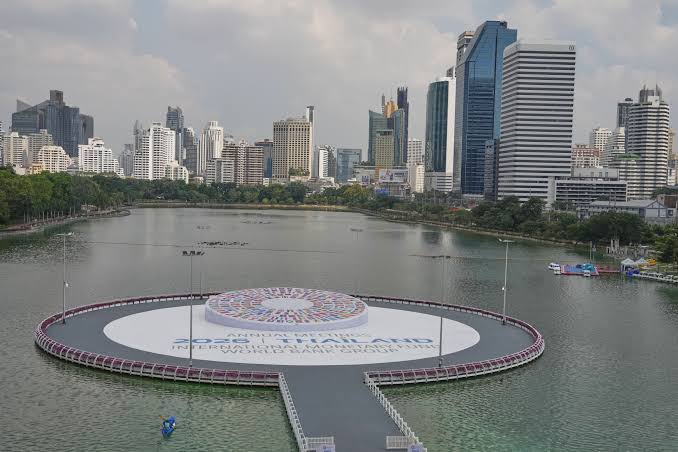
The International Monetary Fund (IMF) has downgraded its economic outlook for the Middle East and Central Asia, forecasting a 0.3% contraction in 2026 as the US-Israel war on Iran disrupts energy production and shipping through the Strait of Hormuz.
In its latest World Economic Outlook released on Tuesday, October 13, 2026, the IMF revised its regional forecast sharply downward from the 1.9% economic expansion projected in April.
The disruption to shipping through the Strait of Hormuz, a critical global energy route that carries around one-fifth of global oil supplies in peacetime, is placing considerable pressure on economies that depend heavily on energy production and exports. <Cite refs={[“turn290095search2″,”turn290095search0”]}/>
Kuwait, Iraq and Qatar are expected to experience the region’s steepest economic declines in 2026, according to the IMF’s latest projections.
The forecast contractions are:
These projections reflect the impact of disrupted energy production, transportation difficulties and restrictions affecting the movement of oil and other goods through the region.
Saudi Arabia has partially cushioned the effects on its energy sector by increasing oil exports through its East-West pipeline, which provides an alternative route that bypasses the Strait of Hormuz. <Cite refs={[“turn290095search2″,”turn290095search1”]}/>
Despite the challenging outlook for much of the region, the IMF expects some economies to continue expanding.
Kyrgyzstan is projected to record the strongest growth in the Middle East and Central Asia grouping, with its economy forecast to expand by 9% in 2026.
The regional outlook is uneven, reflecting differences in countries’ exposure to energy disruptions, trade routes and the wider effects of the conflict.
The IMF’s forecast makes the Middle East and Central Asia the only region expected to record negative economic growth in 2026. <Cite refs={[“turn290095search2″,”turn290095search0”]}/>
While the Middle East and Central Asia face a downturn, the IMF expects the global economy to grow by 3.1% in 2026, up from its previous projection of 3%.
The institution’s forecasts for selected economies and regions include:
The figures highlight how the economic effects of the conflict are being distributed unevenly across the world. Countries more directly exposed to disruptions in Middle Eastern energy production and transportation face greater pressure, while other regions are expected to maintain positive growth. <Cite refs={[“turn290095search2″,”turn290095news20”]}/>
Despite the slightly improved global forecast, the IMF warned that the world economy remains vulnerable to additional shocks.
The institution identified further escalation of conflicts, renewed trade tensions, fiscal vulnerabilities and a reassessment of expectations surrounding artificial intelligence as risks that could weaken economic activity.
However, the IMF also highlighted potential sources of stronger growth, including increased investment in artificial intelligence, productivity gains from the technology and a sustained easing of geopolitical and trade tensions.
The outlook will depend partly on how the conflict evolves and whether disruptions to energy supplies and international shipping can be reduced.
The IMF’s latest projections underline the economic consequences that prolonged conflict can have beyond the countries directly involved.
For energy-producing economies in the Middle East, restrictions on exports and transportation can reduce economic activity, while disruption to global energy markets can create additional costs and uncertainty for businesses and governments elsewhere.
Although global growth is still expected to remain positive in 2026, the sharp downgrade for the Middle East and Central Asia demonstrates the vulnerability of regional economies to prolonged geopolitical shocks.
Source: International Monetary Fund (IMF), October 2026 World Economic Outlook, as reported by Al Jazeera and Reuters.
African360 News — Bringing you the latest global business, economic and financial news.
African360 WhatsApp Channel for more News update: https://whatsapp.com/channel/0029Vb7Oc6nGk1FpdCN0xn44