Physical Address
304 North Cardinal St.
Dorchester Center, MA 02124
Physical Address
304 North Cardinal St.
Dorchester Center, MA 02124

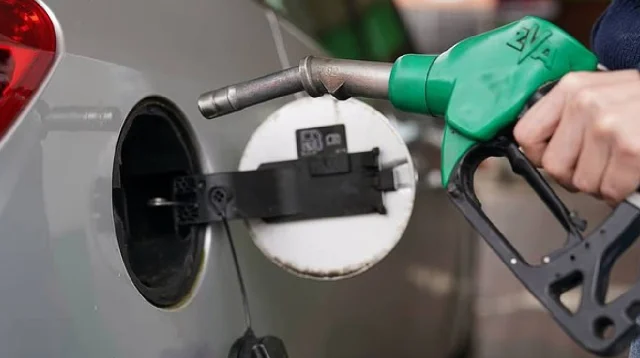
US President Donald Trump is facing growing criticism from Republican and Democratic lawmakers over his plan to import diesel from Russia, with opponents warning that the deal could undermine sanctions imposed over Moscow’s war against Ukraine.
Trump announced on Friday, October 9, 2026, that Russian President Vladimir Putin had agreed to release 300,000 tonnes of diesel immediately to the American and global markets, followed by additional shipments in the coming months.
The announcement represents a contentious shift in US policy, coming just weeks after Trump signed legislation intended to increase economic pressure on Russia and countries purchasing its oil and gas.
The US administration says the arrangement is aimed at easing fuel prices that have risen amid the ongoing war involving the United States, Israel and Iran, which has disrupted global energy supplies.
However, critics argue that allowing Russian diesel into the market could provide Moscow with additional revenue while its war against Ukraine continues.
In a post on Truth Social, Trump said Russia would initially release 300,000 tonnes of diesel, followed by 500,000 tonnes in November and another one million tonnes thereafter.
He also announced plans for a further three million tonnes to be delivered within a relatively short period, depending partly on the condition of Russian refineries.
Russian Deputy Prime Minister Alexander Novak confirmed the proposed volumes to the state-owned news agency TASS, saying exports could eventually reach three million tonnes per month.
Trump defended the arrangement by pointing to the impact of rising fuel prices on American consumers and businesses.
“Lower prices for Americans, especially our Great Farmers, Ranchers, and Truckers, is my Greatest Priority,” he wrote.
Farmers, ranchers and trucking companies are particularly sensitive to diesel costs because the fuel powers agricultural machinery and many commercial vehicles used to transport goods.
Nevertheless, analysts have questioned whether Russia can supply the promised quantities, particularly as Ukrainian attacks have damaged Russian refining infrastructure. They have also questioned how much additional Russian diesel would reduce prices for American consumers.
On Sunday, October 11, seven senators from both major US political parties called on Trump to abandon the plan.
The group comprises Republicans Susan Collins, Lisa Murkowski, Thom Tillis and John Curtis, alongside Democrats Jeanne Shaheen, Richard Blumenthal and Ron Wyden.
In a joint statement, the lawmakers argued that Congress had prohibited Russian energy imports following Moscow’s full-scale invasion of Ukraine in 2022.
They said the administration had failed to consult Congress or provide the explanation they believe is required under the law.
The senators warned that purchasing Russian energy could undermine efforts to restrict the revenue available to the Kremlin to finance the war.
Their objections also come shortly after Trump signed new sanctions legislation aimed at increasing pressure on Russia and countries that continue to purchase its oil and gas.
The dispute centres partly on whether the administration’s decision to permit Russian diesel imports can be reconciled with existing restrictions and the requirements of the recently enacted legislation.
Treasury Secretary Scott Bessent has defended the administration’s approach, saying the arrangement would operate through existing legal channels to help reduce energy prices.
Not all Republicans oppose easing restrictions. Republican Representative Thomas Massie has argued for lifting sanctions on petroleum products more broadly.
Ukrainian President Volodymyr Zelensky has criticised the proposed arrangement, describing it as a gift to Putin and arguing that it could help sustain Russia’s war effort.
Ukraine and its allies have sought to limit Moscow’s energy revenues as part of broader efforts to pressure the Kremlin to end the conflict.
The US decision has also drawn criticism from international figures, including Canadian Prime Minister Mark Carney and UK Defence Secretary Wes Streeting, who have emphasised the importance of maintaining pressure on Russia.
For Ukraine, the concern is that easing restrictions on Russian energy sales could weaken the economic pressure intended to discourage further military action.
The Trump administration, however, maintains that increasing fuel supplies could help ease prices at a time when consumers and businesses are facing higher energy costs.
The diesel agreement comes as the war involving the United States, Israel and Iran continues to affect global energy markets.
Disruptions to oil supplies and uncertainty about shipping routes have contributed to rising prices, placing pressure on households, businesses and industries that depend heavily on fuel.
In the United States, diesel prices have become a particular concern for the agricultural and transport sectors. The American Automobile Association (AAA) figures cited in reports put the national average at approximately US$6.28 per gallon, below a recent record of US$6.53.
The fuel-price increase has also become a political issue ahead of the November 3 US midterm elections, when voters will decide which party controls Congress.
Trump has presented the Russian diesel arrangement as a way to ease the burden on consumers and businesses. Critics, however, question whether the proposed shipments will be large enough or arrive quickly enough to make a substantial difference.
The United States consumes millions of barrels of diesel each day, meaning the effect of additional imports will depend on the volumes delivered, the timing of shipments and wider market conditions.
Energy analysts have questioned whether Russia can deliver the promised quantities while dealing with damage to its refineries and other pressures on its energy industry.
Even if the shipments proceed, the effect on US fuel prices remains uncertain. Diesel prices are influenced by more than crude oil availability, including refining capacity, transportation costs, inventories and global demand.
The financial benefits to Russia will also depend on the volume ultimately exported, the prices received and the terms of the arrangement.
The administration’s reported easing of restrictions on Russian diesel exports has raised further questions about how the policy will be implemented and how it will interact with existing sanctions.
The controversy intensified after Trump announced on Sunday that Russia and Ukraine had agreed to an “energy ceasefire”.
He did not provide detailed terms, and Zelensky said he welcomed the proposal while indicating that more information was needed. At the time of the announcement, Moscow had not publicly confirmed the arrangement.
The proposed ceasefire would focus on attacks against energy infrastructure, a critical issue for both countries as the war continues.
The announcement has not resolved the wider questions surrounding the conflict or the diesel agreement, which remains contentious among US lawmakers and Ukraine’s international partners.
Trump’s Russian diesel plan has brought two competing priorities into sharp focus: reducing fuel costs for American consumers and maintaining economic pressure on Russia over its war against Ukraine.
The administration argues that additional supplies could help ease prices, while opponents warn that relaxing restrictions could weaken US sanctions policy and benefit Moscow.
The outcome will depend on the legal basis for the imports, the volumes Russia can deliver, the response from Congress and the effect of the shipments on energy markets.
For now, the deal remains a source of political and diplomatic tension as the United States confronts rising energy costs and continues to navigate its relationships with Russia, Ukraine and other international partners.
African360 WhatsApp Channel for more News update: https://whatsapp.com/channel/0029Vb7Oc6nGk1FpdCN0xn44