Physical Address
304 North Cardinal St.
Dorchester Center, MA 02124
Physical Address
304 North Cardinal St.
Dorchester Center, MA 02124

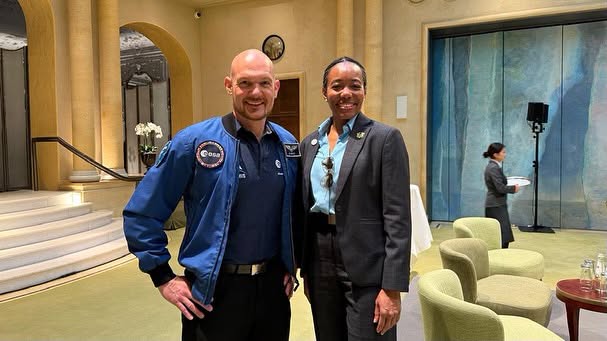
The government is advancing plans to transform the Ghana Space Science and Technology Institute (GSSTI) into a fully fledged Ghana Space Agency, aiming to improve coordination of the country’s space activities and expand the use of satellite technology for national development.
The Minister of Environment, Science and Technology, Dr Zanetor Agyemang-Rawlings, announced the initiative during a media engagement in Accra as part of her First 100 Days Public Engagement Agenda.
The proposed transformation follows Cabinet approval, with the government now working on the legislative and institutional framework required to establish the agency. Drafting instructions have been submitted to the Attorney-General’s Department as preparations for the necessary legislation progress.
According to the government, the new agency would provide a central framework for coordinating national space programmes, supporting research and innovation, promoting public-private partnerships and strengthening international cooperation.
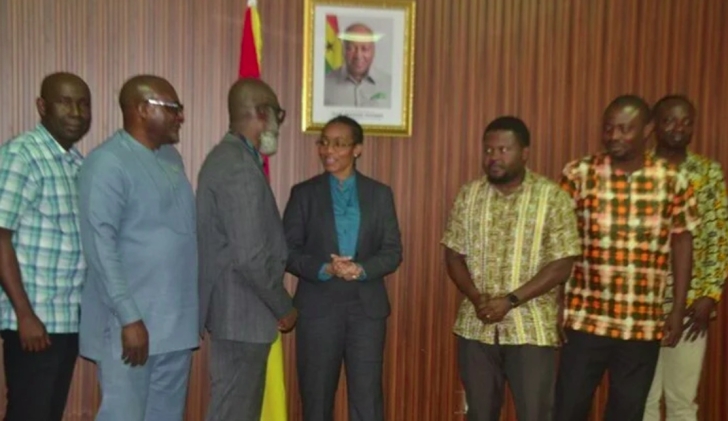
The proposed Ghana Space Agency is expected to help Ghana move beyond research and policy development towards the wider practical application of space science and technology.
Satellite imagery and geospatial data can support several sectors, including agriculture, environmental monitoring, disaster management, telecommunications, mining, logistics, insurance and national security.
The government also wants to encourage investment in aerospace and satellite engineering, remote sensing, geospatial science, artificial intelligence, robotics and data science. These efforts are intended to build local expertise and position Ghana as a regional centre for Earth observation and related technologies.
The plans align with Ghana’s national Space Policy, which identifies a statutory space agency as a key part of the country’s strategy for coordinating space activities, developing infrastructure, strengthening research and expanding commercial applications.
Dr Joseph Bremang Tandoh, Director of the Ghana Space Science and Technology Institute, said a central agency could help address the fragmentation of space-related activities across government institutions.
He explained that various ministries and public institutions independently undertake activities that require satellite data. This can make it harder to coordinate resources, acquire imagery efficiently and ensure that useful information reaches the institutions that need it.
A national agency could coordinate the acquisition and processing of satellite imagery and make the resulting information more accessible to government bodies.
Dr Tandoh also highlighted Ghana’s reliance on external providers for satellite imagery. He said stronger domestic capabilities could improve access to timely information for border surveillance, agricultural planning, flood forecasting and environmental monitoring.
Developing local expertise and infrastructure would therefore be important to ensuring that satellite data is translated into practical solutions for Ghana’s development needs.
Environmental protection is another major priority in Ghana’s space technology agenda.
The government plans to combine satellite imagery with drones, ground observations, geospatial systems and artificial intelligence to monitor deforestation, illegal mining, land degradation, water bodies, coastal erosion and drought.
These technologies could provide information to help authorities identify environmental changes, support enforcement and assess the effectiveness of interventions.
Satellite data can also contribute to flood early-warning systems, agricultural planning, forest monitoring and climate adaptation. For farmers and public agencies, timely information on weather, crop conditions and changing land use could improve planning and decision-making.
International partnerships are expected to play an important role as Ghana develops its space capabilities.
The government intends to deepen cooperation with international space organisations, universities, research institutions and development partners to strengthen technical expertise, research and infrastructure.
Ghana’s national Space Policy also emphasises the development of human resources, international collaboration, commercialisation of space applications and an appropriate legal and regulatory framework for participation by industry.
Greater coordination could help link public institutions, universities and private companies working on space-related research and services.
The first phase of the proposed agency’s development will focus on stakeholder engagement, advancing the legislative process, identifying infrastructure and capacity requirements, and strengthening international partnerships.
Although Cabinet has approved the proposal, the legal and institutional arrangements still need to be developed before the agency can be fully established and operationalised.
The proposed transformation represents a new stage in Ghana’s effort to build a coordinated national space programme. Its eventual impact will depend on the legislation, funding, technical infrastructure and skilled workforce put in place to turn the policy objectives into practical results.
If implemented effectively, the agency could help Ghana use satellite data and Earth-observation technologies more widely in economic planning, environmental protection, disaster preparedness and national security.
African360 WhatsApp Channel for more News update: https://whatsapp.com/channel/0029Vb7Oc6nGk1FpdCN0xn44