Physical Address
304 North Cardinal St.
Dorchester Center, MA 02124
Physical Address
304 North Cardinal St.
Dorchester Center, MA 02124

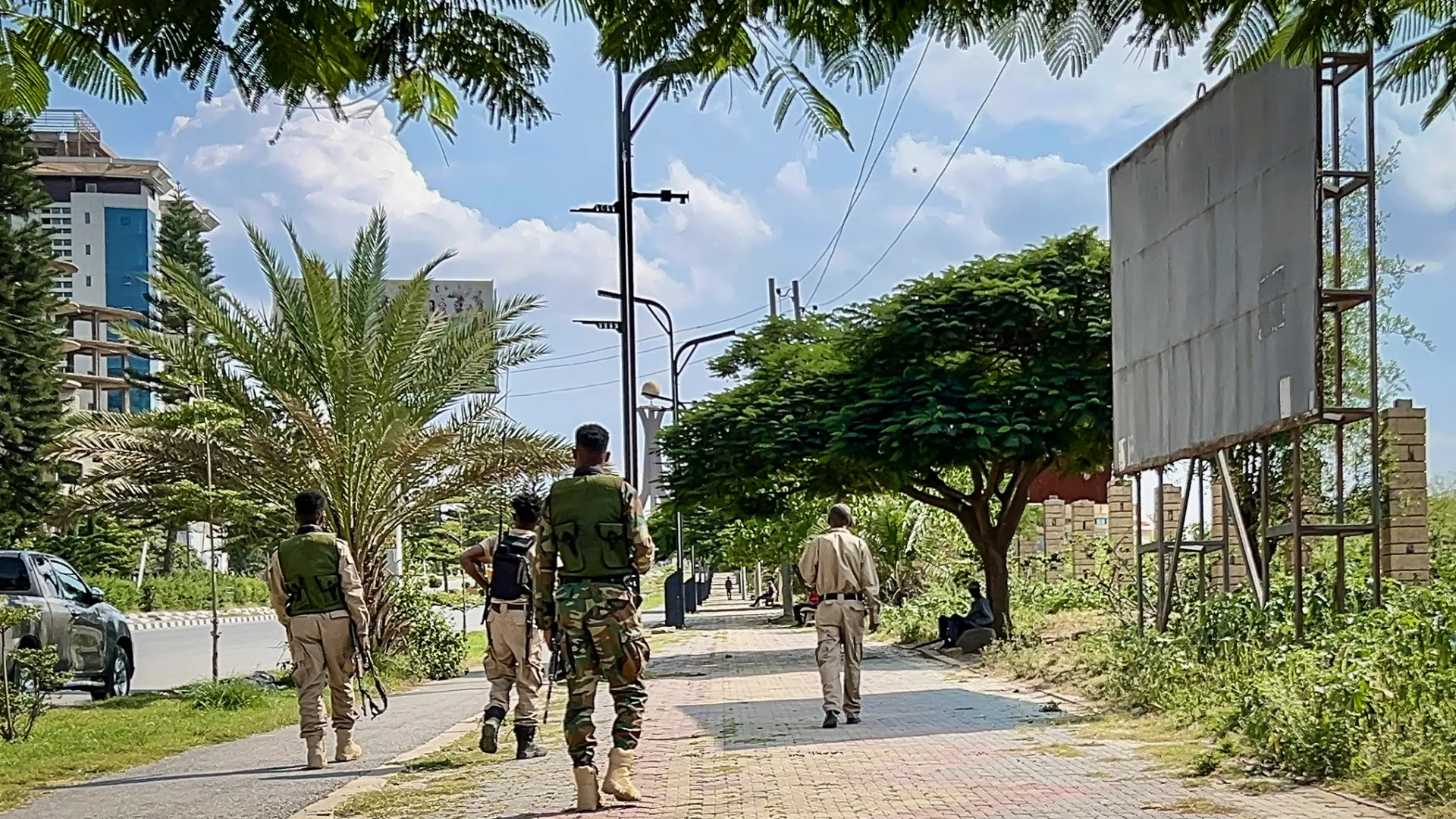
Ethiopia’s renewed conflict in Tigray is raising fears of a wider regional crisis as federal forces regain control of Mekelle, Eritrea faces growing tensions with Addis Ababa, and rival regional powers strengthen diplomatic coordination.
Ethiopian government-aligned forces have retaken Mekelle, the capital of the northern Tigray region, after the Tigray People’s Liberation Front (TPLF) and allied fighters withdrew following renewed fighting.
The withdrawal, reported on October 4, 2026, represents a major setback for the TPLF and its allies. However, the fighting has continued in other parts of northern Ethiopia, leaving the future of the 2022 Pretoria peace agreement increasingly uncertain. Reuters and the Associated Press have reported further clashes and civilian casualties following the change in control of Mekelle. <Cite refs={[“turn563353news38″,”turn563353news41″,”turn563353news42”]}/>
The conflict is also unfolding against a backdrop of deteriorating relations between Ethiopia and Eritrea, disputes over the Nile River and mounting tensions surrounding Ethiopia’s ambition to secure access to the Red Sea.
The return of government-aligned forces to Mekelle does not necessarily mean the rebellion has been defeated.
The TPLF withdrew from the city after a federal counteroffensive, saying it would continue its resistance. The group and several other armed movements have joined an opposition alliance seeking to challenge Prime Minister Abiy Ahmed’s government.
The developments recall the 2020–2022 Tigray war, when federal forces initially captured Mekelle before Tigrayan fighters regrouped and eventually regained control of the regional capital.
That conflict caused a devastating humanitarian crisis, with mass displacement, widespread destruction and hundreds of thousands of deaths reported or estimated during the war and its aftermath.
The Pretoria Agreement, signed in November 2022, was intended to end the fighting. However, disputes over territorial control, disarmament, political representation and the return of displaced people remained unresolved.
Renewed hostilities now threaten to reverse the fragile progress made under the peace agreement. <Cite refs={[“turn563353search2″,”turn563353news45”]}/>
Ethiopia also faces armed insurgencies in other regions, including Amhara and Oromia. Continued fighting in Tigray could therefore place additional pressure on federal forces and complicate efforts to restore stability across the country.
One of the most sensitive issues in the unfolding crisis is Ethiopia’s determination to secure reliable access to the sea.
Ethiopia became landlocked when Eritrea gained independence in 1993, leaving the country heavily dependent on neighbouring states for access to international shipping routes.
Djibouti remains Ethiopia’s principal maritime gateway, although Addis Ababa has explored alternative trade and port arrangements with other countries.
Prime Minister Abiy Ahmed has repeatedly described access to the Red Sea as a strategic priority for Ethiopia’s economic development.
His government has argued that the country’s population, economic needs and geographical position justify efforts to secure reliable maritime access through negotiations and mutually beneficial arrangements.
However, Ethiopia’s ambitions have caused concern in Eritrea, particularly because of the strategic importance of the port of Assab.
For Eritrea, any attempt by Ethiopia to obtain access through coercion or territorial claims would raise serious national security concerns. For Ethiopia, reducing dependence on a single maritime route is an important economic and strategic objective.
The challenge is to reconcile those interests without triggering a direct confrontation between the neighbouring countries. <Cite refs={[“turn563353news43″,”turn563353search8”]}/>
Regional diplomacy has added another dimension to the crisis.
On October 4, the leaders of Egypt, Eritrea, Somalia and Sudan met in New Alamein, Egypt, for a quadrilateral consultative summit focused on regional developments and cooperation.
The leaders discussed political, economic and trade cooperation, regional security, and developments in the Horn of Africa and the Red Sea.
Their joint declaration emphasised respect for national sovereignty, territorial integrity, noninterference in domestic affairs and the peaceful resolution of disputes.
Although the summit did not establish a formal military alliance, it demonstrated a willingness among the four governments to coordinate their positions on shared regional concerns. <Cite refs={[“turn563353search0″,”turn563353search1”]}/>
The countries have different priorities and relationships with Ethiopia. Nevertheless, their concerns overlap on several issues, including the Red Sea, regional security and the long-running dispute over the Grand Ethiopian Renaissance Dam.
Egypt and Sudan have opposed aspects of Ethiopia’s approach to managing the Nile, while Eritrea remains concerned about Ethiopia’s maritime ambitions.
Somalia, meanwhile, has its own security and sovereignty concerns in its relationship with Addis Ababa.
These overlapping interests could shape regional diplomacy as the Tigray conflict continues.
Relations between Ethiopia and Eritrea have deteriorated sharply, increasing concerns that the conflict could extend beyond Tigray.
Eritrean forces fought alongside Ethiopian government troops during the 2020–2022 war. Since then, relations between the two governments have deteriorated over security, political and strategic disagreements.
Recent reports of Eritrean troops entering towns in northern Ethiopia have intensified those concerns.
On October 9, Reuters reported that Ethiopia had accused Eritrea of an incursion into its territory and told the United Nations Security Council that Eritrean forces had advanced into northern Ethiopia. Eritrea has rejected accusations of supporting the opposition alliance and disputed Ethiopia’s account of the border situation. <Cite refs={[“turn563353news36″,”turn563353search8”]}/>
The competing claims have not been independently established in full, but they illustrate the seriousness of the diplomatic breakdown.
If Ethiopian and Eritrean forces engage directly, the consequences could extend well beyond the Tigray region.
A confrontation could disrupt trade, worsen displacement, strain humanitarian operations and draw other regional actors into a more dangerous security crisis.
Sudan’s ongoing civil war further complicates the situation.
The conflict between the Sudanese Armed Forces and the paramilitary Rapid Support Forces has created a major humanitarian emergency and increased competition for influence among neighbouring countries and external powers.
Egypt has maintained close ties with Sudan’s army, while allegations of outside support for the opposing sides have become a recurring feature of the conflict.
Ethiopia has also faced allegations concerning support networks linked to Sudan’s armed groups. Such claims require careful attribution and independent verification, particularly where governments and external actors deny involvement.
The instability in Sudan intersects with wider disputes over the Nile, border security and regional trade routes.
For Egypt, developments in Sudan are closely connected to its national security and water interests. For Ethiopia, instability along its western border presents additional security challenges at a time when federal forces are already facing pressure in several regions.
These overlapping conflicts increase the risk that local confrontations could become entangled with wider regional rivalries.
The growing diplomatic tensions do not automatically mean that neighbouring countries will intervene militarily.
Egypt, Eritrea, Sudan and Somalia each have different strategic objectives, domestic challenges and security priorities.
Eritrea has a direct border and security interest in the Tigray conflict. Egypt’s principal concerns include the Nile dispute and regional influence. Sudan remains consumed by its civil war, while Somalia faces persistent internal security challenges.
Their cooperation could remain diplomatic, economic or political rather than develop into direct military action.
Nevertheless, continued fighting in Tigray could create opportunities for external actors to exert influence through political support, security partnerships or other forms of assistance.
Ethiopia’s federal government has accused neighbouring countries of supporting armed opposition groups, while the countries concerned have denied the allegations.
Without independently verified evidence, these accusations should not be treated as established fact.
The decisive question is whether the parties can prevent their competing interests from turning the current crisis into a broader regional conflict.
Ethiopia now faces a difficult combination of domestic conflict and regional tensions.
Although government-aligned forces have regained control of Mekelle, the continued presence of armed opposition groups means the security situation remains unsettled.
The federal government must contend with the challenge of restoring order in Tigray while managing insurgencies elsewhere in the country. It must also navigate deteriorating relations with Eritrea and persistent disagreements with Egypt and Sudan.
For civilians, the immediate concerns include safety, access to healthcare, reliable communications, food supplies and humanitarian assistance.
A prolonged conflict could further disrupt livelihoods and delay the recovery of communities already affected by the previous war.
The African Union, the United Nations and regional governments face a growing need to encourage de-escalation, protect civilians and support renewed political dialogue.
The recapture of Mekelle marks an important battlefield development, but it does not guarantee an end to Ethiopia’s renewed conflict in Tigray.
The crisis has become increasingly connected to wider disputes involving Red Sea access, Nile water security, Eritrea’s national security concerns and instability in Sudan.
While Egypt, Eritrea, Sudan and Somalia have strengthened diplomatic coordination, their shared concerns do not yet amount to proof of a coordinated military campaign against Ethiopia.
The coming weeks will be crucial in determining whether the fighting remains primarily an internal Ethiopian conflict or develops into a broader regional confrontation.
For the Horn of Africa, preventing further escalation will require diplomacy, respect for sovereignty, protection of civilians and a renewed effort to resolve the political disputes that remain unresolved since the 2022 peace agreement.
African360 WhatsApp Channel for more News update: https://whatsapp.com/channel/0029Vb7Oc6nGk1FpdCN0xn44