Physical Address
304 North Cardinal St.
Dorchester Center, MA 02124
Physical Address
304 North Cardinal St.
Dorchester Center, MA 02124
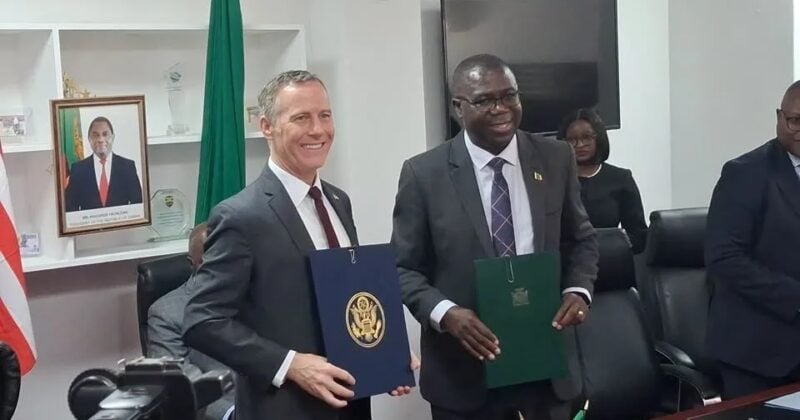
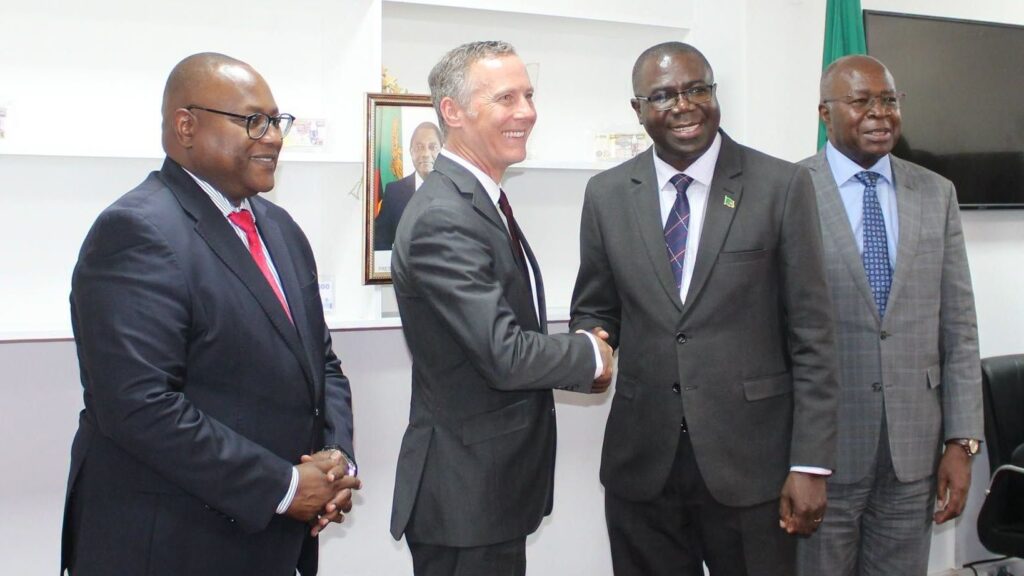
Zambia has signed a five-year health financing agreement worth more than $1.5 billion with the United States after months of negotiations over medical data privacy, biological specimens and concerns about access to the country’s mineral resources.
The agreement, signed in Lusaka on Thursday, 8 October 2026, marks a significant development in health cooperation between the two countries following public criticism of an earlier draft.
Under the arrangement, the United States will provide more than $1.5 billion to support Zambia’s healthcare sector, while the Zambian government has committed to increasing domestic health expenditure by approximately $975 million over five years. The combined commitments total roughly $2.49 billion under the official financing figures.
The agreement is intended to strengthen healthcare services, improve access to essential medicines and support programmes targeting HIV/AIDS, tuberculosis, malaria, maternal and child health, and disease surveillance.
The agreement follows months of disagreement over provisions in an earlier draft that raised concerns among civil society organisations, health advocates and opposition figures.
Critics warned that the proposed terms could give Washington excessive access to sensitive medical information and biological specimens collected in Zambia.
The controversy intensified after a draft agreement reportedly included provisions that could require Zambia to share pathogen information and biological samples with the United States.
The Chapter One Foundation, a Zambian human rights organisation, warned that the country risked compromising citizens’ health data. HIV advocacy groups also called for greater transparency and questioned whether the arrangement would provide sufficient protection for patients.
Following negotiations, Zambia’s Health Minister, Roma Chilengi, said the revised agreement had addressed the government’s major concerns.
According to Zambian officials, the final arrangement does not require the transfer of biological specimens to the United States and does not permit the sharing of individual patient records. Data exchange will instead focus on information needed to monitor and evaluate programmes supported by the agreement.
The government says the revised terms better protect Zambia’s privacy, sovereignty and national interests.
Another major source of disagreement was concern that US health assistance could be linked to preferential access for American companies to Zambia’s critical mineral resources.
Zambia is one of the world’s major copper producers and possesses mineral resources that are important to electricity infrastructure, renewable energy technologies and other industries.
Earlier negotiations prompted Zambian officials to question whether health funding was being connected to separate discussions about mineral access.
In May 2026, Foreign Minister Mulambo Haimbe publicly criticised the proposed data-sharing provisions and raised concerns about the perceived connection between healthcare assistance and mineral negotiations.
US officials rejected claims that the health funding was conditional on access to Zambia’s mineral resources.
Following the latest negotiations, Zambia confirmed that the health financing agreement and discussions on a critical minerals framework had been separated.
The distinction is important because it allows both governments to pursue cooperation in healthcare without making the health agreement dependent on a separate minerals arrangement.
Reuters reported on 8 October that Zambia was negotiating a separate agreement with Washington concerning critical minerals.
The five-year agreement is expected to support several priority areas within Zambia’s healthcare system.
These include:
The funding is expected to decline progressively over the five-year period as Zambia increases its own financial contribution to healthcare.
The arrangement reflects Washington’s broader shift towards bilateral health financing agreements that require partner countries to assume greater responsibility for their domestic health systems.
The agreement comes after the Trump administration dismantled the United States Agency for International Development (USAID) in 2025, significantly changing the way American foreign assistance is organised.
For years, US-funded programmes supported HIV treatment, malaria prevention, disease surveillance and other public health initiatives across Africa.
The restructuring of American foreign assistance has raised concerns about funding gaps, the continuity of healthcare services and the ability of African governments to replace donor support.
The new bilateral agreements are intended to maintain essential health programmes while encouraging countries to increase domestic spending and strengthen their healthcare systems.
However, critics have questioned whether the transition can protect vulnerable populations from disruptions, particularly in countries that have relied heavily on international assistance.
The US government argues that the revised approach will make health funding more targeted and effective, while promoting greater long-term self-reliance.
Zambia’s agreement also highlights the different approaches African governments have taken towards Washington’s new health financing arrangements.
Countries including Kenya, Tanzania and Uganda have signed similar agreements with the United States, although the details and financial commitments vary from country to country.
Ghana and Zimbabwe, by contrast, have rejected proposed arrangements over concerns about data sharing and other conditions.
These differing positions reflect the challenge facing African governments as they seek to secure funding for essential healthcare services while protecting national interests, patient privacy and control over medical information.
Zambia’s negotiations demonstrate that governments can seek changes to proposed terms before committing to a financing agreement.
Whether the revised arrangement delivers the intended benefits will depend on its implementation, the protection of sensitive information and the ability of both governments to meet their financial commitments.
The new health financing agreement provides Zambia with a framework for continued cooperation with the United States while placing greater emphasis on domestic healthcare spending.
If implemented effectively, the funding could help improve access to treatment, strengthen disease surveillance, support frontline health workers and improve the availability of essential medicines.
At the same time, the agreement will require careful implementation and oversight to ensure that programme monitoring does not compromise patient confidentiality.
The separation of health financing from mineral negotiations also provides a clearer basis for the two countries to pursue their respective priorities independently.
Zambia’s decision to sign the revised US health financing agreement marks the end of months of public disagreement over data privacy, biological specimens and concerns about mineral access.
The United States has committed more than $1.5 billion over five years, while Zambia plans to increase its own healthcare spending by approximately $975 million.
Although the revised terms address several major concerns raised during negotiations, the agreement’s long-term success will depend on transparent implementation, strong data protection and sustained investment in Zambia’s healthcare system.
For other African countries negotiating similar agreements, Zambia’s experience offers an important example of how governments can seek to balance international health assistance with national sovereignty and public accountability.
African360 WhatsApp Channel for more News update: https://whatsapp.com/channel/0029Vb7Oc6nGk1FpdCN0xn44