Physical Address
304 North Cardinal St.
Dorchester Center, MA 02124
Physical Address
304 North Cardinal St.
Dorchester Center, MA 02124

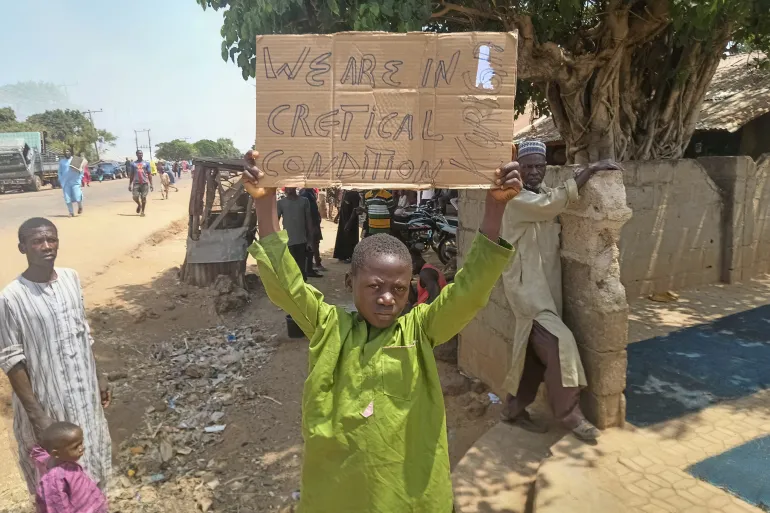
Maiduguri, Nigeria — For Musa Abdullahi Wakawa, the nightmare began with a phone call: his wife and seven-year-old son had been abducted.
Then came the question that has become painfully familiar to families across northeastern Nigeria: How much will it cost to bring them home?
For days, Musa searched for ways to raise the ransom demanded by the kidnappers. Like many families caught in Nigeria’s growing kidnapping crisis, he faced an impossible choice — find the money or risk losing a loved one.
Across Borno State, families are selling livestock, borrowing money, disposing of property and exhausting their savings to secure the release of relatives.
The consequences extend beyond ransom payments. Abductions are leaving families traumatised, disrupting livelihoods and, increasingly, keeping children away from school.
Laraba Dauda, 45, remembers the last conversation she had with her younger sister.
Her sister was abducted on January 13, 2026, along the Biu–Buratai road, according to Laraba.
Not long after the abduction, the phone rang. Her sister was calling from somewhere in the bush.
“Aunty, unknown people have kidnapped us and taken us somewhere in the bush. We don’t know where they are taking us. At this moment, Aunty, please just help me with your prayers.”
The call ended in tears.
Months later, Laraba still does not know where her sister is being held or whether she is safe.
She is urging the Nigerian government to intensify efforts to rescue people who remain in captivity.
“We need the government to come to our aid and help rescue our relatives who have spent more than six months in captivity,” she said.
For Anjikwi Hena, his son’s disappearance came at a moment when the family was looking towards a better future.
His son was abducted on March 30, 2026, according to Hena.
He had completed his education and was preparing to travel to Maiduguri to look for work. His father encouraged him and prayed for his success.
Instead, he disappeared into captivity.
Hena said their close relationship has made the uncertainty particularly painful.
For families like his, there is no clear timeline for when a missing relative might return — or whether they will return at all.
The kidnapping crisis is also taking a heavy toll on education in communities already affected by years of armed conflict.
In Askira-Uba Local Government Area of Borno State, just 56 of 113 primary schools are currently operating, according to Fasuma Askira, the local government education secretary.
Before an attack on Mussa in May, 76 primary schools were functioning. The security situation subsequently forced another 20 to close.
On May 15, suspected rebel fighters attacked Mussa and abducted dozens of children.
A register later obtained by news organisations identified 40 missing children, although figures from community and government sources have varied. The Borno State government has more recently referred to about 44 children still missing from Mussa.
The threat continued on June 29, when armed rebels attacked Government Day Secondary School in Lassa while students were sitting National Examinations Council examinations.
Some students were recovered soon afterwards, but 36 students and a teacher have reportedly remained in captivity.
The attacks have intensified fears among parents and teachers already living with the threat of armed violence.
Junior secondary students from Mussa were moved to a government boarding school in Uba, while the local government was advised to deploy community vigilantes around schools.
Soldiers have also been deployed in Mussa and Lassa alongside local vigilantes, according to authorities.
For parents, sending children to school now involves a difficult calculation: the importance of education against the possibility of another attack.
The situation in Borno is part of a broader kidnapping problem affecting communities across Nigeria.
Amnesty International Nigeria says at least 1,100 people were abducted across the country between January and April 2026, while warning that the true number could be considerably higher because many incidents in remote areas go unreported.
“Apart from killing people, gunmen are now on a rampage of abductions, largely for lucrative ransom,” said Isa Sanusi, director of Amnesty International Nigeria.
He said some victims remain at the mercy of armed groups for months and may face extremely harsh conditions.
Amnesty International has warned that victims can face torture, starvation and sexual violence, while their families are placed under enormous financial and emotional pressure.
The organisation has also raised concerns that fear of abduction is pushing children out of school, particularly in rural communities.
Borno State Commissioner for Information and Internal Security Usman Tar said the government was responding through both military and non-military measures.
He identified several security hotspots, including the Biu-Buratai axis and the Biu-Damboa-Sabon Gari area.
“We are putting in place both kinetic and non-kinetic measures in order to overcome the problem,” Tar said.
He said the state government was working with the armed forces by providing additional logistical support and civilian volunteers.
According to Tar, the measures had helped security forces gain greater control over some hotspot areas and contributed to a reduction in attacks.
The government is also using technology, including drones equipped with thermal capabilities, to monitor the movement of suspected criminals, he said.
Authorities are advising commuters to avoid particularly dangerous routes where necessary and are working to ensure suspects are prosecuted.
Tar also acknowledged the humanitarian and psychological impact of abductions on families.
He said government officials had visited affected families to offer condolences and reassurance, while financial assistance was being provided through the State Emergency Management Agency and the state humanitarian agency.
“There are fixed sums that are provided through the State Emergency Management Agency and the State Humanitarian Agency,” Tar said.
He also argued that insecurity cannot be addressed through military operations alone, pointing to poverty, unemployment and illiteracy as wider socioeconomic challenges.
“Terrorism is a multinational problem,” he said.
Security analyst Professor Khalifa Dikwa described the situation as deeply concerning and warned that there were few indications that the kidnapping crisis would end soon.
He said kidnapping for ransom had “metamorphosed into a profit-making venture”, with armed groups competing for territory and resources in forest areas.
Dikwa argued that ransom payments can help criminal networks purchase weapons and attract new recruits, creating a cycle in which communities are effectively forced to finance the groups responsible for their suffering.
A family may sell its possessions to secure the release of one relative, only to face another ransom demand when someone else is abducted.
Dikwa called for stronger intelligence-led and technology-based operations to locate armed groups and disrupt the movement of ransom money.
He also said security agencies needed modern equipment, including night-vision and tracking technology, as well as better welfare for personnel operating on the front lines.
For Musa, the wait is for his wife and young son to come home.
For Laraba, it is for the return of her sister.
For Hena, it is for the son who was preparing to leave home in search of work and a better future.
And across Askira-Uba, parents are facing a different kind of uncertainty as schools close and children remain missing.
The numbers tell part of the story. But behind every abduction is a family waiting for a phone call, a community struggling to feel safe and a future placed on hold.
For Laraba, the final words from her sister remain painfully clear:
“This is my last communication.”
African360 WhatsApp Channel for more News update: https://whatsapp.com/channel/0029Vb7Oc6nGk1FpdCN0xn44