Physical Address
304 North Cardinal St.
Dorchester Center, MA 02124
Physical Address
304 North Cardinal St.
Dorchester Center, MA 02124
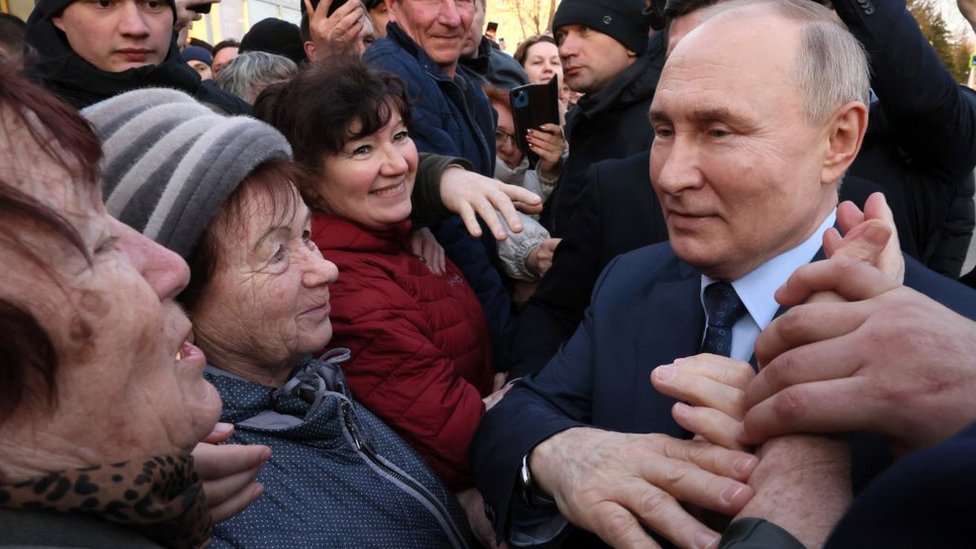
Moscow, Russia — September 17, 2026: Russia is preparing to vote in its first parliamentary election since the country launched its full-scale invasion of Ukraine, but the contest is taking place within a political system where the ruling United Russia party is expected to retain its dominant position.
Voting for the 450-seat State Duma is scheduled from September 18 to 20, with 225 lawmakers elected through a nationwide party-list vote and another 225 through single-member constituencies.
The election is being closely watched not simply because of its expected result, but because it offers a window into how the Kremlin is managing politics, public opinion and dissent more than four years into the war in Ukraine.
The outcome is widely expected to preserve United Russia’s control of the Duma, which has consistently backed major Kremlin initiatives. Reuters describes Russia’s political environment as tightly controlled, with limited genuine opposition participating in the election.
For President Vladimir Putin, however, the election offers more than an opportunity to fill parliamentary seats.
It provides a political measure of public sentiment at a time when the war is placing increasing pressure on Russian society and the economy.
Putin has himself presented the election as a demonstration of national unity and support for Russia’s soldiers, urging citizens to vote and describing participation as a statement of national resolve.
This is the first Duma election since Russia launched its full-scale invasion of Ukraine in February 2022.
That has made the war an unavoidable backdrop to the campaign.
Russian authorities have promoted themes of patriotism, military service and national unity, while the Kremlin continues to describe wartime restrictions as necessary for protecting the country.
At the same time, Reuters reports that some Russians are increasingly anxious about the war’s effects, including drone attacks, economic pressures and concerns about further mobilisation.
The election therefore provides an unusual opportunity to observe the tension between the government’s message of stability and the concerns being felt by parts of the population.
United Russia is not the only party expected to have a significant presence in the next parliament.
Other established parliamentary parties—including the Communist Party, LDPR, Just Russia and New People—are also expected to retain representation.
But these parties operate within what is commonly described by analysts as Russia’s “systemic opposition”: parties that compete in elections but generally do not challenge the Kremlin on the central issues of national policy.
Reuters notes that the four parliamentary parties broadly vote alongside United Russia on major issues, including the government’s position on the war.
That creates a parliament where political differences exist, but the boundaries of acceptable opposition are much narrower than in competitive multiparty systems.
One of the biggest controversies surrounding this year’s election is the exclusion of Yabloko, Russia’s liberal party and the only registered political party openly opposing the war in Ukraine.
Russia’s Supreme Court removed Yabloko’s federal candidate list from the election in August following a legal challenge brought by the nationalist Rodina party.
Rodina had accused Yabloko of various violations, including receiving undeclared foreign support. Yabloko denied the allegations and described the decision as an attack on political freedom.
The ruling means Yabloko cannot compete for seats through the nationwide party-list ballot.
Some of its candidates, however, are still attempting to compete in individual constituencies.
Despite the party’s exclusion from the national ballot, some Yabloko candidates have continued campaigning.
Reuters recently profiled Polina Lermant, a 24-year-old Yabloko candidate in Moscow who is running on an anti-war platform.
Lermant told Reuters she fears the possibility of official pressure or imprisonment because of her campaign activities. Several senior Yabloko figures have already received prison sentences over comments concerning the war.
The party’s continued presence, even in a limited form, gives voters who oppose the war a rare opportunity to express that position through an electoral candidate.
Despite the seriousness of the political environment, the election campaign has produced some unusual scenes.
In one televised debate, a presenter introduced a group of candidates only for viewers to see empty lecterns because the candidates had failed to appear.
Another candidate turned his campaign message into a song, producing a scene that looked more like a television talent show than a conventional political debate.
Such moments may appear humorous, but they also illustrate the unusual character of an election in which the biggest political question—who will retain control of the Kremlin-backed parliamentary system—is largely settled before voting begins.
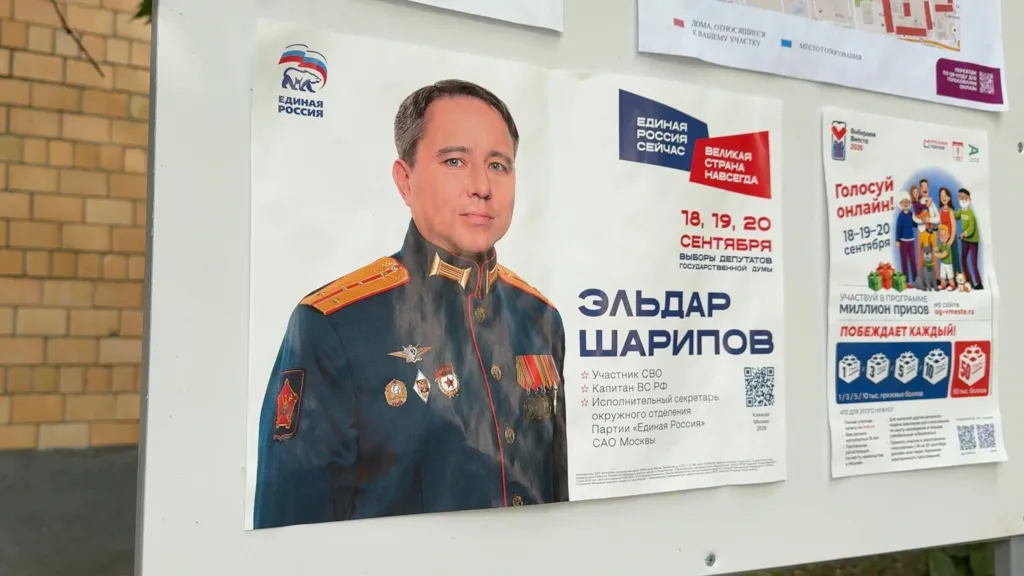
Another notable feature of the election is the growing role of military veterans.
Russian officials say almost 200 veterans of the war in Ukraine are running for parliamentary seats.
Their participation reflects a broader effort to bring people with military experience into political institutions and public life.
For the Kremlin, veterans can also represent a politically useful constituency, linking the parliament directly to the military campaign and its supporters.
The election is taking place amid a much narrower political environment than existed before the war.
Critics of the Kremlin have faced imprisonment, restrictions or exile, while independent organisations have been subjected to legal pressure.
The independent election-monitoring organisation Golos has also been shut down after one of its leaders, Grigory Melkonyants, was sentenced to five years in prison in 2024 on charges involving an “undesirable organisation.”
The authorities maintain that Russia’s electoral system is transparent and lawful, while critics argue that restrictions on candidates and political organisations prevent meaningful competition.
The new Duma will therefore inherit a political structure in which the major parliamentary parties are broadly supportive of the Kremlin on the central issues of the war and national policy.
That does not mean every Russian voter shares the same views.
Recent Reuters reporting points to growing concerns over inflation, high borrowing costs, labour shortages, fuel disruptions and the effects of the war.
The key question is how much of that public anxiety can translate into political expression within the boundaries of the current electoral system.
Russia’s 2026 parliamentary election is unlikely to surprise observers with a dramatic change in the balance of power.
But that does not make it politically insignificant.
The more revealing story is what the election tells us about the relationship between the Kremlin, Russian society and political dissent.
For Putin, the vote can be presented as evidence of continued national unity and support for his government’s direction.
For critics, the restrictions placed on opposition parties and candidates are evidence of a political system in which the space for dissent has become increasingly narrow.
And for ordinary Russians, the election arrives against the backdrop of a war that is now deeply embedded in everyday life.
The campaign has therefore exposed an interesting contradiction.
Russia still holds competitive elections, televised debates and contests between multiple parties. Yet the most consequential boundaries of political debate—particularly around the war—remain heavily restricted.
That is why the September 18–20 vote deserves attention beyond the final seat count.
The result will show who enters the Duma. The campaign reveals much more about the political environment in which those lawmakers will operate.