Physical Address
304 North Cardinal St.
Dorchester Center, MA 02124
Physical Address
304 North Cardinal St.
Dorchester Center, MA 02124

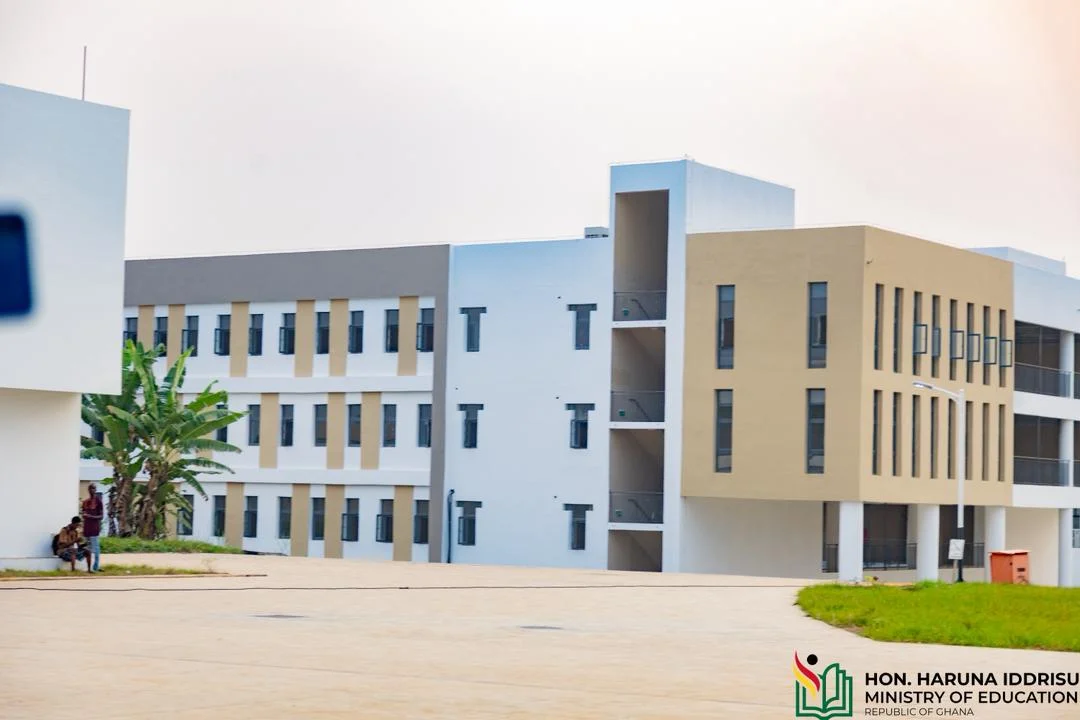
Bunso, Eastern Region — September 2026: Ghana’s newest public university is preparing to take a different approach to higher education by bringing engineering, agricultural science, innovation and entrepreneurship under one roof.
The University of Engineering and Agricultural Sciences (UEAS), located at Bunso in Ghana’s Eastern Region, says it is being established to produce industry-ready graduates capable of turning agricultural knowledge and engineering expertise into practical businesses, technologies and jobs.
The university’s Vice-Chancellor, Professor Mark Adom-Asamoah, said the institution’s central mission is to develop professionals who can contribute directly to Ghana’s industrialisation, food security and employment agenda.
“We want to train industry-ready engineers and agricultural scientists to help with the industrialisation of the nation, address food security and create jobs for the youth,” Prof. Adom-Asamoah said.
UEAS is being established under the University of Engineering and Agricultural Sciences Act, 2026 (Act 1169).
Unlike conventional universities where students from different academic disciplines often train separately, UEAS intends to deliberately bring engineering and agricultural science students together.
The objective is to create a continuous pipeline from agricultural production to technology, processing, manufacturing and agribusiness.
The university wants students to understand not only how to produce food, but also how technology and engineering can be used to improve productivity, reduce waste and create commercially viable agricultural enterprises.
Its long-term ambition is to become a centre of excellence in engineering innovation and agro-entrepreneurship, with the goal of becoming a leading institution of its kind in Africa.
The Minister of Education, Haruna Iddrisu, inaugurated the Governing Council and Core Management Team of UEAS on May 12, 2026.
The leadership was tasked with operationalising the university ahead of the 2026/2027 academic year.
UEAS is expected to admit its first cohort of students shortly, while President John Dramani Mahama is expected to formally inaugurate the institution before the end of 2026.
The university will initially operate through two schools:
The School of Engineering will offer Bachelor of Science programmes in:
The School of Agricultural Science will offer programmes including:
The programme structure is designed to give students sustained exposure to their core disciplines throughout their university education.
For example, agricultural students will study core areas such as agronomy from the first year through to the fourth year rather than waiting until later in their studies to specialise.
One of UEAS’s most distinctive features is expected to be its Innovation Centre.
The centre will provide students with access to machinery and other facilities where they can experiment, design technologies and develop practical solutions.
Prof. Adom-Asamoah gave smart agriculture as an example of how the university’s interdisciplinary approach could work.
Engineering students could develop irrigation systems and the technology needed to deliver water efficiently, while agricultural science students determine when crops actually require water based on factors such as temperature and other agronomic conditions.
The two disciplines would therefore work together rather than operating independently.
“That is called smart agriculture. So, we want to bring all of them together,” the Vice-Chancellor explained.
This approach could allow students to move from identifying an agricultural problem to designing a technological solution and eventually developing a commercially viable product.
The philosophy behind UEAS is to move tertiary education beyond an overreliance on theoretical learning.
The university wants graduates to leave with the ability to design, build, test, innovate and commercialise solutions.
That could be particularly relevant to Ghana’s agricultural sector, where challenges such as mechanisation, irrigation, post-harvest losses, food processing, storage and access to technology continue to create opportunities for innovation.
By combining engineering with agricultural science, UEAS hopes its graduates can help bridge some of those gaps.
The university’s campus at Bunso has been developed with financing from a $92 million Korean Exim Bank loan.
The planned facilities include:
Prof. Adom-Asamoah described the Bunso campus as one of the best-planned university campuses in the country.
The investment provides UEAS with infrastructure intended to support both academic instruction and practical research.
Another major component of the university’s vision is entrepreneurship and leadership development.
Prof. Adom-Asamoah said the institution intends to equip students not only to seek employment after graduation but also to identify problems, develop solutions and create businesses around them.
That approach is particularly significant in a country where thousands of graduates enter the labour market each year.
If effectively implemented, the university’s model could encourage graduates to become engineers, agricultural scientists, technology developers, entrepreneurs and employers at the same time.
The idea behind UEAS is ambitious.
Ghana does not simply need more university graduates. It needs graduates who can help solve problems that affect the country’s economy.
Agriculture provides one of the clearest examples.
Farmers need better machinery. Irrigation needs technology. Food processors need efficient equipment. Agricultural businesses need engineers. Engineers, in turn, need a practical understanding of the industries their innovations are supposed to serve.
That is where UEAS’s interdisciplinary model could become particularly important.
Imagine an agricultural scientist identifying a crop production problem and working alongside an engineer to design a machine or digital system to solve it.
The next step could involve an entrepreneur turning that solution into a business.
That creates a potential chain:
Agriculture → Engineering → Innovation → Processing → Agribusiness → Jobs.
The real measure of UEAS, however, will come after students enter the university.
Ghanaians will ultimately want to see what its graduates build, which technologies they develop, how many businesses emerge from its innovation centres and whether its research makes a measurable difference to agriculture and industry.
If the institution succeeds in connecting classroom knowledge with farms, factories and businesses, Bunso could become an important centre for Ghana’s next generation of problem-solvers.
And that is perhaps the most interesting promise of Ghana’s newest public university—not simply to teach students what is already known, but to give them the tools to build what Ghana needs next.