Physical Address
304 North Cardinal St.
Dorchester Center, MA 02124
Physical Address
304 North Cardinal St.
Dorchester Center, MA 02124

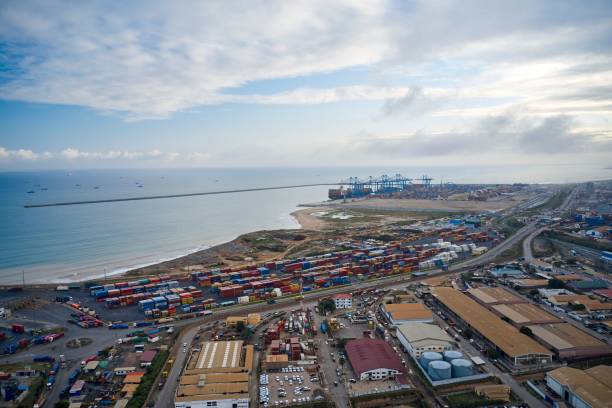
Businesses operating around the Port of Tema are calling for urgent measures to address growing container congestion, warning that the situation is increasing the cost of doing business while putting additional pressure on roads in the port city.
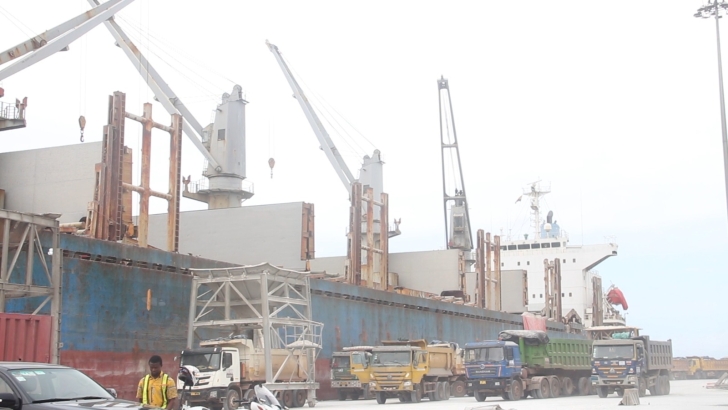
The congestion has increasingly spilled beyond the port enclave, affecting major routes used by container trucks, commercial vehicles, private motorists, motorbikes and pedestrians.
For businesses that depend on the movement of goods, the delays are creating another challenge: time is money.
Longer journeys mean higher fuel consumption, delayed deliveries, lost working hours and additional transportation costs — expenses that businesses say could eventually be passed on to consumers.
The First Vice-President of the Ghana Institute of Freight Forwarders (GIFF), Nana Asiamah Peprah I, said the congestion was having a direct impact on businesses involved in the movement of goods.
According to him, journeys that would normally take about 30 minutes can now take as long as two hours.
For freight forwarders, importers and transport operators, such delays can have a significant financial impact.
Nana Peprah explained that port operations are highly time-sensitive and that every additional delay adds to the cost of moving goods.
“Every congestion, in fact, the normal congestion in the ports always affects businesses and those businesses will also pass it on to the consumers,” he said.
According to Nana Peprah, one of the major problems is the limited capacity of some terminals to receive empty containers after import cargo has been discharged.
Some shipping lines operate private container terminals, but when those facilities reach capacity, trucks are forced to queue at alternative locations.
The resulting queues can stretch far beyond the immediate port area.
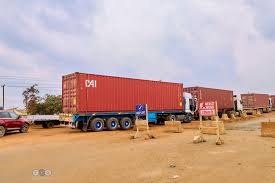
Nana Peprah said the situation has, in some instances, seen truck queues extend from the MPS terminal towards Nungua Barrier.
He said the problem has already been raised during discussions with port authorities and other stakeholders, but industry players are still waiting to see effective solutions implemented.
Freight forwarders believe additional storage capacity could help ease the pressure.
Nana Peprah called on authorities and shipping lines to identify suitable spaces outside the Tema Port enclave where containers could temporarily be stored.
Such facilities, he argued, could reduce pressure on existing terminals and help prevent trucks from occupying major roads while waiting to deliver or collect containers.
The proposal highlights a wider challenge facing Ghana’s maritime logistics sector: port capacity must grow alongside cargo volumes.
The Importers and Exporters Association of Ghana (IEAG) has also called for action.
Its Executive Secretary, Samson Asaki Awingobit, said congestion was contributing to increased traffic within the port enclave and surrounding communities.
He urged the Ghana Ports and Harbours Authority (GPHA) to consider using properties and spaces currently leased to private businesses for additional container terminal facilities, particularly where existing lease agreements are approaching expiration.
According to Mr Awingobit, additional modern container terminals could increase holding capacity, improve cargo handling and facilitate the movement of goods and vehicles.
The concerns come as the Ghana Ports and Harbours Authority works to address the problem.
In a statement issued on August 7, 2026, the GPHA acknowledged landside congestion at the Port of Tema.
The authority attributed the situation partly to increased import traffic, the evacuation of empty containers and congestion on surrounding roads.
The GPHA said it had placed relevant stakeholders on heightened operational alert and was working with shipping lines and terminal operators to accelerate the evacuation of empty containers.
The measures announced include:
The authority has also appealed to importers, clearing agents and cargo owners to clear and evacuate their consignments as quickly as possible.
The faster cargo is removed from the port, the more space becomes available for incoming shipments.
The effects of the port congestion are increasingly being felt outside the port itself.
The Nungua Beach Road corridor towards Sakumono and surrounding communities has come under additional pressure from container trucks and other heavy-duty vehicles.
The problem is not limited to traffic delays.
Heavy-duty trucks parked along sections of the road can reduce available road space and create difficult conditions for motorists navigating around them.
The pressure is also being felt along routes towards Ashaiman, where container truck movements are mixing with already heavy everyday traffic.
The congestion also raises concerns about emergency access.
Tema is home to major healthcare facilities, including the International Maritime Hospital in Community 3 and Tema General Hospital in Community 9.
When major roads become heavily congested, emergency vehicles may face additional difficulties moving through affected areas.
For residents, the issue is therefore about more than simply arriving late at work or spending extra time in traffic.
It is also about road safety and access to essential services.
Motorists using the Nungua Beach Road corridor say the situation has become increasingly difficult, particularly during peak traffic periods.
The road connecting parts of Tema Community 3, Sakumono and surrounding areas has become an important route for both residents and vehicles serving the port.
The presence of heavy-duty trucks along road shoulders has added to the challenge.
Large articulated trucks can create blind spots for smaller vehicles, increasing the need for motorists to exercise caution around them.
Motorbikes and pedestrians can also face additional risks when they have to navigate around parked trailers and moving container trucks.
Some truck drivers say the problem is not simply a matter of drivers choosing to park illegally.
According to drivers interviewed about the situation, there are limited designated parking facilities where they can safely keep their vehicles while waiting for assignments.
One driver, who requested anonymity, acknowledged that parking on highway shoulders is not permitted but said the shortage of suitable parking areas remains a concern.
The driver explained that some trucks may remain in the area while waiting for customers to assign them cargo destined for other countries in the sub-region.
This raises another important issue for authorities: where should heavy-duty trucks wait when they have nowhere else to go?
The congestion at Tema Port is becoming a bigger issue than a simple traffic problem.
It is a logistics, infrastructure and economic efficiency problem.
Ghana’s port operations are closely connected to businesses across the country and to trade with neighbouring countries.
When containers cannot move efficiently, the consequences can spread throughout the supply chain.
Importers may face delays.
Transport operators spend more time and fuel.
Businesses receive goods later.
Drivers lose productive hours.
Consumers may eventually face higher prices.
And residents living around major port corridors have to deal with additional traffic and safety concerns.
The GPHA’s immediate measures may help reduce the current pressure, but Ghana also needs to consider longer-term solutions.
That could include expanding container storage capacity, improving truck parking facilities, increasing coordination between shipping lines and terminals, strengthening traffic management and improving the movement of empty containers.
There is also a strong case for better planning between port operations and surrounding road infrastructure.
A world-class port cannot operate efficiently if the roads carrying its cargo remain permanently congested.
The real question is not simply “How do we clear today’s traffic?”
It is:
“How do we prevent the same problem from happening again?”
As Ghana’s international trade grows, the country’s logistics infrastructure must grow with it.
Tema is one of the country’s most important economic gateways.
Keeping containers moving efficiently is therefore not just a concern for shipping companies or freight forwarders.
It is a national economic issue.
For now, businesses and residents are waiting to see whether the measures announced by the authorities will translate into visible improvements on the roads.
Tema needs its containers moving — not sitting on the highways.