Physical Address
304 North Cardinal St.
Dorchester Center, MA 02124
Physical Address
304 North Cardinal St.
Dorchester Center, MA 02124

President John Dramani Mahama has called on Ghana’s Judiciary to accelerate reforms, embrace appropriate technology and make the justice system faster and more accessible to ordinary citizens.
The President said public confidence in the Judiciary depends not only on the quality of court decisions but also on the conduct of judges, accessibility of the courts and the timely delivery of justice.
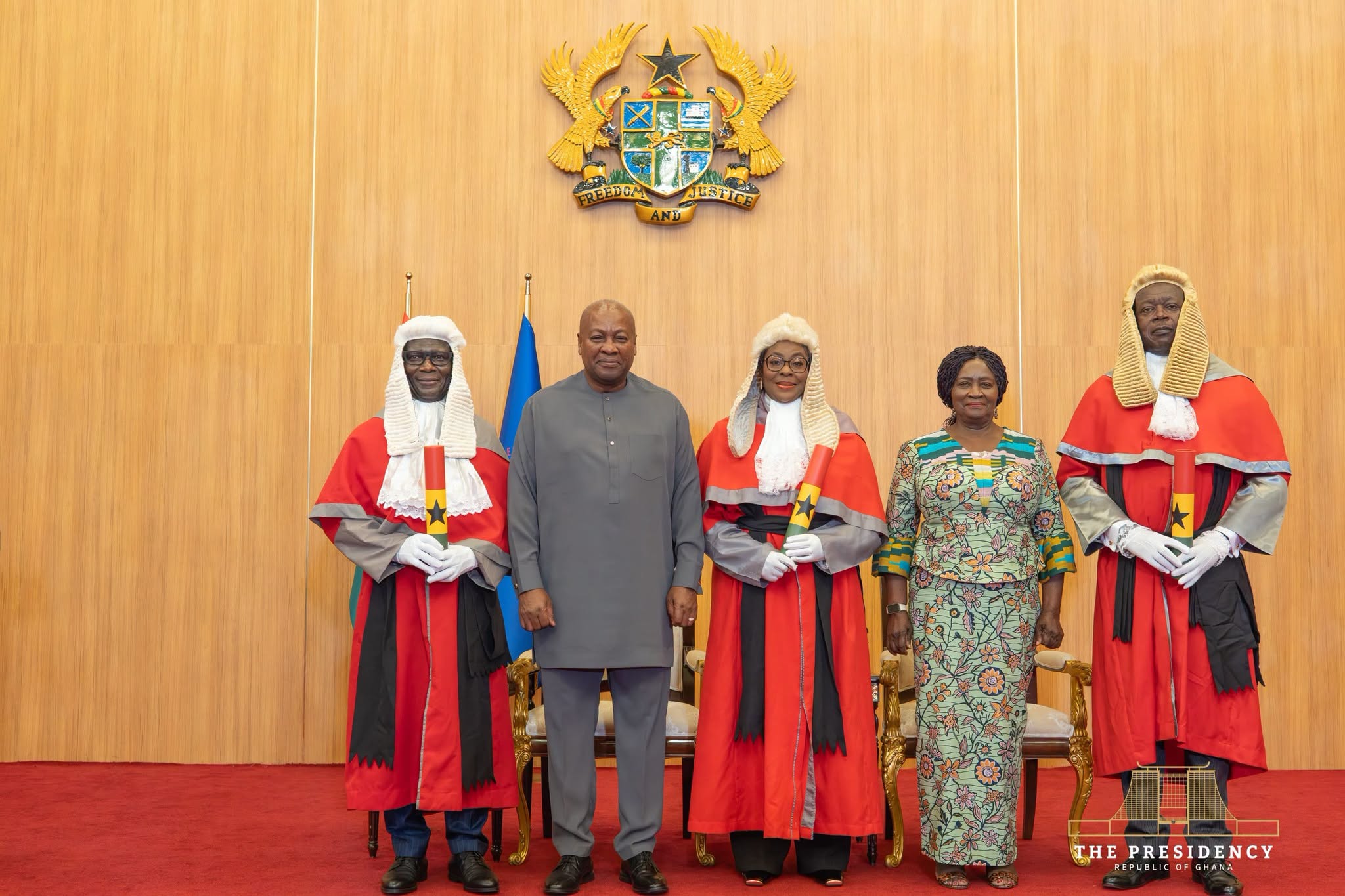
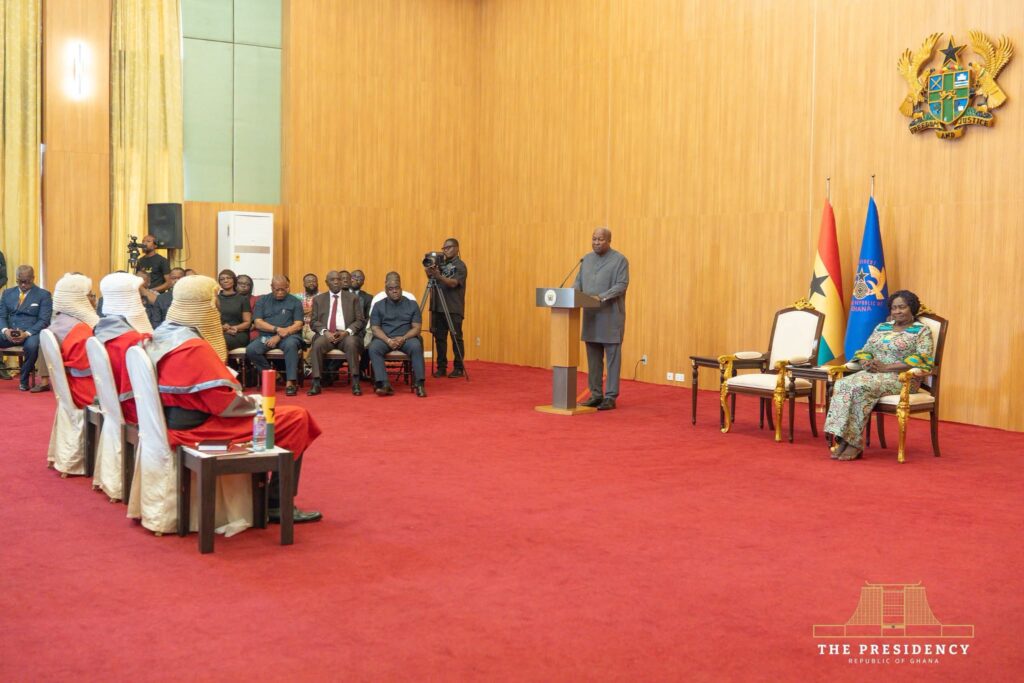
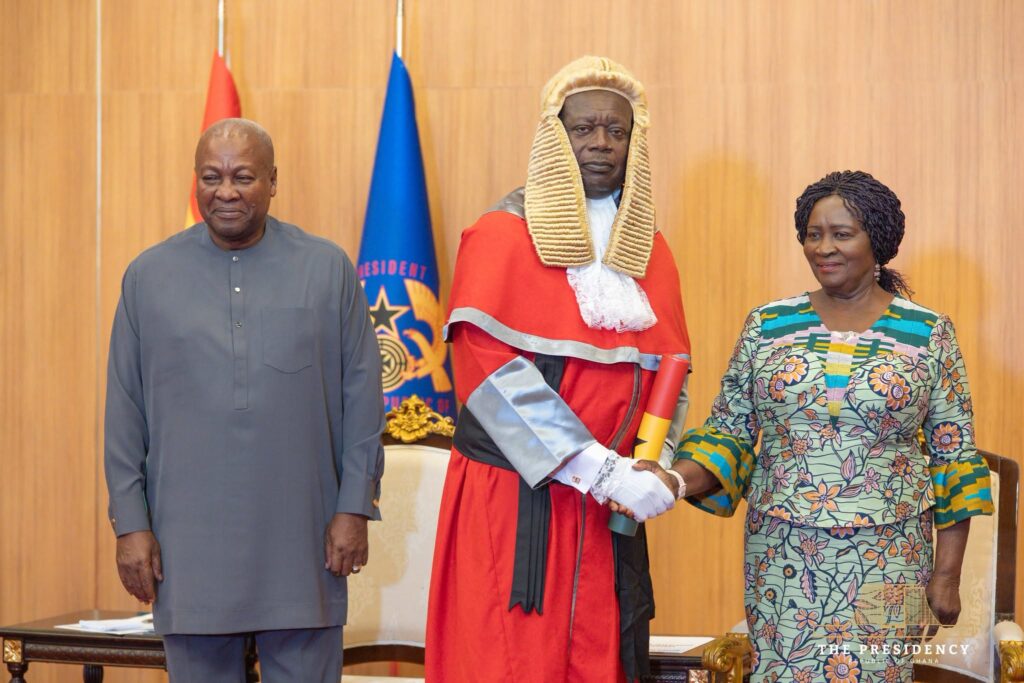
He made the call at the Presidency in Accra during the swearing-in ceremony of three new Justices of the Supreme Court — Justice Sophia Rosetta Bernasko Essah, Justice Edward Amoako Asante and Justice Anthony Forson Jr.
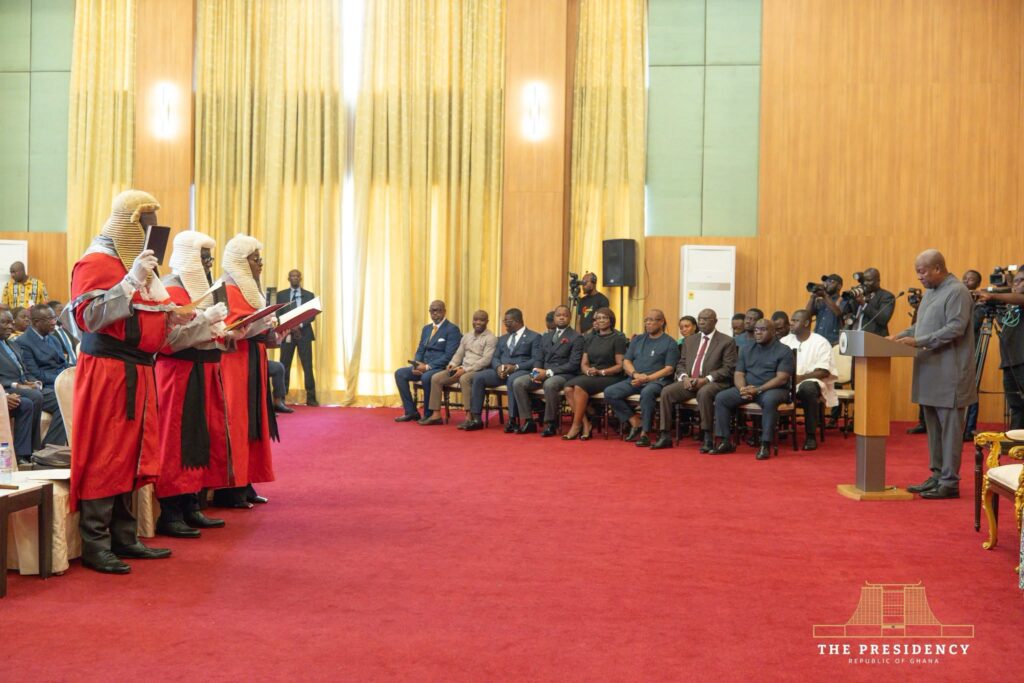
The three Justices took their oaths before President Mahama as they formally assumed their new responsibilities on Ghana’s highest court.
President Mahama expressed concern about prolonged court cases, unnecessary adjournments and delays in delivering judgments.
He warned that such challenges can place significant hardship on citizens and weaken public confidence in the justice system.
For many Ghanaians, access to justice can become difficult when cases take years to conclude.
The President therefore urged the Judiciary to pursue reforms that would improve efficiency while maintaining the independence and integrity of the courts.
He also encouraged the Judiciary to make greater use of technology where appropriate to improve the administration and delivery of justice.
President Mahama stressed that the Judiciary’s responsibility extends beyond simply hearing cases.
According to him, courts must ensure that justice is delivered in a timely and accessible manner.
He said prolonged cases and avoidable adjournments could create the perception that justice is inaccessible to ordinary citizens.
The President’s call comes as Ghana continues to seek ways to modernise public institutions and improve service delivery through technology and institutional reforms.
President Mahama also urged the Supreme Court to ensure that its judgments are clearly written and well reasoned.
He said decisions of the country’s highest court should provide dependable guidance to lower courts, public institutions, lawyers and citizens.
The Supreme Court plays a critical role in interpreting Ghana’s Constitution and settling important legal questions.
For that reason, the President said the authority of the Court ultimately depends on the confidence and trust of the Ghanaian people.
Congratulating the three newly appointed Justices, President Mahama said their positions came with enormous responsibility.
He reminded them that their appointment was not ceremonial but a commitment to the people of Ghana.
“The oath you have taken today is consequential, not ceremonial. It is a solemn covenant with the people of Ghana.”
The President urged the Justices to protect citizens’ rights, uphold the Constitution and ensure that no individual or institution is above the law.
President Mahama also urged the new Justices to remain independent when dealing with cases involving strong public emotions or political interests.
He advised them not to allow pressure, praise or criticism to influence their decisions.
Instead, he said their legacy should be defined by the quality of their legal reasoning, fairness, integrity and loyalty to the Constitution.
The President said Supreme Court judges need more than legal knowledge.
They must also demonstrate sound judgement, courage, patience and a strong commitment to justice.
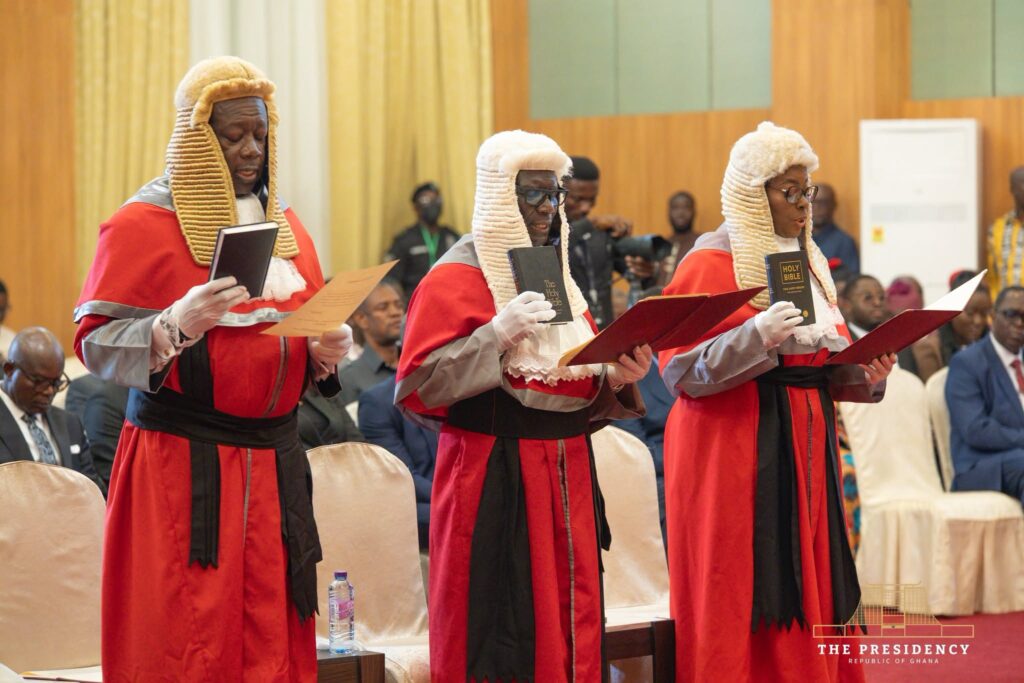
President Mahama described Justice Bernasko Essah as an experienced judicial officer whose service at the Court of Appeal would bring valuable experience to the Supreme Court.
Her elevation to the country’s highest court adds further experience to the bench.
Justice Asante brings extensive national and regional judicial experience.
He previously served on the Court of Appeal and was also President of the ECOWAS Court of Justice.
President Mahama said his experience in regional integration, human rights and international law would enrich the work of the Supreme Court.
President Mahama highlighted Justice Forson’s decades of experience in private legal practice and his former leadership role at the Ghana Bar Association.
He said Justice Forson’s experience representing citizens, businesses and institutions before the courts could provide an important perspective on how legal decisions affect ordinary people.
Speaking on behalf of the three Justices, Justice Sophia Rosetta Bernasko Essah expressed gratitude to President Mahama for the confidence placed in them.
She pledged that the three Justices would hear cases fairly, decide according to the law and act with courage and integrity.
They also pledged to remain faithful to Ghana’s Constitution and the judicial oaths they had taken.
The three Justices were administered the Oath of Allegiance, Judicial Oath and Oath of Secrecy by President Mahama before receiving their warrants of appointment.
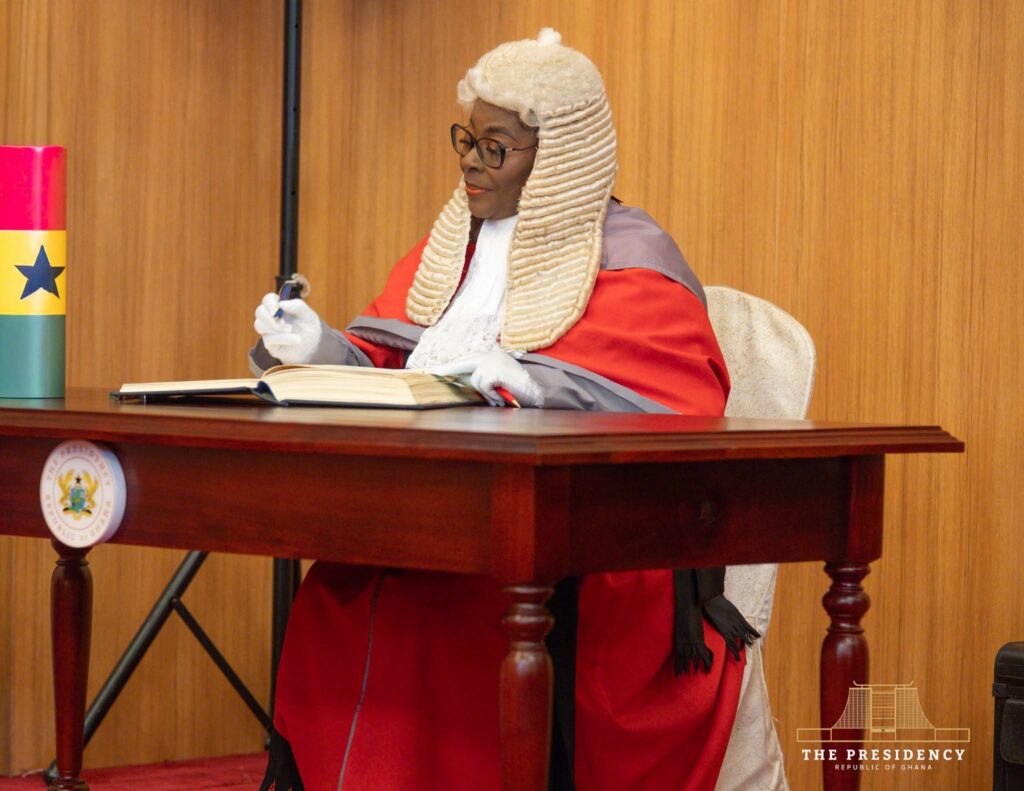
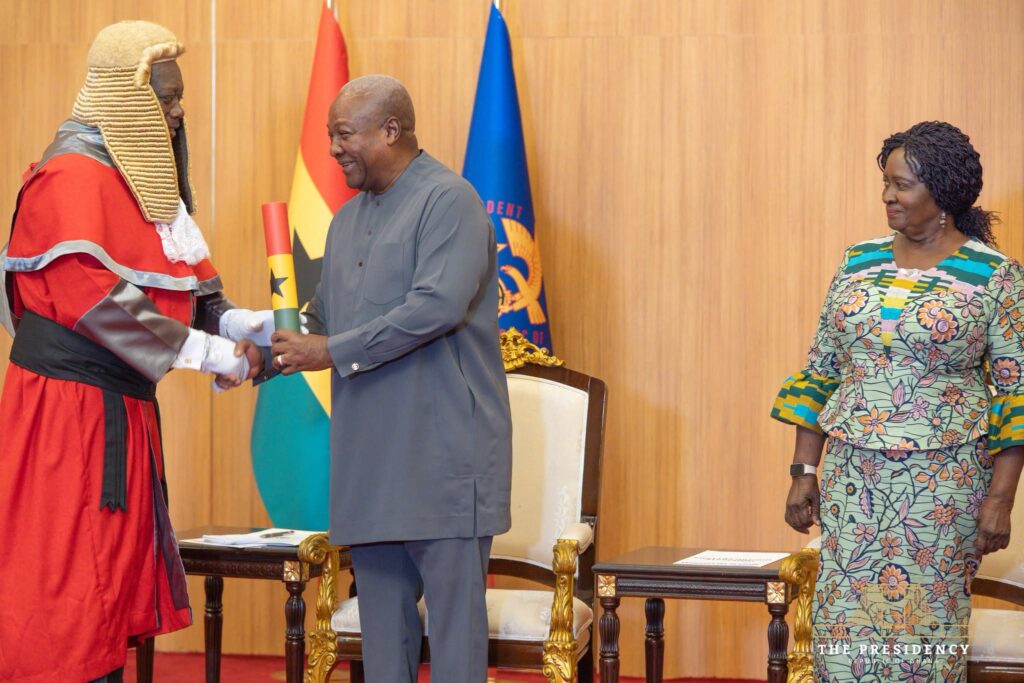
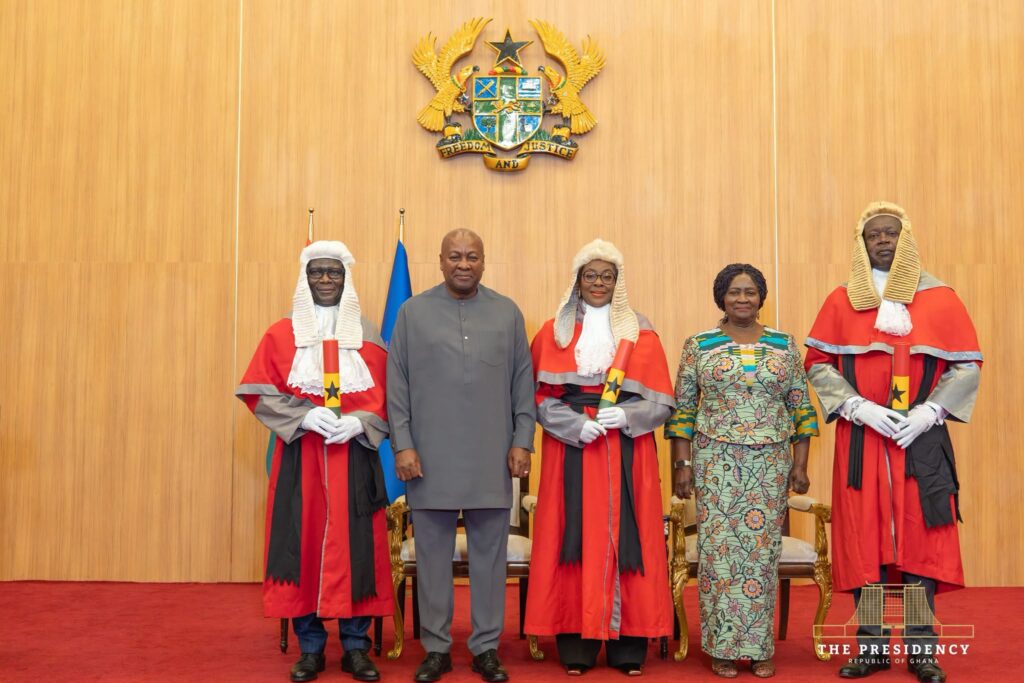
President Mahama’s call for judicial reform touches on an issue that affects virtually every Ghanaian.
For someone waiting years for a court decision, justice is not simply about having a functioning courtroom.
It is about being able to get a case heard, receive a decision within a reasonable period and understand why that decision was reached.
Technology can certainly help.
Digital case management, electronic filing, better scheduling systems and improved access to court information could reduce some of the administrative challenges facing the justice system.
But technology alone will not solve every problem.
Ghana also needs adequate resources, effective case management, strong judicial administration and continued respect for judicial independence.
The President’s emphasis on clear Supreme Court judgments is equally important.
When the highest court provides clear and well-reasoned decisions, it helps lower courts, lawyers, public institutions and citizens understand how the law should be applied.
The newly sworn-in Justices therefore have an important responsibility.
Their decisions will not only determine individual cases; they could also shape Ghana’s constitutional democracy and the country’s understanding of the rule of law.
Ultimately, Ghanaians want a Judiciary that is independent, accessible, efficient and trusted.
The challenge now is to turn the President’s call for reform into measurable improvements that ordinary citizens can experience.
Justice must not only be done. It must also be accessible, understandable and delivered without unnecessary delay.