Physical Address
304 North Cardinal St.
Dorchester Center, MA 02124
Physical Address
304 North Cardinal St.
Dorchester Center, MA 02124

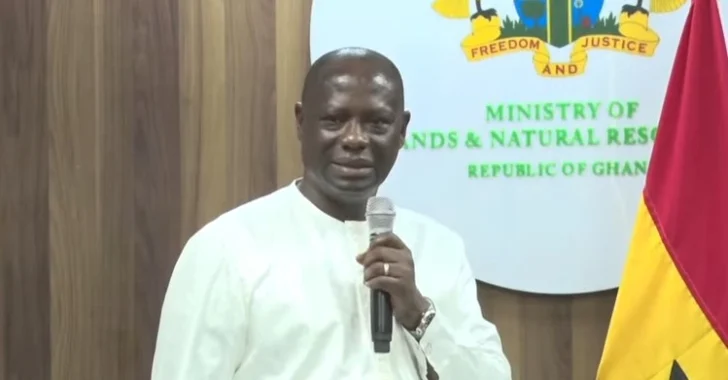
Ghana begins a nationwide review to reclaim illegally acquired public lands while intensifying reforms in forestry, land administration, and the fight against galamsey. Here’s what it means for citizens and the environment.
Ghana has entered a defining moment in its governance of land and natural resources. In what can be described as one of the most far-reaching reforms in recent years, the government has launched a comprehensive process to reclaim public lands that were acquired illegally. The move is part of a broader strategy to protect the country’s natural resources, reform land administration, and restore public confidence in how state assets are managed.
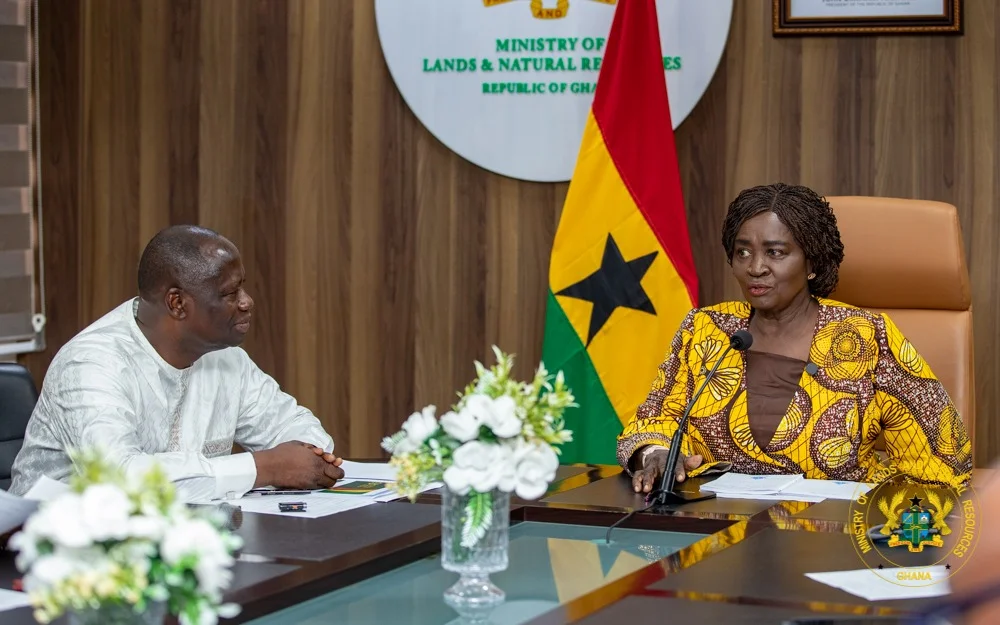
The announcement was made in Accra by the Minister of Lands and Natural Resources, Mr Emmanuel Armah-Kofi Buah, during an engagement with Vice President Professor Naana Jane Opoku-Agyemang and her team. According to the minister, Cabinet has approved a full-scale review of all public lands that were sold or allocated in the past. Any transaction that failed to follow due process or did not offer value for money will be cancelled outright. Even incomplete or unfinished allocations will be automatically revoked.
This is a powerful signal. For decades, many Ghanaians have believed that public lands were quietly converted into private property through backdoor deals, political influence, and bureaucratic manipulation. These practices did not only deprive the state of revenue; they also weakened trust in public institutions. Mr Buah made it clear that the new reforms are designed to ensure that no public official will ever again contemplate acquiring state land for personal benefit.
At its core, the ministry’s mandate is to ensure the sustainable management and use of Ghana’s lands, minerals, forests, and wildlife to support socio-economic development. The new policy direction suggests that the government is ready to confront uncomfortable truths and correct historical wrongs.
Beyond land administration, the state of Ghana’s forests paints a sobering picture. The minister revealed that out of 288 forest reserves nationwide, 44 have been completely destroyed in recent years. Even more alarming is the fact that about 16 percent of the country’s forest cover has been lost within just eight years.
Over 8,000 football fields’ worth of forest land have been degraded, particularly in the Western, Western North, and Ashanti regions. Some forest reserves have effectively become “red zones,” controlled by armed groups engaged in illegal activities.
These figures are not just statistics; they reflect a crisis with long-term consequences for climate stability, agriculture, water security, and rural livelihoods. Forests are Ghana’s natural shield against erosion, drought, and biodiversity loss. Their destruction threatens the foundation of sustainable development.
In response, the government has launched the Tree for Life Reforestation Initiative, under which more than 28 million seedlings were planted in the first year alone. This is a remarkable start. Additionally, nine forest reserves have been reclaimed from red zones and placed under safer conditions.
Perhaps most notably, Ghana has become the first African country authorised to export legal timber to the European market. This milestone demonstrates significant improvements in forest governance and transparency, positioning Ghana as a continental leader in sustainable forestry.
For many Ghanaians, land administration has long been synonymous with frustration—missing files, endless delays, multiple ownership claims, and costly legal battles. Mr Buah acknowledged these challenges and announced sweeping reforms.
The Lands Commission is being supported to digitise all land records and services, a move expected to drastically reduce delays and eliminate the problem of lost files. In addition, land administration services are being decentralised. Already, 36 new offices have been opened, with plans to establish offices in 110 districts nationwide.
This decentralisation could be transformative. By bringing services closer to the people, the government is not only improving access but also reducing opportunities for corruption and middlemen exploitation. A transparent, digital land system is essential for economic growth, investment security, and social stability.
Illegal mining, popularly known as galamsey, remains the biggest challenge confronting the sector. The damage is visible everywhere—polluted rivers, destroyed cocoa farms, degraded lands, and rising health risks in mining communities.
The minister revealed that water turbidity levels in some rivers have risen far above safe limits, forcing water treatment plants to shut down. This is not just an environmental issue; it is a public health emergency. Communities are being deprived of clean drinking water, while the cost of treatment continues to rise.
So far, over 255 small-scale mining licences have been revoked. Mining in forest reserves and water bodies has been banned, and new tracking systems for heavy mining equipment have been introduced. These measures aim to close the loopholes that have allowed illegal operations to flourish.
Vice President Professor Naana Jane Opoku-Agyemang commended the ministry for the progress made, describing its work as critical to the survival of the nation. She rightly observed that the ministry’s portfolio affects the daily lives of citizens and therefore deserves full government support.
Her message was clear: environmental protection is not a luxury or a political slogan—it is a matter of survival. Environmental destruction, particularly through illegal mining, poses direct threats to health, livelihoods, and future generations.
Ghana stands at a crossroads. The decisions taken today will determine whether the country bequeaths fertile land, clean water, and thriving forests to its children, or leaves behind degraded landscapes and broken systems.
The ongoing reforms offer hope. Reclaiming illegally acquired public lands, restoring forests, digitising land records, and confronting galamsey head-on are bold steps. What remains is sustained political will, consistent enforcement, and active citizen participation.
If these reforms are carried through with integrity, Ghana could emerge not only as a model of environmental governance in Africa but as a nation that chose long-term survival over short-term gain.
Join African360 WhatsApp Channel for more News update: https://whatsapp.com/channel/0029Vb7Oc6nGk1FpdCN0xn44