Physical Address
304 North Cardinal St.
Dorchester Center, MA 02124
Physical Address
304 North Cardinal St.
Dorchester Center, MA 02124

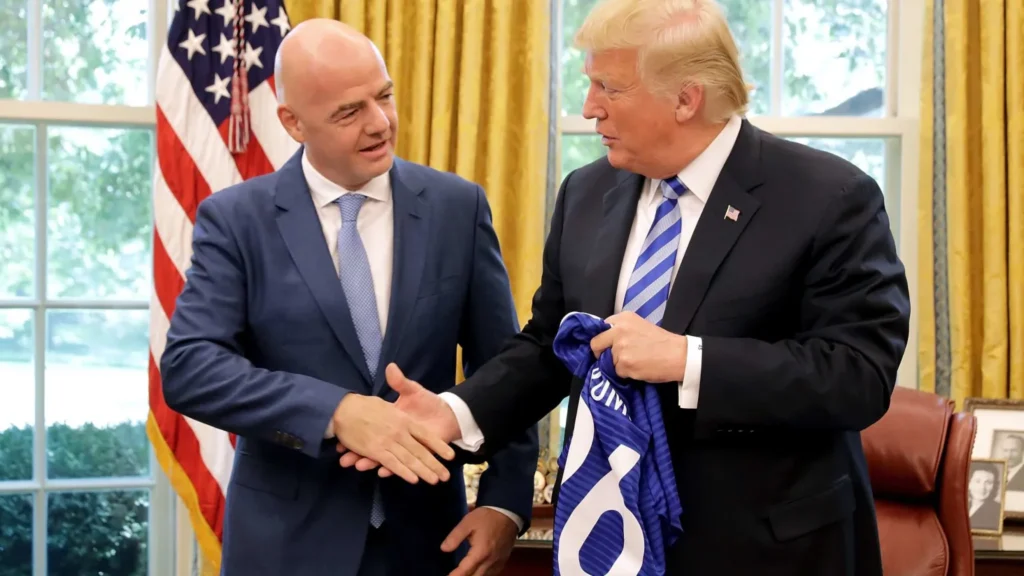
The United States has opened a priority visa appointment system for 2026 World Cup ticket holders, but security checks and travel restrictions mean entry is still not guaranteed for all fans.
Football fans planning to attend the 2026 FIFA World Cup in the United States have been given a new pathway to fast-track their visa appointments, following the launch of a special priority system designed for ticket holders.
The FIFA Prioritised Appointment Scheduling System, widely referred to as the FIFA Pass, officially went live on Tuesday, January 20. The platform allows holders of confirmed World Cup tickets to book priority slots for US visa interviews, a move aimed at reducing long waiting times that could otherwise prevent supporters from traveling in time for the tournament.
The initiative was first announced in November by US President Donald Trump, amid growing concerns that visa backlogs—particularly in developing countries—would block thousands of fans from attending the world’s biggest sporting event.
However, US authorities have been clear: a FIFA Pass does not guarantee a visa.
The State Department stressed that every applicant will still be subject to full security screening and vetting. Applicants must demonstrate eligibility under US immigration law, compliance with visa conditions, and an intention to leave the country after the tournament.
“At the visa appointment, the applicant must demonstrate eligibility for the visa, compliance with US laws, and an intention to leave the country at the end of the tournament,” a senior State Department official said. “America’s safety and the security of our borders will always come first.”
The official added that the new system is expected to significantly reduce waiting times, noting that in more than 80 percent of countries, visa appointments can now be scheduled within 60 days.
The FIFA Pass system is primarily designed for fans who require a US visa. Supporters from countries covered by the US Visa Waiver Program—including most European nations, the United Kingdom, Japan, Australia, and others—do not need a visa for short stays of up to 90 days.
Instead, they must apply for an ESTA (Electronic System for Travel Authorization), meaning they do not need to use the FIFA Pass platform.
For fans from countries outside the Visa Waiver Program, however, the FIFA Pass offers a crucial advantage by granting access to priority appointment slots at US embassies and consulates.
Complicating matters is a recent US decision to pause the processing of immigrant visas from 75 countries. The suspension, announced last week, affects 15 countries that have already qualified for the 2026 World Cup—including five-time champions Brazil.
An additional seven countries on the list are still in contention to qualify for the tournament, which will be jointly hosted by the United States, Canada, and Mexico from June 11 to July 19, 2026.
The State Department clarified that this suspension applies only to immigrant visas and does not affect non-immigrant visas, such as those issued to tourists, athletes, their families, and accredited media professionals.
This means football fans from affected countries can still apply for visitor visas to attend the tournament.
Qualified countries on the list of 75 include:
Algeria, Brazil, Cape Verde, Colombia, Egypt, Ghana, Haiti, Iran, Ivory Coast, Jordan, Morocco, Senegal, Tunisia, Uruguay, and Uzbekistan.
Countries still in qualification contention include:
Albania, Bosnia-Herzegovina, DR Congo, Iraq, Jamaica, Kosovo, and North Macedonia.
The situation becomes more complex for fans from countries subject to US travel bans.
The order to indefinitely pause immigrant visa processing from the 75 countries took effect on January 21. Before this, President Trump expanded an existing travel ban that came into force on January 1, barring nationals of certain countries from entering the US.
Among countries already qualified for the World Cup:
The State Department has made it clear that a FIFA Pass does not override these rules.
A spokesperson explained that the system does not allow people “who are otherwise not eligible” to be issued a visa. This means fans from those four countries appear unlikely to be able to travel to the US for the World Cup.
Guidance from the State Department states that there are exceptions for:
“Any athlete or member of an athletic team, including coaches, persons performing a necessary support role, and immediate relatives.”
However, it explicitly adds:
“The exception does not apply to fans or spectators.”
Supporters from these countries may still submit visa applications, but “they may be ineligible for visa issuance or admission to the United States.”
The launch of the FIFA Pass is a significant step toward making the 2026 World Cup accessible to a global audience. For many supporters, particularly from regions with historically long visa wait times, the system could be the difference between attending the tournament and missing out.
Yet, the policy landscape means that access will not be equal for all.
While fans from most countries will benefit from faster processing, those from nations under full or partial travel restrictions face uncertainty, regardless of whether they hold match tickets.
With the United States set to host 78 of the 104 matches across 11 cities—including the final at MetLife Stadium in New Jersey—the country will be the centerpiece of the tournament.
As excitement builds toward what will be the largest World Cup in history, the success of the FIFA Pass system will be judged not just by speed, but by how fairly it enables football supporters from around the world to take part in the spectacle.
For now, ticket holders can apply—but for many, the dream of attending still depends on the final decision at the visa window.