Physical Address
304 North Cardinal St.
Dorchester Center, MA 02124
Physical Address
304 North Cardinal St.
Dorchester Center, MA 02124

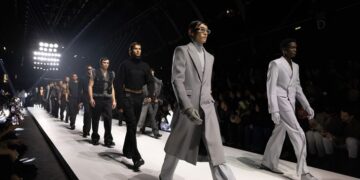
From Olympic-inspired fashion to modular tailoring and sustainability trends for Fall-Winter 2026–27.
Five Trends and Buzzwords from Menswear Previews for Next Winter. From Dsquared2’s playful nods to winter sports, to Emporio Armani’s presentation of Team Italia uniforms, and Ralph Lauren’s ski-resort-inspired showcase as he prepares to dress Team USA, the Games loomed large across the city’s runways.
As ever, fashion mirrored the world beyond the catwalk. Conversations in the front row went beyond silhouettes—streamlined at Prada—and inventive accessories, such as Dsquared2’s hybrid winter footwear, to deeper questions of diversity, longevity, and sustainability. Here are some of the standout trends
Dsquared2, founded by Canadian twins Dean and Dan Caten, delivered one of the most playful tributes to winter sports. Actor Hudson Williams, star of the buzzy hockey series Heated Rivalry, opened the show, descending a faux snow-covered staircase in ripped double denim and a glittering racing number.
The brand’s footwear stole the spotlight: hybrid designs fused ski boots with high heels for women and equally inventive mashups for men. Olympic motifs appeared throughout—most cheekily in a gold-medal intarsia knit—handled with the duo’s trademark irreverence. Ralph Lauren offered a more refined alpine vision in a stately Milan palazzo. Patterned knits, fleece jackets, puffers, and flannel evoked the brand’s all-American heritage. Presented to a celebrity crowd including Nick Jonas and Tom Hiddleston, the collection felt like a warm prelude to the Olympic season.
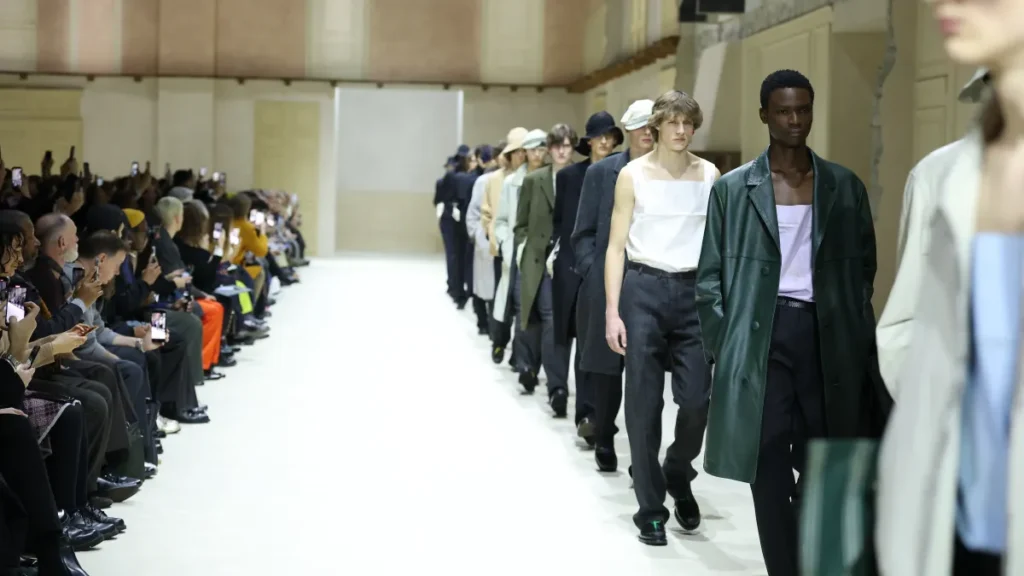
“As a designer, you feel the vibrations in the world,” Lauren said ahead of the show. “If you are sensitive to that, you develop a feel for the clothes you’re going to do next season.”
At Prada, co-creative directors Miuccia Prada and Raf Simons explored men’s headwear with sculptural flair. Berets and fedoras were designed to fold flat like origami, snapping onto the back of outerwear when not in use.
The runway also introduced a modular men’s cape worn over coats for added protection and utility. Shirts featured T-shirt-style necklines and buttoned down the back, while exaggerated cuffs spilled dramatically from jacket sleeves—challenging traditional proportions.
Zegna’s creative director Alessandro Sartori focused on wardrobe building across generations. His message: fashion should endure.
The standout piece was a longer, more voluminous jacket with square shoulders, designed to be worn single-breasted, double-breasted, or casually fastened with three horizontal buttons. A clever reversible-button system offered versatility, underscoring Sartori’s aim to create garments that combine lasting quality with evolving style.
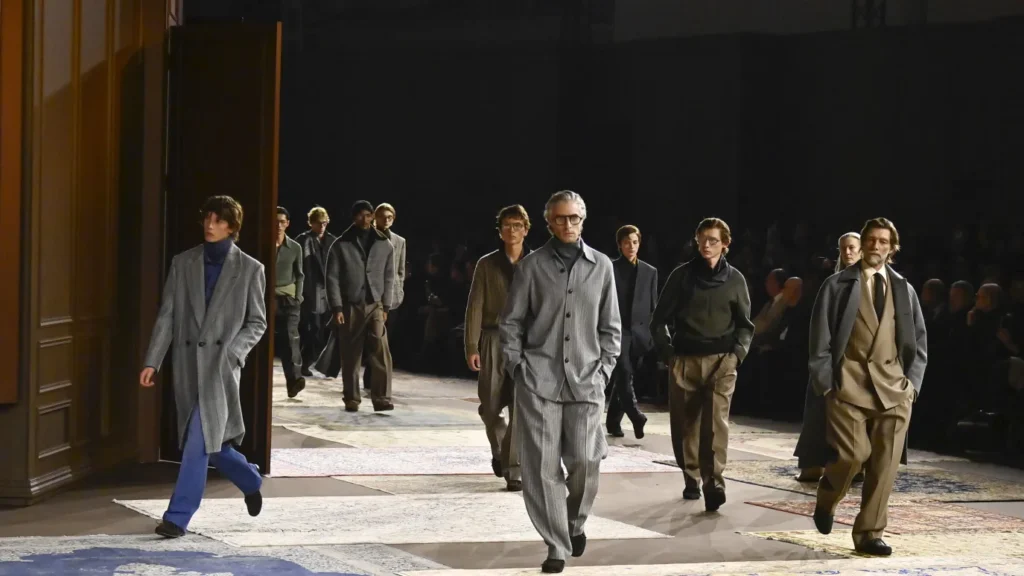
Across collections, functionality merged with imagination. From foldable accessories to modular outerwear, designers embraced adaptability—responding to modern lifestyles that demand both elegance and practicality.
Sustainability was no longer a footnote—it was embedded in the narrative. Designers spoke openly about longevity, responsible production, and fashion’s role in shaping future habits. Milan’s runways suggested that ethical thinking is becoming as essential as tailoring itself.
Milan Fashion Week’s menswear previews for Fall-Winter 2026–27 revealed a season shaped by sport, resilience, and reinvention. From Olympic flair to modular design and sustainable legacy, next winter’s wardrobe is set to balance performance with purpose.
Zegna’s vision is rooted in longevity rather than trend-chasing. “Our customers are collectors, not just fashionistas,” Alessandro Sartori explained. “I want people to collect pieces the way they collect watches.”
To underline that philosophy, the brand presented a nearly century-old jacket, displayed behind glass and crafted from Zegna’s own fabrics. It served as a reminder of the house’s heritage and its rare level of independence: today, the family-run company controls around 60% of its supply chain. That degree of oversight has become increasingly significant as other Italian luxury brands face scrutiny amid ongoing supply-chain scandals.
At the opposite end of the scale, Simon Cracker—a 15-year-old label built on upcycling—stands among the few names in Milan that can speak about sustainability with genuine credibility. Its presence reinforced a broader message emerging this season: responsibility is no longer optional.
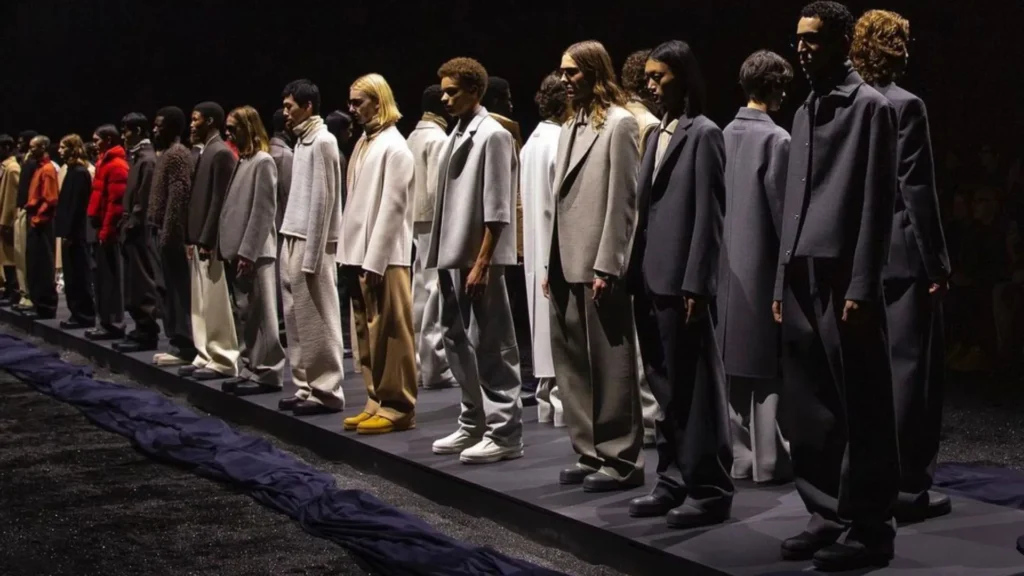
Men’s fashion is also embracing adornment. From red carpets to runways, jewelry is becoming central to modern menswear.
Dolce & Gabbana’s eveningwear featured dramatic lapel embellishments, from oversized floral pins to ornate gold brooches embedded with watches, some suspended from long, elegant chains—true heirloom statements. Giorgio Armani took a subtler route, adding refined lapel pins to tailored looks.
At Prada, exaggerated sleeves were fastened with gemstone cufflinks in lapis lazuli and tiger’s eye, while mismatched sculptural earrings completed the ensembles. Accessories, once secondary in menswear, now carry narrative weight.
Ghanaian designer Victor Hart made his Milan runway debut with the support of the Afrofashion Association, presenting a striking collection of sculptural denim infused with streetwear elements such as industrial belting.
Milan experienced a wave of change after the Black Lives Matter movement in 2020, when designers like Stella Jean and Edward Buchanan—alongside Afrofashion Association founder Michelle Ngonmo—pressed the industry to act. That momentum sparked a brief renaissance in diversity and inclusion. In recent seasons, however, the spotlight has dimmed.
Casting models of different backgrounds remains the most visible—and some argue most performative—expression of diversity, yet even that standard is not consistently met. Dolce & Gabbana, which faced backlash in 2018 over ads seen as anti-Asian, was criticised on social media after presenting an all-white cast for its Saturday menswear show.
This season in Milan made one thing clear: fashion is evolving—not only in silhouette and styling, but in values. The challenge now is ensuring that those values endure beyond the runway.