Physical Address
304 North Cardinal St.
Dorchester Center, MA 02124
Physical Address
304 North Cardinal St.
Dorchester Center, MA 02124


Rui Pinto was virtually unknown to most football fans when he began publishing confidential documents. More than a decade later, the Portuguese hacker is at the centre of one of football’s biggest controversies, after leaked material helped trigger the Premier League’s landmark case against Manchester City.
Outside the Etihad Stadium, the name Rui Pinto may not immediately mean much to Manchester City supporters.
Yet his digital trail has become deeply connected to one of the most consequential financial disputes in modern English football.
Pinto was the founder of Football Leaks, a website that began publishing confidential football documents in 2015. Among the material later released were internal communications and financial documents relating to some of Europe’s biggest clubs.
The leaks eventually became part of the wider chain of events surrounding the Premier League’s investigation into Manchester City.
And now, as reports say City have been found guilty of 114 of 115 alleged financial-rule breaches, Pinto’s name has once again returned to the centre of the story.
Pinto grew up in Vila Nova de Gaia, across the Douro River from Porto.
His former geography teacher, Mario Falcao, remembers him as an ordinary and sociable student who had a particular ability with computers.
There was little indication at the time that the boy would eventually become one of the most controversial figures in European football.
Pinto’s interest in computers eventually developed into something far more consequential.
In 2015, he created Football Leaks, initially using the pseudonym “John”.
The website published confidential material involving clubs, players, agents and football executives, promising to expose what Pinto described as the hidden side of the sport.
The early leaks included information involving Portuguese clubs, including Benfica and FC Porto, the club Pinto supported.
The revelations soon expanded beyond Portugal.
Documents connected to some of the biggest names in football, including Cristiano Ronaldo, Lionel Messi and Neymar, were subsequently published through journalists who received material from Pinto.
One of the most important partnerships was with German publication Der Spiegel.
Pinto eventually provided journalists with an enormous volume of documents, reportedly amounting to more than three terabytes of data.
Journalists then spent years examining, verifying and cross-checking the information before publishing stories.
Christoph Winterbach, who worked on the Football Leaks investigation at Der Spiegel, described the material as offering an unprecedented look behind the scenes of the football industry.
But the journalists also faced an important ethical question: how should information obtained illegally be treated when it appears to reveal matters of public interest?
That debate remains at the heart of the Rui Pinto controversy.
The Football Leaks material later became particularly significant in relation to Manchester City.
In 2018, German publication Der Spiegel published documents purporting to show internal communications concerning City’s financial affairs and sponsorship arrangements.
The revelations prompted investigations by European football authorities and contributed to the long-running scrutiny surrounding the club.
Manchester City consistently rejected wrongdoing and argued that the leaked material had been obtained illegally and published without proper context.
The Premier League eventually referred City to an independent commission in February 2023, bringing 115 alleged breaches into the formal process.
The charges cover alleged financial-rule violations across several seasons, as well as accusations that the club failed to cooperate with the Premier League’s investigation.
The latest development has transformed the story again.
Reports from The Athletic and The Times, subsequently carried by Reuters and other international outlets, say the independent commission found Manchester City guilty of 114 of the 115 alleged breaches.
The Premier League has declined to comment publicly because the process remains confidential.
Manchester City have also stressed that the case is not yet concluded and are expected to appeal.
The club has maintained its long-standing position that it has evidence supporting its defence and has denied wrongdoing.
That means the reported findings do not represent the end of the legal and regulatory process.
The eventual sanction, if any, remains a separate question.
For Pinto, the consequences of Football Leaks have been personal as well as legal.
He was arrested in Hungary in 2019 and extradited to Portugal.
His subsequent legal battles have included periods of detention, house arrest and witness protection.
In 2023, he received a four-year suspended prison sentence after being convicted in Portugal of offences including unauthorised access to computer systems, interception of correspondence and attempted extortion.
A separate case in France later resulted in another suspended sentence.
Pinto has consistently argued that his actions exposed information that was in the public interest.
His legal team has therefore sought to frame him within the broader debate over the protection of whistleblowers.
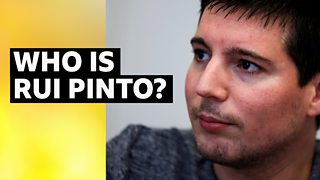
The debate surrounding Pinto has produced sharply contrasting views.
Former Portuguese politician and European Parliament member Ana Gomes has defended him as an important whistleblower and argued that authorities should have treated him as an ally in investigations into wrongdoing.
Other observers take the opposite position.
Lawyers representing affected parties have argued that Pinto obtained information through illegal means and that the public-interest argument cannot erase the underlying offences.
Portuguese journalist Antonio Varela, one of the first journalists contacted by Football Leaks, has described Pinto’s position as more complicated — someone who obtained information unlawfully but whose disclosures nevertheless exposed significant issues within European football.
That distinction is crucial.
The fact that leaked information may be newsworthy does not automatically make the method used to obtain it lawful.
At the same time, the publication of illegally obtained information can still lead to legitimate public-interest investigations.

The impact of Football Leaks extends well beyond Manchester City.
The material helped journalists investigate issues involving player contracts, transfer arrangements, taxation, agents, sponsorships and the financial structures surrounding some of Europe’s richest clubs.
Its revelations contributed to a wider debate about how football’s financial rules were being applied — and whether powerful clubs and individuals were receiving adequate scrutiny.
The Manchester City case became perhaps the most significant example of that debate.
But there is an important distinction between the source of evidence and the legal process that ultimately evaluates it.
The Premier League case was heard by an independent commission, rather than being decided by Pinto or the journalists who published the leaked documents.
The commission’s reported findings therefore represent a separate stage in the process.
The reported 114 guilty findings could have major implications for Manchester City and potentially the wider Premier League.
However, the punishment has not yet been determined publicly, and the club is expected to appeal.
The range of possible consequences will depend on the eventual regulatory process.
The case could also reignite questions about the Premier League’s financial regulations, enforcement mechanisms and the length of time required to resolve major disciplinary disputes.
The investigation itself has already lasted years.
The independent commission began hearing the case in September 2024 after an eight-year saga between City and the Premier League.
Rui Pinto did not personally determine Manchester City’s guilt or innocence.
What he did was help bring confidential information into the public domain.
Journalists investigated that material. Football authorities subsequently conducted their own investigations. Manchester City mounted a defence. An independent commission considered the Premier League’s allegations.
That chain of events is important because it separates Pinto’s actions from the legal findings against Manchester City.
Yet without Football Leaks, the football world might never have seen some of the documents that helped fuel the controversy.
That is why Pinto remains such a divisive figure.
To his supporters, he exposed information that powerful institutions would rather have kept hidden.
To his critics, he was a hacker who committed crimes to obtain the information.
Both aspects form part of his complicated legacy.
The Rui Pinto story raises one of football’s most difficult questions: where does whistleblowing end and cybercrime begin?
The answer is not simple.
Pinto was convicted of criminal offences relating to how he obtained information. At the same time, the material he released generated investigations and public scrutiny of major football institutions.
The latest Manchester City development adds another extraordinary chapter.
Reports say an independent commission found City guilty of 114 of the 115 alleged Premier League breaches, but City maintain that the process remains ongoing and are expected to appeal.
Whatever the eventual outcome, Pinto’s story demonstrates the enormous power of information in modern football.
A teenager from Portugal who developed a talent for computers eventually created a website that exposed thousands of confidential documents and triggered investigations reaching some of the biggest clubs and personalities in the sport.
Football Leaks may have started with a computer and a mysterious username — but its consequences have reached the very top of world football.
Follow the Afrcan360 Sports channel for more sports updates on WhatsApp: https://whatsapp.com/channel/0029VbCZkljKQuJTjRq4HZ0W