Physical Address
304 North Cardinal St.
Dorchester Center, MA 02124
Physical Address
304 North Cardinal St.
Dorchester Center, MA 02124

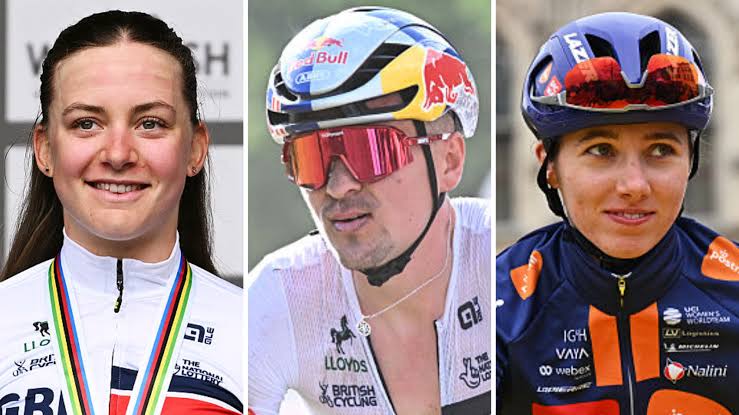
Great Britain heads into the 2026 UCI Road World Championships in Montréal with a deep and talented squad capable of challenging for rainbow jerseys across several categories.
The streets of Montréal are set to become the centre of world cycling this week, and Great Britain has arrived with one of its most intriguing line-ups in years.
With established stars, emerging young riders and strength across the men’s and women’s fields, Britain has genuine medal ambitions as the 2026 UCI Road World Championships enter their decisive road-race stages.
The championships are being held from 20 to 27 September, with the elite women’s road race scheduled for Saturday, September 26, followed by the men’s race on Sunday, September 27.
The men’s race has been opened up by the absence of reigning world champion Tadej Pogačar, creating a different competitive landscape in Montréal.
Great Britain will be led by Tom Pidcock, who arrives as one of the country’s principal hopes for the elite men’s rainbow jersey.
Pidcock will be supported by a strong group that includes Adam Yates, Oscar Onley, Fred Wright, Ethan Hayter, Finlay Pickering, Mark Donovan, James Shaw and Callum Thornley. British Cycling described the selection as a highly competitive squad combining established performers with riders emerging onto the international stage.
Yates brings considerable experience from the biggest stage of professional cycling, while Onley has also enjoyed a strong season.
The combination gives Britain several potential tactical options rather than relying entirely on one rider.
The British women’s team is equally intriguing.
Zoe Bäckstedt heads the elite women’s squad after making an impressive breakthrough at senior level.
Bäckstedt claimed silver in the elite women’s individual time trial in Montréal, finishing behind Switzerland’s Marlen Reusser. The result provided an early indication that she can compete with the very best at elite level.
She will now turn her attention to the road race, where she will be supported by Lauren Dickson, Pfeiffer Georgi, Anna Henderson, Anna Morris, Flora Perkins and Alice Towers.
The depth of the squad could prove important in a race where positioning, teamwork and tactical decisions can be just as important as raw power.
One of the most encouraging aspects of Britain’s challenge is the number of young riders coming through the system.
British Cycling’s 2026 selection includes substantial representation from the under-23 and junior categories, highlighting the depth of Britain’s development pathway.
Among them are Cat Ferguson, Imogen Wolff, Awen Roberts, Abi Miller, Morven Yeoman, Ben Wiggins and Elliot Rowe.
British Cycling has said its Talent Development Pathway has supported 24 of the 36 riders selected for the championships at some stage of their careers.
That pathway has already helped develop riders such as Pidcock, Bäckstedt, Oscar Onley and Ferguson.
Britain’s current generation is also benefiting from a powerful recent cycling tradition.
The country has enjoyed major success in road cycling over the past 15 years, with riders such as Mark Cavendish, Lizzie Deignan and Tom Pidcock helping raise the profile of the sport.
Cavendish won the men’s world road race title in 2011, while Deignan became women’s world champion in 2015.
British riders have also produced historic champions including Tom Simpson, Beryl Burton, Mandy Jones and Nicole Cooke.
That history provides an important backdrop as another generation attempts to add its name to the rainbow-jersey roll of honour.
The elite road races in Montréal are not simple tests of sprinting ability.
The women’s race covers 180.4km, while the men’s race stretches to 273.2km, with the demanding Montréal circuit playing a major role in the outcome.
Riders will need to balance attacking ambitions with energy conservation, positioning and teamwork.
A successful breakaway can completely change the race, but staying away from a large peloton requires enormous physical effort.
That tactical battle becomes particularly important at the World Championships because riders compete in national teams rather than their normal professional trade teams.
For riders such as Bäckstedt, the World Championships present an unusual tactical challenge.
Unlike normal professional races, riders do not have the same level of communication with a team car throughout the race.
That places greater emphasis on communication between teammates and their ability to read the race.
For Britain, that could make the depth of the women’s squad particularly valuable.
If one British rider manages to follow a major attack, the team could then have another rider sitting behind ready to respond to subsequent moves.
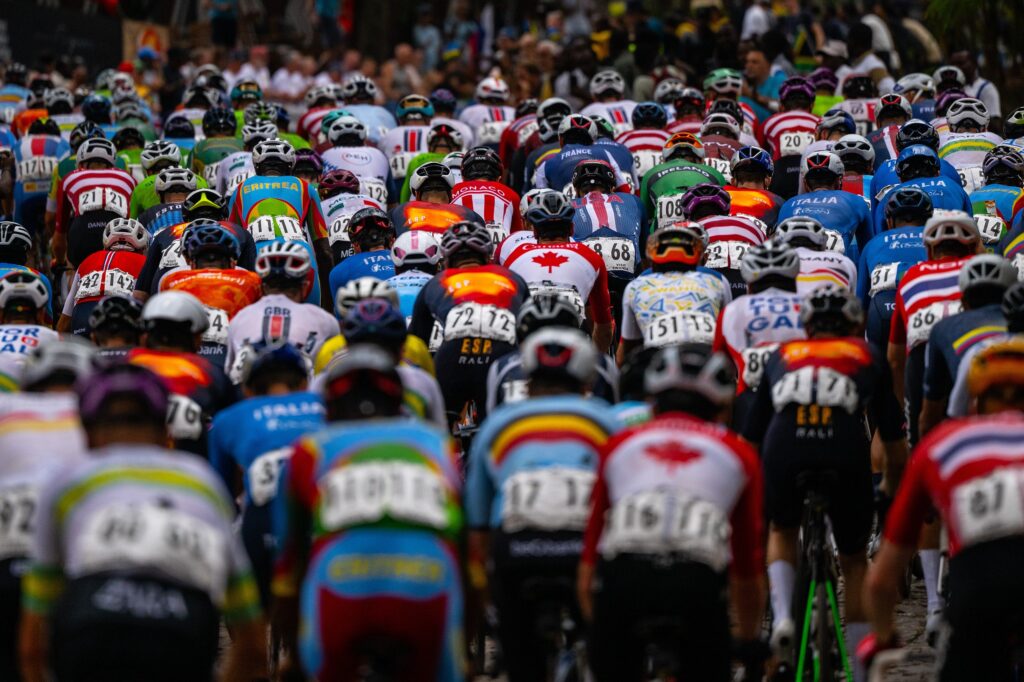
Perhaps the biggest reason for optimism is that Britain’s challenge extends well beyond the headline names.
The senior squads contain established WorldTour riders, while the under-23 and junior selections feature riders who are already making their presence felt internationally.
The full British selection includes:
Elite Women: Zoe Bäckstedt, Lauren Dickson, Pfeiffer Georgi, Anna Henderson, Anna Morris, Flora Perkins, Alice Towers.
Elite Men: Mark Donovan, Ethan Hayter, Oscar Onley, Finlay Pickering, Tom Pidcock, James Shaw, Callum Thornley, Fred Wright, Adam Yates.
U23 Men: Jacob Bush, Mattie Dodd, Elliot Rowe, Will Smith, Ben Wiggins.
U23 Women: Cat Ferguson, Abi Miller, Awen Roberts, Imogen Wolff, Morven Yeoman.
Junior Women: Aalia Clay, Peggy Knox, Gabriella McHugh, Zoe Roche, Melanie Rowe.
Junior Men: Leon Atkins, Gus Dutton, Finlay Storrie, Dexter Townsend, Evander Wishart.
The depth across these categories illustrates how broad Britain’s current talent pipeline has become.
Great Britain’s challenge in Montréal is about more than two individual medal hopes.
Pidcock and Bäckstedt provide the headline names, but the real strength of the British team lies in its depth.
The absence of Pogačar changes the men’s race, while Bäckstedt’s silver in the elite time trial has already demonstrated that Britain’s younger generation can compete at the highest level.
The road races will ultimately be decided over hundreds of kilometres, where positioning, teamwork, tactical judgement and endurance can matter as much as individual brilliance.
For British cycling, Montréal represents an opportunity to see whether years of investment in talent development can translate into more rainbow jerseys.
And with established stars racing alongside a generation of ambitious young riders, Britain has plenty to watch for across the final days of the championships.
Follow the Afrcan360 Sports channel for more sports updates on WhatsApp: https://whatsapp.com/channel/0029VbCZkljKQuJTjRq4HZ0W