Physical Address
304 North Cardinal St.
Dorchester Center, MA 02124
Physical Address
304 North Cardinal St.
Dorchester Center, MA 02124

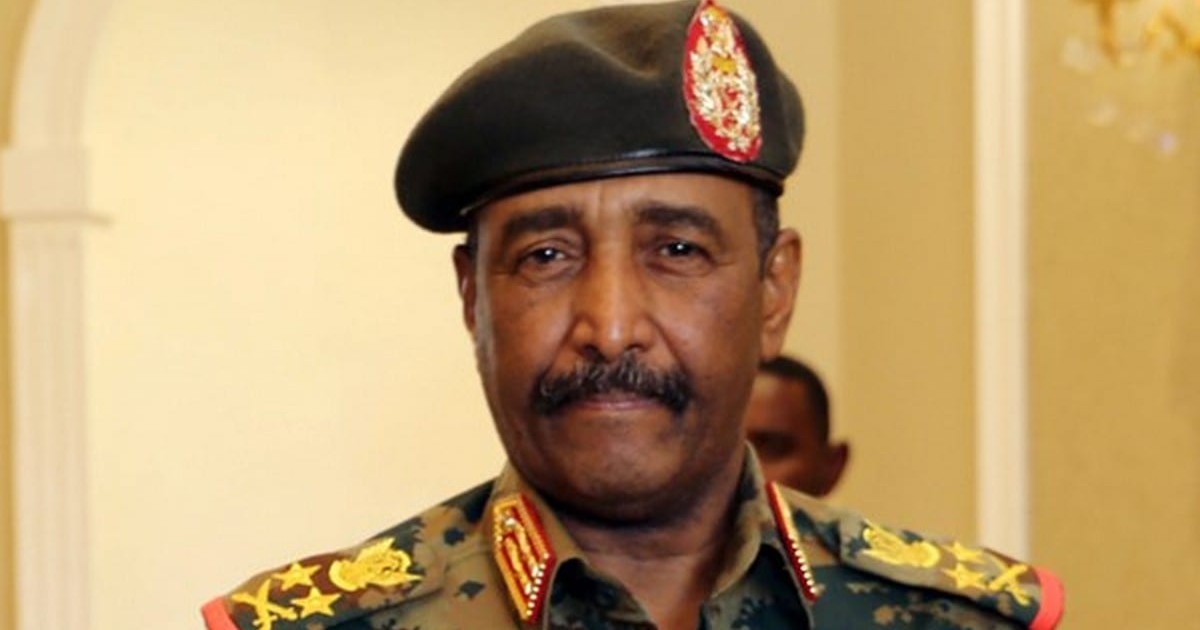
A diplomatic dispute has erupted between Sudan and the United States after reports that Washington withheld a visa for Sudanese army chief General Abdel Fattah al-Burhan ahead of the United Nations General Assembly, allegedly making his attendance conditional on accepting a proposed 90-day ceasefire.
The reported move has drawn criticism from Sudanese officials, activists and journalists, while the United Nations has expressed concern over the situation.
Neither the U.S. State Department nor the Sudanese government has publicly confirmed all details surrounding the visa decision. However, Reuters reported that Sudanese and Western sources said the visa issue was linked to a ceasefire proposal put forward by Massad Boulos, the U.S. senior adviser for Arab and African affairs.
The dispute comes as Sudan’s devastating war between the Sudanese Armed Forces (SAF) and the paramilitary Rapid Support Forces (RSF) enters its fourth year.
Al-Burhan was scheduled to address the 81st UN General Assembly in New York on Thursday, September 24.
He has addressed the assembly twice since the conflict began in April 2023, when fighting erupted following a power struggle between the military and RSF leadership.
According to Reuters, a Sudanese diplomatic source and a Western analyst familiar with the discussions said U.S. officials had linked the issuance of Burhan’s visa to his acceptance of a proposed three-month ceasefire.
A senior Sudanese source said Burhan had postponed his trip to New York but had not initially received formal notification that his visa had been denied.
The reported dispute has now become a diplomatic issue involving Sudan, Washington and the United Nations.
Sudan’s UN ambassador, Al-Harith Idriss Al-Harith, reportedly appealed directly to Secretary-General António Guterres, asking the UN to intervene with U.S. authorities.
Sudan argued that preventing its leader from attending the General Assembly would interfere with the country’s participation in the work of the world body.
The United Nations has acknowledged the matter.
UN spokesperson Stéphane Dujarric said Guterres was “deeply concerned” that a visa had reportedly not been issued and that the UN Secretariat had been engaging U.S. authorities over the issue.
The UN has also reminded Washington of its responsibilities as the host country of the organisation’s headquarters in New York.
The 81st General Assembly’s high-level debate is scheduled to run from September 22 to September 26, with an additional sitting on September 28.
While Washington has not publicly confirmed that Burhan’s visa was conditioned on the ceasefire proposal, the U.S. State Department has made clear that it does not recognise either side of the conflict as representing legitimate constitutional government.
State Department spokesperson Tommy Pigott said neither the Sudanese Armed Forces nor the RSF, nor their respective leaders, represent legitimate constitutional governance for Sudan.
He added that the United States would seek to increase pressure on all parties and networks contributing to the continuation of the war.
U.S. Secretary of State Marco Rubio also described Washington’s attempts to mediate an end to the conflict as frustrating, saying parties had repeatedly agreed to commitments before backing away.
Sudan’s Ministry of Foreign Affairs has rejected Washington’s characterization of the country’s governing arrangements and called for what it described as more constructive engagement.
The ministry said any peace initiative should respect Sudan’s sovereignty, territorial integrity and national institutions.
It also blamed foreign interference for contributing to the continuation of the conflict.
Sudan’s government has previously argued that any ceasefire must include provisions addressing the position and withdrawal of the RSF, humanitarian access and the country’s territorial integrity.
Reports of the visa dispute have generated criticism among Sudanese activists and journalists.
Some described the reported linkage between the visa and ceasefire negotiations as an attempt to exert political pressure on Khartoum.
Sudanese activist Mamoun al-Sheikh said the reported visa decision would not silence Sudan’s voice, while another activist, Sayed Al-Mazaj, described the alleged condition as political pressure.
Journalist Diaa Al-Din Bilal similarly argued that preventing Burhan from travelling to New York would not necessarily persuade him to accept Washington’s position.
These are political reactions to the reported decision and do not establish whether the U.S. formally imposed the alleged condition.
The visa dispute is unfolding against one of the world’s most severe humanitarian emergencies.
Sudan’s war began in April 2023 after tensions between the army led by Burhan and the RSF commanded by Mohamed Hamdan Dagalo, commonly known as Hemedti.
The fighting has devastated major cities, displaced millions and severely disrupted food supplies, healthcare and basic services.
Reuters reported that more than 14 million people have been displaced since the war began, while the conflict has become one of the world’s worst humanitarian crises.
A UN fact-finding mission has also warned that foreign weapons, military technology, fighters and logistical networks are helping sustain the conflict and increasing the ability of the warring sides to attack civilian areas with drones.
The proposed three-month ceasefire is part of broader international efforts to stop the fighting and create conditions for humanitarian access and political negotiations.
The United States has previously supported several ceasefire and humanitarian initiatives involving Sudan, including efforts to secure humanitarian truces and civilian protection arrangements.
At the UN, the U.S. has said its objective is to end the devastating conflict and support a civilian-led future for Sudan.
The challenge remains that previous ceasefire initiatives have repeatedly failed to produce a lasting end to hostilities.
Abdel Fattah al-Burhan has been Sudan’s de facto leader since the overthrow of longtime president Omar al-Bashir in 2019.
He and RSF leader Mohamed Hamdan Dagalo initially worked together during Sudan’s political transition but later became rivals.
Their partnership collapsed following disagreements over the future structure of Sudan’s security forces and the proposed integration of the RSF into the national army.
The dispute eventually developed into the war that continues today.
The African Union and Western governments subsequently withdrew recognition following the October 2021 military coup that disrupted Sudan’s civilian transition.
The visa dispute has now introduced another layer of tension into international efforts to resolve Sudan’s war.
For Washington, the issue comes as the Trump administration seeks greater pressure on the parties to the conflict while attempting to advance a ceasefire proposal.
For Sudan, the reported visa condition is being presented as a question of sovereignty and its right as a UN member state to participate in the General Assembly.
For the United Nations, the situation raises questions about the obligations of the United States as host country and the ability of member states to participate in the organisation’s proceedings.
The immediate question is whether Burhan will ultimately receive permission to travel to New York or whether another Sudanese representative will address the General Assembly on the country’s behalf.
The reported visa dispute illustrates how diplomacy surrounding Sudan’s war has become increasingly intertwined with questions of international recognition, access and political leverage.
The United States has made clear that it wants the fighting to end and has questioned the legitimacy of both major armed parties as representatives of constitutional government. Sudan, meanwhile, insists that any peace initiative must respect its sovereignty and national institutions.
The reported attempt to link Burhan’s UN attendance to a ceasefire, if confirmed, would add another contentious dimension to those negotiations.
But the larger issue remains the humanitarian cost of the war.
A visa dispute will not by itself resolve the conflict. The central challenge is securing a durable ceasefire, protecting civilians, restoring humanitarian access and creating a credible political process capable of moving Sudan away from military confrontation.
With millions displaced and the conflict continuing, pressure on the warring parties is likely to remain intense as international mediators search for a workable path toward peace.
African360 WhatsApp Channel for more News update: https://whatsapp.com/channel/0029Vb7Oc6nGk1FpdCN0xn44