Physical Address
304 North Cardinal St.
Dorchester Center, MA 02124
Physical Address
304 North Cardinal St.
Dorchester Center, MA 02124
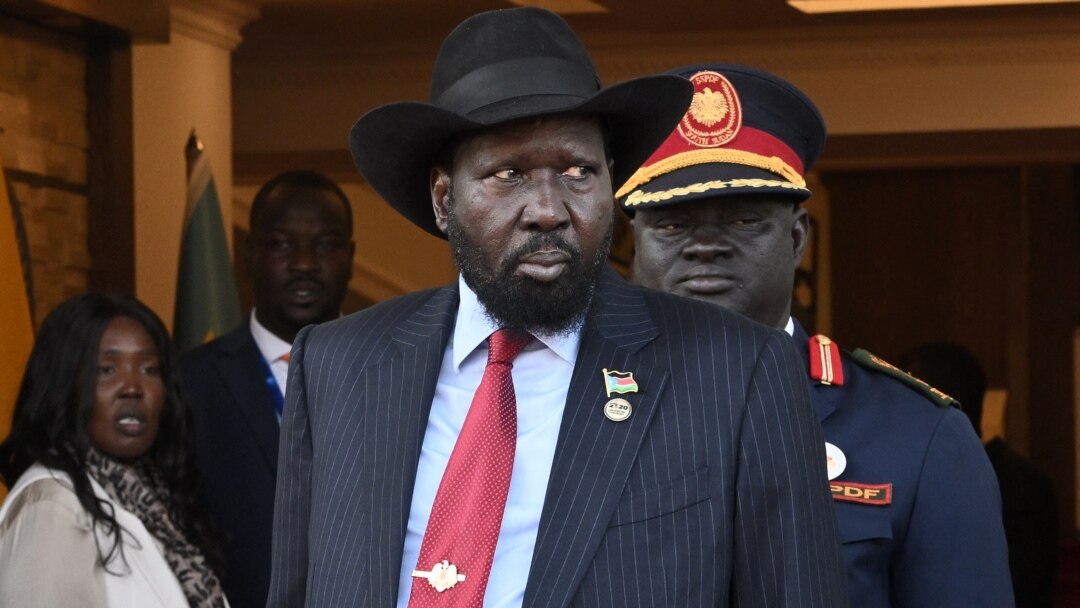
South Sudan has formally ended its transitional unity government, with President Salva Kiir appointing a caretaker administration as the country moves towards its first national elections, scheduled for December 22, 2026.
The decision, announced on September 22, brings an end to the power-sharing arrangement established under the 2018 peace agreement that helped end five years of civil war.
Under the new arrangement, Kiir will remain president throughout the electoral period until an elected successor assumes office, while the country’s vice-presidents, ministers and several legislative and administrative bodies have been removed or dissolved.
The development marks a significant turning point for the world’s youngest country—but it has also generated concerns over how the electoral transition will be managed and how political power will be exercised during the period leading to the vote.
The presidential order ended the Revitalized Transitional Government of National Unity, which was created under the 2018 peace agreement.
The order also dissolved the national and state assemblies and removed the vice-presidents who had served as part of the power-sharing structure.
The judiciary, security institutions and other state structures remain in operation.
South Sudan’s state broadcaster, SSBC, described the move as part of the process of preparing the country for the December elections.
The government has presented the dissolution as a necessary step to avoid an institutional vacuum as the transitional period comes to an end.
The country’s National Elections Commission has set December 22, 2026 as the date for the long-delayed national elections.
The elections were originally expected to take place in 2022 but have been postponed twice as authorities struggled to complete key elements of the 2018 peace agreement.
The current timetable means South Sudan is now attempting to move towards elections without completing all of the processes that were previously expected to precede a permanent political settlement.
Among the outstanding issues are the permanent constitution, voter registration and the unification of armed forces associated with rival political factions.
The dissolution followed amendments to South Sudan’s National Elections Act.
Parliament approved the changes shortly before Kiir announced the end of the transitional government.
Under the amended framework, Kiir remains in office during the election period until a newly elected president takes over.
The vice-presidents, including First Vice-President Riek Machar, were removed from their positions as the transitional government ended.
The changes have been rejected by the main opposition alliance, which has raised objections to the way the transition is being handled.
The restructuring has triggered concerns among political analysts and civil society groups about the concentration of executive authority during the electoral period.
Analysts cited by international news agencies have questioned whether the new legal arrangements provide sufficient checks and balances while parliament and the transitional power-sharing structure are no longer in place.
Those concerns have also been heightened by the recent change at the National Elections Commission.
Kiir dismissed elections commission chairman Abednego Akok Kacuol earlier this month without a publicly stated reason and appointed Gabriel Bol Deng Majok as his replacement.
The move prompted questions about the timing and legality of the change, given that the country was only months away from its first national elections.
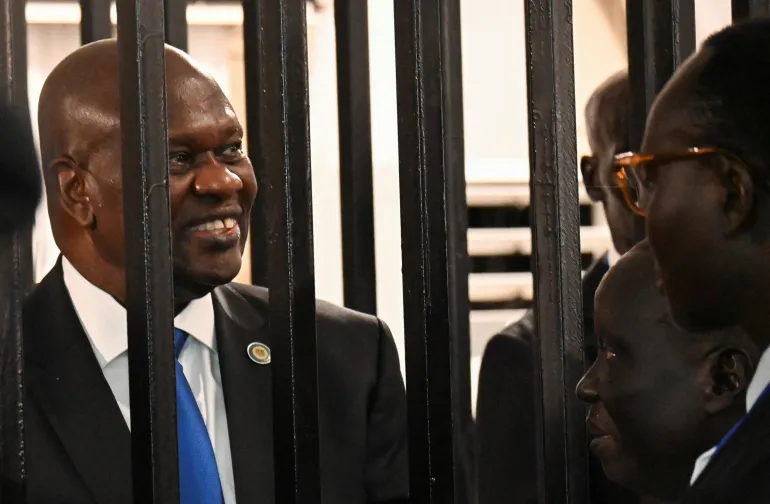
The transition is taking place while Kiir’s longtime political rival, Riek Machar, remains under house arrest.
Machar, who leads the Sudan People’s Liberation Movement-in-Opposition (SPLM-IO), has been involved in the country’s political and military struggles for years and served as Kiir’s First Vice-President under the 2018 peace agreement.
He is currently facing trial on charges including treason and murder, which he denies.
His continued detention adds another layer of uncertainty to the political environment ahead of the election.
The 2018 peace agreement was built around power-sharing between Kiir’s government and Machar’s opposition movement, making Machar’s political status particularly important to the broader transition.
South Sudan’s transition remains closely linked to the implementation of the 2018 peace agreement.
The agreement ended a civil war that killed hundreds of thousands of people and displaced millions.
However, several major provisions remain incomplete.
These include the drafting of a permanent constitution, voter-registration preparations and the integration of rival armed forces into unified national security structures.
The delays have repeatedly pushed back the country’s planned transition to elected government.
Amnesty International has welcomed the dissolution as a step towards the country’s first elections but has warned that holding an election alone will not be sufficient.
The organisation has called for South Sudanese authorities to create an environment in which citizens can vote and contest elections freely and safely.
Amnesty also highlighted concerns about restrictions on freedom of expression, political participation and civic space.
That means the credibility of the December election will depend not only on whether voting takes place, but also on the conditions under which political parties, candidates, journalists and voters are able to participate.
The political transition is also taking place under heightened security.
Security personnel were placed on alert in Juba as the government announced the dissolution, with checkpoints and road restrictions reported around government facilities.
The country’s history of political and ethnic violence means the security environment will remain a critical factor throughout the electoral period.
The United Nations Commission on Human Rights in South Sudan has previously warned that elections without adequate safeguards and inclusive political dialogue could contribute to renewed conflict.
South Sudan gained independence in 2011, but it has spent much of its short history dealing with political instability and armed conflict.
The December election therefore carries enormous significance.
It is expected to be the country’s first national election since independence and could mark the formal transition from a prolonged peace process to an elected government.
But the process also faces substantial challenges.
The country must prepare voters, strengthen electoral institutions, maintain security and provide space for political competition—all while completing an unusually compressed transition.
South Sudan’s decision to dissolve its transitional government is both a political milestone and a major test of the country’s fragile peace process.
On one hand, the move clears a major institutional hurdle ahead of the December 22 election and brings an end to a transitional arrangement that has already been extended several times.
On the other hand, the removal of the vice-presidents and dissolution of the legislature means the country is entering the electoral period with a significantly different balance of political institutions.
That makes the next three months particularly important.
The key questions will be whether electoral preparations can be completed on time, whether political opponents are able to campaign freely, whether voters can participate safely and whether the security environment remains stable.
The recent replacement of the elections commission leadership adds another layer of scrutiny to the process.
For South Sudan, the objective is therefore larger than simply holding an election.
The country must demonstrate that its first national vote can help consolidate peace rather than reopen the political and ethnic divisions that contributed to the devastating conflict of the past decade.
December 22 could become one of the most consequential dates in South Sudan’s young history—but the credibility of the process will depend heavily on what happens between now and election day.
African360 WhatsApp Channel for more News update: https://whatsapp.com/channel/0029Vb7Oc6nGk1FpdCN0xn44